What Types of Forklift Pallets Are There?
Forklift Pallets may look simple, but the wrong choice can make everyday handling awkward. A pallet must support its load, suit the forklift, and fit the storage system. Some are built from timber, others from plastic or metal. Their designs also differ: block, stringer, open-deck, and specialized pallets each bring practical trade-offs. Fit comes first.
For a transparent expert-style perspective, this introduction uses Jordan Lee as a fictional composite warehouse-handling specialist, not a real person or a sourced quotation. Lee’s guiding line is: “Choose the pallet for the load, the route, and the equipment—not habit.” That principle helps frame the choices ahead. A light plastic pallet may suit clean, repeated circulation, while a sturdy timber model can work well for varied loads. Yet material alone does not settle the question. Deck openings, entry points, load capacity, hygiene needs, and repair options matter too. Details count.
The sections that follow compare common Forklift Pallets by material and construction, then explain how to match them to handling conditions. They also point out limits that are easy to overlook, such as uneven loads or tight turning spaces. A pallet can meet a specification and still feel wrong in daily use. That deserves a second look. Check the actual load, forklift, and work area before choosing.
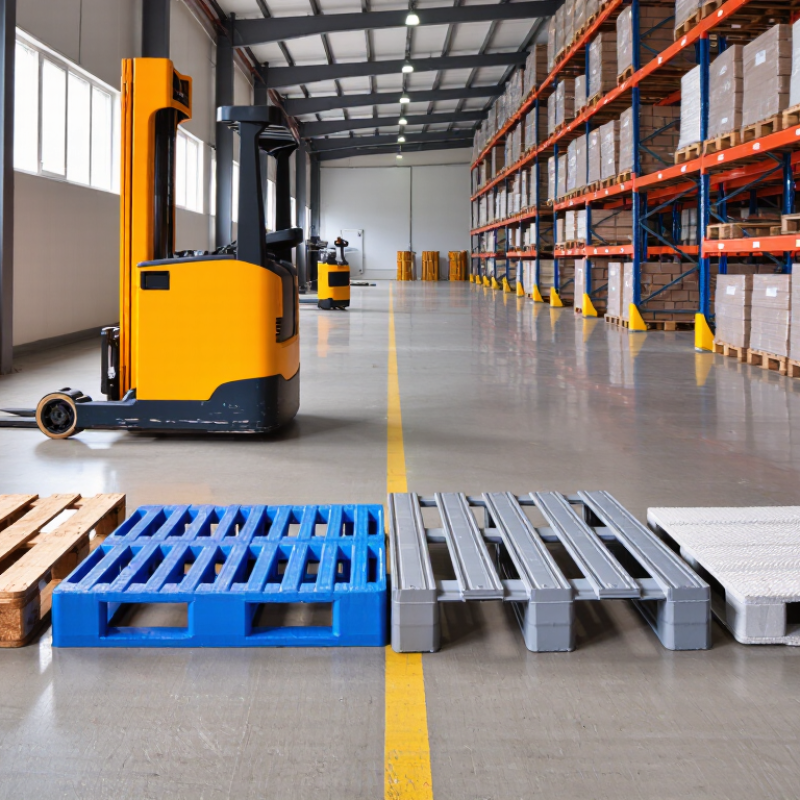
How Forklift Pallets Are Classified by Material
What Types of Forklift Pallets Are There?
How Forklift Pallets Are Classified by Material
Forklift pallets are commonly classified as wood, plastic, metal, or composite. Each material behaves differently under load, during cleaning, and in changing temperatures. The right choice depends on the goods, handling environment, and storage system—not just the purchase price.
Wood pallets are widely used because they are sturdy, repairable, and often easy to source. Their boards and fasteners are visible, which makes damage easier to spot. However, damp wood can swell or weaken, and splinters may snag packaging. Keep them dry when possible. Plastic pallets resist moisture and are easy to wash, making them useful where cleanliness matters. Their consistent dimensions can also help automated handling. Yet impact or cold temperatures may make some designs brittle. Not always.
Metal pallets, usually made from steel or aluminum, suit demanding loads and repeated use. Steel is strong but heavy; aluminum weighs less but may cost more. Composite pallets, made from materials such as molded fibers or recycled plastics, offer varied combinations of weight and durability. Their performance differs by construction, so the material name alone tells little. Check rated capacity, fork-entry openings, and compatibility with racks. A pallet that works well on a warehouse floor may not suit a narrow conveyor. It is easy to overlook that detail.
What Types of Forklift Pallets Are There? - How Forklift Pallets Are Classified by Material
| Pallet Material | Typical Construction | Advantages | Limitations | Common Uses | Forklift Handling Notes |
| Wood | Boards and stringers or blocks, assembled with nails or other fasteners. | Widely available, repairable, and suitable for many general warehouse and shipping tasks. | Can absorb moisture, splinter, or develop loose boards and fasteners; quality and service life vary. | General warehousing, domestic transport, and reusable pallet pools. | Check for damage and protruding fasteners. For applicable international shipments, solid-wood packaging may need to meet ISPM 15 requirements. |
| Plastic | Molded or formed from plastics such as HDPE or polypropylene; designs may include solid or open decks and reinforced sections. | Consistent dimensions, resistant to moisture and many common cleaning processes, and does not produce wood splinters. | May cost more initially than basic wood pallets; damaged units can be difficult to repair, and performance varies with temperature and design. | Food, pharmaceutical, clean, export, and automated handling environments where consistent dimensions are useful. | Confirm fork-entry openings and load ratings. Some designs flex under load, so check suitability for rack storage. |
| Metal | Usually fabricated from steel or aluminum, with welded, pressed, or formed components. | Can provide high strength and durability; suitable designs can withstand demanding industrial use and repeated handling. | Often heavier and more expensive than wood or plastic; steel may corrode if its finish is damaged and exposed to moisture. | Heavy-duty manufacturing, automotive operations, and applications requiring robust reusable pallets. | Account for pallet tare weight when calculating the forklift's required capacity. Inspect for bent sections, sharp edges, and damaged welds. |
| Corrugated Paperboard | Layered corrugated board formed into a deck and support structure; often designed for a specific shipment or load. | Lightweight and recyclable in many paper-recycling systems; useful for reducing packaging weight on one-way shipments. | Sensitive to moisture and damage; generally less suited to repeated use or demanding outdoor conditions. | Lightweight, one-way distribution and export shipments where the pallet is not expected to return. | Use only within the manufacturer's load and environmental limits. Keep forks level and avoid impacts that can crush the supports. |
| Composite | May combine materials such as recycled plastic and wood fibers, or use engineered layers bonded into a pallet structure. | Can combine selected properties of its component materials, such as dimensional consistency and resistance to moisture. | Construction and performance differ considerably by product; repair, recycling, and disposal options depend on the material mix. | Reusable transport systems and operations seeking an alternative to conventional solid-wood pallets. | Check the pallet's marked load rating, fork-entry design, and storage conditions rather than assuming all composite pallets perform alike. |
Note: A pallet's safe capacity depends on its design, condition, load distribution, and whether it is used dynamically, on the floor, or in a rack. Always follow the pallet rating and the forklift load chart.
Common Pallet Types by Entry and Deck Design
What Types of Forklift Pallets Are There?
Common Pallet Types by Entry and Deck Design
Pallet choice often starts with how forklift forks approach it. Two-way pallets accept forks from two opposite sides; four-way designs allow entry from all four sides. Stringer pallets usually offer two-way access, while notched stringers can permit four-way entry. Block pallets commonly provide four-way access, which helps when loads must be approached from different directions. Check the actual fork openings, though: labels alone do not guarantee clearance for your truck.
Deck design matters too. Open-deck pallets use spaced boards that reduce material and let dirt fall through, but small cartons may sag between gaps. Closed-deck or solid-top designs support more of the load and are easier to wipe clean. Single-face pallets have a usable deck on one side; double-face models have decks on both sides and can better distribute certain loads. ISO 6780:2003 specifies six principal flat-pallet dimensions for intercontinental handling, a reminder that footprint and equipment compatibility deserve measurement, not guesswork.
Tips: Measure fork spacing, opening height, and load overhang before ordering. Test a loaded sample on your actual forklift. A four-way pallet can still be awkward if its entry openings are too tight. This is easy to overlook. Walk the route, too: turning space and rack clearance can make a technically compatible pallet impractical.
What Types of Forklift Pallets Are There?
Common pallet types by entry and deck design
How to read the chart: Two-way pallets allow fork entry from two opposite sides; four-way pallets allow entry from all four sides. Stringer pallets may have notches for four-way access, while block pallets commonly provide four-way entry. Decks may be open, close-boarded, or reversible; the exact design varies by pallet.
Specialty Pallets for Unique Loads and Work Environments
Specialty forklift pallets address loads that standard flat pallets cannot hold securely. Drum pallets use raised rims or shaped supports to limit movement during lifting. Coil pallets cradle heavy rolls in a recessed channel, helping prevent them from shifting. For pipes, lumber, or other long goods, extended or four-way-entry designs can improve access in tight aisles. Fit matters. The pallet’s openings must match the forklift’s fork spacing, while its rated capacity must suit the load and its weight distribution. A strong pallet can still feel unstable if the load sits too high or off-center.
The work environment matters just as much. Plastic pallets resist moisture and are easier to wash, which can be useful in damp or sanitation-sensitive areas. Treated wood may suit rough handling, but splinters and damaged boards need attention. Metal designs tolerate demanding industrial use, yet their weight and surface can affect handling. Cold rooms, outdoor storage, and frequent washing can each change which material performs reliably. Not every option works everywhere. Before choosing, check the load dimensions, forklift entry points, rated capacity, and storage conditions. A common oversight is focusing on the pallet alone; wrapping, restraints, and operator visibility also influence safe handling. Even a suitable design may need adjustment after a trial with the actual load.
How Pallet Design Affects Forklift Handling
What Types of Forklift Pallets Are There?
How Pallet Design Affects Forklift Handling
Forklift pallets commonly use block, stringer, or perimeter-base designs. Their entry openings determine which sides a forklift can approach. A two-way pallet accepts forks from two sides; a four-way design allows entry from all four. That flexibility helps in tight storage areas, but only when the fork spacing matches the openings.
Deck design matters, too. Open decks are lighter and allow drainage, while solid decks support small boxes and reduce snagging. Stringers can guide fork placement, but damaged or notched stringers may weaken support. Block pallets often offer better access for pallet jacks and forklifts from multiple directions. Still, the extra access does not make every pallet suitable for every load. Measure the load, check its center of gravity, and confirm the pallet’s rated capacity before lifting.
Tips: Slide forks fully beneath the pallet and keep them level. Watch for protruding boards and uneven loads. Test it loaded. A pallet that looks sturdy when empty can flex under concentrated weight. I’ve found that a small mismatch between fork width and entry openings can cause awkward repositioning, so check fit before moving a full stack.
Choosing a Pallet Type for Your Operation
Choosing a pallet type starts with the load, not the material. Measure the goods and check their weight, footprint, and center of gravity. Then confirm the pallet’s rated capacity and dimensions against your forklift, rack, and conveyor requirements. A pallet that fits the floor may still sit poorly on a narrow rack. Test the actual setup.
Wood pallets work well for varied loads and can often be repaired, but splinters and moisture may complicate handling.
Plastic pallets resist moisture and are easier to wash, yet a damaged unit may be harder to repair.
Metal pallets suit demanding environments, though their weight can affect everyday handling.
Paper pallets are light, but generally need dry conditions and careful load planning.
Walk the route with a sample pallet before ordering in volume. Check fork-pocket clearance, entry direction, turning space, and how the load behaves during lifting. For cold rooms, wash areas, or outdoor staging, consider temperature, water, and floor conditions. Empty pallets need storage space, too. Track breakage and replacement frequency over several weeks; your first estimate may be wrong. Compare total operating cost, not purchase price alone, and review the choice when products or workflows change.