What Is a Waste Water RO System?
A Waste Water Ro System uses reverse osmosis membranes to reduce dissolved salts, metals, and other contaminants in treated wastewater. It applies pressure to push water through a semi-permeable membrane. The membrane allows smaller water molecules to pass. Larger dissolved substances remain in a concentrated reject stream.
The process is more than a membrane housing and pump. Effective systems commonly include screening, filtration, chemical control, and performance monitoring. Pretreatment protects the membrane from suspended solids, oil, scaling, and biological growth. Without it, pressure can rise quickly, while water production falls. Small details matter.
A plant operator may notice these changes through pressure gauges, conductivity readings, and daily flow records. A clean membrane does not guarantee safe water. Feedwater quality, system design, maintenance, and the intended reuse application all influence results. Professional testing remains essential before discharge or reuse decisions.
No system is maintenance-free.
This guide explains how a Waste Water Ro System works, what equipment it contains, and where operating challenges appear. It also considers recovery rate, energy demand, concentrate management, and routine cleaning. These factors are often discussed separately, although they affect one another in practice. A higher recovery rate may reduce wastewater volume, but it can increase scaling risk. That trade-off deserves careful review.
The explanation is based on established water-treatment principles and practical operating considerations. However, actual performance depends on site conditions. Laboratory testing and qualified engineering advice should support final specifications. A tidy process diagram can hide difficult decisions. That is why reliable design begins with measured data, not assumptions.
Definition and Purpose of a Wastewater RO System
A wastewater reverse osmosis (RO) system is a pressure-driven treatment unit. It pushes pretreated wastewater through semi-permeable membranes. Water passes through, while many dissolved salts, metals, nutrients, and trace contaminants remain in the concentrate stream. The purpose is not simply to “clean dirty water.” It is to produce water suitable for industrial reuse, process operations, cooling, or carefully controlled environmental applications.
The scale of the challenge is substantial. The United Nations World Water Development Report 2017 estimated that more than 80% of global wastewater returns to the environment without adequate treatment. RO can reduce dissolved contaminants by roughly 90–99%, according to technical guidance from the U.S. Environmental Protection Agency. Actual performance depends on feed quality, membrane condition, pressure, and pretreatment. Numbers on a specification sheet can look impressive, but they are not guarantees.
In practice, operators protect the membranes with screening, clarification, filtration, and chemical control. Without these steps, fouling can quickly reduce flow and increase cleaning frequency. Energy use also matters. The International Desalination Association reports that modern membrane desalination commonly requires several kilowatt-hours per cubic meter, although wastewater conditions vary widely. Concentrate disposal remains a difficult design issue. RO is powerful, but it is not a magic wall. A poorly designed system may transfer the problem into a smaller, saltier stream. That part deserves more honest engineering discussion.
Main Components of a Wastewater RO System
What Is a Waste Water RO System?
A wastewater reverse osmosis (RO) system treats water by forcing it through semi-permeable membranes. Pressure pushes water through while many dissolved salts, metals, and organic residues remain behind. Its performance depends heavily on the main components, not the membrane alone.
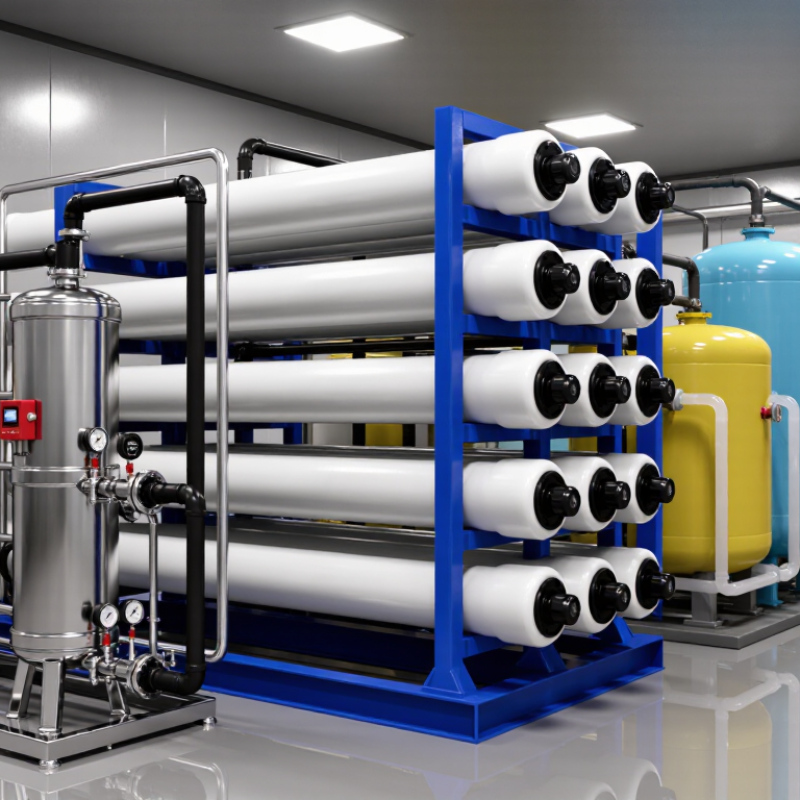
Pretreatment protects the membrane from clogging and damage. Screens remove larger particles, while cartridge filters capture finer solids. Chemical dosing may control scale, though incorrect dosing creates new problems. A high-pressure pump then supplies steady pressure to the membrane vessels. The vessels hold the membrane elements securely. Inside them, purified water passes through the membrane, producing permeate. Concentrated wastewater leaves through a separate stream.
Pressure gauges, flow meters, conductivity sensors, and automatic valves help operators detect changes. A sudden conductivity increase may indicate membrane damage or poor sealing. Cleaning equipment is also essential because fouling develops gradually. Post-treatment can adjust pH or add minerals, depending on the intended reuse. Storage tanks and sanitary piping protect treated water after filtration. No system is perfect. In practice, feed-water testing and regular maintenance matter more than impressive equipment lists. Some designs also underestimate reject-water management, which can reduce efficiency and complicate operation.
What Is a Wastewater RO System? – Main Components of a Wastewater RO System
A wastewater reverse osmosis system uses several treatment stages to reduce suspended solids, fine particles, dissolved salts, and other contaminants. The chart shows representative particle-size or filtration scales for common system components. Values vary with equipment design, feedwater quality, and operating conditions.
Typical components include screening or pretreatment, multimedia filtration, cartridge filters, a high-pressure pump, RO membrane pressure vessels, and post-treatment controls. Pretreatment protects the RO membranes from fouling, while the membrane stage provides the primary dissolved-contaminant separation.
Types of Wastewater Treated by RO Systems
What Is a Waste Water RO System?
Types of Wastewater Treated by RO Systems
A wastewater reverse osmosis (RO) system uses pressure to push water through a semi-permeable membrane. The membrane blocks many dissolved salts, metals, microorganisms, and small organic compounds. Clean water passes through, while concentrated contaminants leave as reject water. In practice, RO usually needs pretreatment. Screens, cartridge filters, or biological treatment help reduce fouling and membrane damage.
Municipal wastewater can receive RO treatment after biological processing and fine filtration. The treated water may support industrial reuse, cooling systems, or controlled irrigation. Industrial wastewater is another common application. Metal-finishing, chemical, pharmaceutical, and electronics facilities may use RO to reduce dissolved solids and specific contaminants. Food and beverage wastewater can also be treated when oils, proteins, and suspended particles are removed first. Textile wastewater often requires additional color and organic-load treatment before RO.
Agricultural drainage and landfill leachate may also enter an RO process, but their chemistry can vary sharply. High ammonia, hardness, or organic matter may require specialized pretreatment. No membrane performs perfectly. A field system can lose flow when operators underestimate seasonal changes or cleaning needs. That mistake is common. Reliable design depends on laboratory testing, regular water analysis, pressure monitoring, and a realistic plan for managing the concentrated reject stream. RO is powerful, but it is not a complete answer for every wastewater source.
Benefits, Limitations, and Maintenance Requirements
A wastewater RO system treats contaminated water by pushing it through a semi-permeable membrane. Pressure separates dissolved salts, metals, and many organic compounds from the water stream. The purified portion becomes permeate. The concentrated portion becomes reject water. In field operations, feed-water testing matters more than product brochures. Membrane performance changes with temperature, pH, turbidity, and chemical exposure.
The main benefit is reliable removal of dissolved contaminants. Treated water may support reuse in cooling, washing, or process applications. It can also reduce demand for freshwater supplies. However, RO does not destroy pollutants. It concentrates them, creating a reject stream that needs controlled handling. Energy use can be significant, especially with high salinity. Pretreatment is essential. Suspended solids and biological growth can quickly block the membrane. Not every wastewater source suits RO.
Maintenance requires routine measurement, not guesswork. Operators should record pressure, flow, conductivity, and recovery rates. A sudden conductivity increase may indicate membrane damage or poor sealing. Cartridge filters often need frequent replacement. Membranes may require chemical cleaning when pressure rises or flow falls. Cleaning chemicals must match the membrane material and wastewater chemistry. Poorly planned cleaning can shorten membrane life. Sometimes, operators wait too long. That mistake is expensive. Regular laboratory testing still deserves attention, even when daily instruments appear normal.