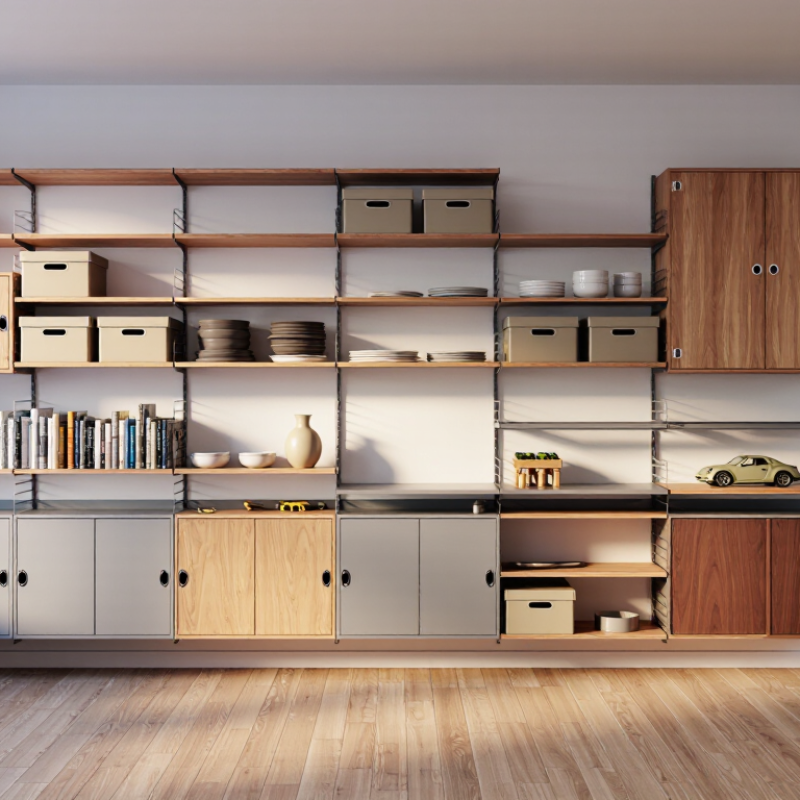
What Is a Shelf Panel and How Is It Used?

A Shelf Panel is more than a flat board placed between two supports. It is a working surface that organizes objects, carries weight, and shapes how a room feels. In homes, stores, offices, and workshops, Shelf Panel systems can hold books, dishes, tools, display products, or storage boxes. Their performance depends on material, thickness, span, edge support, and installation quality.

Storage designer Lisa Adams has emphasized, “The key to a successful closet is making the space work for your lifestyle.” That principle applies to every Shelf Panel project. A kitchen shelf should resist moisture and daily cleaning. A garage panel may need stronger support for heavy containers. A retail shelf must remain stable while presenting products clearly. Small details matter. A sagging center, rough edge, or loose bracket can quickly reduce confidence in the entire system.

This article will explain what a Shelf Panel is, how it is constructed, and where it is commonly used. It will also examine popular materials, including laminated board, plywood, solid wood, and metal. Practical choices are rarely perfect. A thicker panel may provide better strength but reduce usable space. A low-cost material may look attractive but fail under repeated loading. Careful measurement helps, although real rooms are seldom perfectly square. Understanding these limits allows homeowners, designers, and installers to choose safer, more durable shelving solutions.

What Is a Shelf Panel and How Is It Used?

Shelf Panel Definition: A Horizontal Board in the 32 mm Cabinet System

A shelf panel is a horizontal board that creates usable storage inside a cabinet. In the 32 mm cabinet system, its position follows a regular drilling pattern. Vertical holes are commonly spaced 32 mm apart, while shelf-pin holes often sit 37 mm from the cabinet front. This repeatable geometry lets installers move a shelf without rebuilding the cabinet.

The panel carries dishes, files, tools, or folded clothing. Its performance depends on span, thickness, material, and edge support. A 600 mm panel loaded with ceramic plates needs more stiffness than one holding light towels. Particleboard, plywood, and solid wood also behave differently under constant weight. A level shelf can still sag later. That detail is easy to miss.

Demand for adaptable storage is growing. The 2024 Houzz U.S. Kitchen Trends Study reported cabinet upgrades in 76% of renovated kitchens. Grand View Research also valued the global modular kitchen market at about 28 billion U.S. dollars in 2023. These figures help explain the popularity of adjustable cabinet systems, but they do not guarantee good shelf design. In practical installation work, accurate hole alignment matters as much as the panel itself. A few millimeters of error can make pins bind or doors appear uneven. The 32 mm system is efficient, not flawless. Check the load before filling the shelf.

What Is a Shelf Panel and How Is It Used? - Shelf Panel Definition: A Horizontal Board in the 32 mm Cabinet System

Data Dimension Shelf Panel Information Practical Notes
Definition A shelf panel is a horizontal board installed between or against cabinet sides to support stored items. It can be fixed, adjustable, pull-out, or removable depending on the cabinet design.
Role in the 32 mm Cabinet System The panel is positioned within a cabinet construction based on a 32 mm modular drilling and component-spacing principle. The 32 mm principle helps coordinate shelf positions, hinge locations, drawer components, and cabinet hardware.
Primary Function To create a stable horizontal storage surface inside a cabinet, bookcase, wardrobe, pantry, or shelving unit. The panel also divides a cabinet into usable vertical compartments.
Common Materials Particleboard, medium-density fiberboard, plywood, solid wood, and laminated furniture board. Material selection affects weight, moisture resistance, screw-holding strength, appearance, and load performance.
Typical Thickness Common furniture-panel thicknesses include approximately 16 mm, 18 mm, and 19 mm. The correct thickness must match the cabinet construction, shelf supports, edge treatment, and hardware clearances.
Width and Depth Width is normally the clear distance between cabinet sides; depth is selected according to the cabinet body and intended storage. Allow clearance for doors, drawers, hinges, drawer slides, and rear panels before finalizing dimensions.
Adjustability Adjustable shelves are supported by shelf pins fitted into a vertical series of holes. A common 32 mm system uses hole rows arranged on a 32 mm vertical pitch, although exact drilling specifications can vary.
Edge Treatment Exposed edges may receive veneer, laminate edging, PVC edging, solid-wood lipping, or paint-grade finishing. Edge treatment improves appearance and helps protect porous board materials from impact and moisture.
Installation Methods Typical methods include shelf pins, support brackets, cleats, dowels, screws, cam fittings, or concealed hardware. The fixing method should suit the panel material, expected load, span, and whether the shelf must be removable.
Load Capacity Load capacity depends on material, thickness, shelf span, support spacing, fixing quality, and load distribution. Heavy items should be placed near supports. Long unsupported spans may require a thicker panel, a center support, or a reinforcing edge.
Common Applications Kitchen cabinets, wardrobes, office storage, bookcases, bathroom units, utility cabinets, and retail fixtures. The panel can store dishes, books, clothing, files, containers, tools, and other household or commercial items.
Fixed vs. Adjustable Fixed panels add rigidity to the cabinet, while adjustable panels allow the storage height to be changed. A cabinet may combine both types to balance structural strength and storage flexibility.
Key Design Checks Check the opening size, panel thickness, support positions, drilling pattern, edge finish, clearances, and expected load before installation. Accurate measurement helps prevent sagging, interference with doors or drawers, and unstable shelf connections.

Core Materials and Standard Thicknesses: 16–25 mm Is Common

What Is a Shelf Panel and How Is It Used?

A shelf panel is a flat board supported by brackets, side panels, or concealed hardware. It carries books, tools, tableware, and other household loads. Its core material strongly affects stiffness, weight, moisture resistance, and screw holding.

Common shelf panels measure 16–25 mm thick. A 16 mm particleboard panel suits light storage and shorter spans. A 18 mm MDF panel offers a smoother surface for painted furniture. A 25 mm plywood panel usually performs better across wider openings.

However, thickness alone does not prevent bending. Span, panel depth, load weight, and support spacing matter more than many buyers expect. EN 312 and ANSI A208.1 classify panel performance by intended use, not appearance.

The U.S. Environmental Protection Agency also lists formaldehyde emission limits of 0.09 ppm for particleboard and 0.11 ppm for MDF under TSCA Title VI.

These figures make core selection a health and compliance issue, not only a design choice.

FAO’s Forestry Production and Trade data shows wood-based panels remain a major global material group, exceeding 400 million cubic metres annually in recent reporting. That scale does not mean every panel is suitable for shelving.

Tips: Keep supports closer than 600 mm for heavy books. Seal exposed edges near sinks or laundry areas. Check the supplier’s span tables before cutting. I have seen attractive 16 mm shelves sag within months. A thicker board helped, but an added center support worked better. Do not assume “solid” means stronger; poor support design can defeat expensive materials.

Shelf Panel Dimensions: Typical Depths of 250–600 mm for Storage

A shelf panel is the flat surface that supports stored items inside a cabinet, wall system, or freestanding unit. Its depth determines how much space objects need from front to back. Typical shelf panel depths range from 250 to 600 mm for general storage.

A 250 mm panel works well for books, small boxes, and display items. Depths of 300–400 mm suit kitchen goods, folded clothing, and office supplies.

Panels measuring 450–600 mm provide room for large containers, tools, or archive boxes. However, deeper shelves can become awkward to reach. Items may also disappear behind the front row.

Measure the available wall or cabinet space carefully. Allow a small clearance for doors, hinges, and uneven surfaces. A 600 mm panel may fit on paper but feel excessive in a narrow room. Load capacity depends on panel thickness, material, span, and support spacing. Solid timber and engineered boards behave differently under weight. Check technical data before installation.

In my workshop, a 300 mm shelf looked suitable for storage boxes. It was not. The boxes fit, but their lids opened poorly near the wall. I later moved them to a 400 mm panel and improved access. This small mistake showed that usable depth matters more than maximum depth. Do not guess. Measure the objects you actually use.

Load Capacity Factors: Span, Material, Thickness, and Support Spacing

A shelf panel is a flat board supported at two or more points. It holds books, tools, containers, or display items. Its safe load depends on more than the panel’s advertised thickness. A 900 mm span bends more easily than a 450 mm span under the same weight. Longer spans create greater bending stress and visible sag.

Material changes performance. Solid wood, plywood, particleboard, and metal panels respond differently to moisture, impact, and sustained weight. Thickness also matters because small increases can improve stiffness significantly. Support spacing is equally important. Closely placed brackets reduce the unsupported span and share the load more effectively. In practice, evenly distributed books are safer than one heavy box placed at the center. Check the manufacturer’s tested rating whenever available, and consider deflection, not only sudden failure. A calculation may look correct but still ignore damp conditions or repeated loading.

Tips: Measure the actual span between supports, not the shelf’s full length. Place brackets near the ends, while keeping enough edge distance for secure fastening. Test a loaded shelf gradually with ordinary items. Watch for creaking, cracks, loose hardware, or a dropping center. These signs need attention. I would also leave a safety margin, because real rooms are rarely as controlled as drawings suggest. A careful design may use more supports than initially planned.

Shelf Panel Applications and Installation: Cabinets, Racks, and Display Units

What Is a Shelf Panel and How Is It Used?

A shelf panel is a flat, load-bearing surface installed inside cabinets, racks, or display units. It may use solid wood, laminated board, metal, or tempered glass. The material should match the expected weight and environment. A kitchen cabinet panel may hold dishes, while a retail rack may support boxed goods. These uses demand different thicknesses, edges, and fixing methods.

In cabinets, installers often measure the internal width before cutting the panel. Leave a small clearance on both sides. This prevents binding when humidity changes the material’s size. Adjustable shelf pins provide flexible storage, but each pin must sit fully inside its hole. A practical check is simple: place the panel, press both front corners, and watch for movement. If it rocks, the supports may be uneven or incorrectly positioned.

Racks usually need stronger brackets, crossbars, or reinforced panels. Check the load rating, span length, and wall condition before installation. A long panel can sag even when its total weight seems acceptable. Display units require a different balance. Clear glass improves visibility, while a solid panel can create a warmer visual background. I have found that appearance often receives more attention than stability. That is a mistake. Secure fasteners, smooth edges, and rounded corners matter, especially in busy spaces. Installation plans are rarely perfect on the first attempt, so test the unit with real items before final tightening.

What Is a Shelf Panel and How Is It Used?

Shelf panels are horizontal surfaces installed inside cabinets, storage racks, and display units. Their thickness is commonly selected according to the expected load, span, and required stability.

Typical shelf panel thickness by application. Cabinet and display shelves commonly use 18 mm panels, while rack and utility shelving often requires thicker panels for longer spans and heavier loads. Actual specifications should be confirmed according to the material, support spacing, and load requirements.

Article Source:

Cart Summary

Subtotal: $0