





What Are the Top Medical Roll Paper Types in 2026?

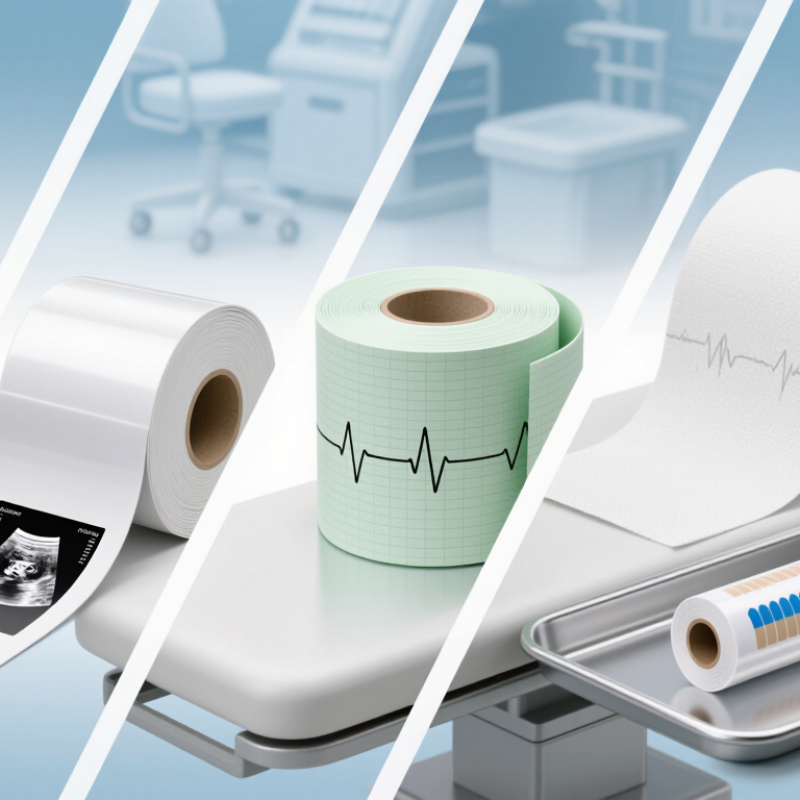
Medical Roll Paper may look like a simple consumable, but its coating, surface, and printer compatibility affect daily clinical work. Common types include ECG recording paper, ultrasound thermal paper, fetal-monitor paper, examination table paper, and sterilization indicator roll stock. Each serves a different task. A clear trace on an ECG strip matters; so does a roll that feeds smoothly through a busy exam-room printer.

The scale of healthcare helps explain why these small supplies deserve careful selection. WHO’s Global Health Expenditure Report 2023 estimated worldwide health spending at US$9.8 trillion in 2021, or 10.3% of global GDP. That figure is broad context, not a measurement of medical paper demand. Standards add a more practical lens: ISO 11607-1 addresses packaging for terminally sterilized medical devices, while ISO 11140-1 covers chemical indicators used in sterilization processes. These standards do not rank paper rolls, but they clarify why intended use and validated compatibility matter. A neat category list can still mislead. In 2026, “top” should mean suitable for the device, readable in practice, and supported by reliable product specifications—not simply the cheapest roll or the most familiar label. This guide compares the main types and the details worth checking before purchase.

What Are the Top Medical Roll Paper Types in 2026?

ECG Thermal Rolls: 25 mm/s Paper Speed and 10 mm/mV Gain

ECG Thermal Rolls: 25 mm/s Paper Speed and 10 mm/mV Gain

For ECG thermal rolls, 25 mm/s and 10 mm/mV are familiar recording settings. At 25 mm/s, each horizontal millimetre represents 40 milliseconds; a 5 mm box represents 200 milliseconds. At 10 mm/mV, a 1 mV signal should create a 10 mm vertical deflection. These practical conversions help clinicians read intervals and voltage without mental guesswork.

The American Heart Association’s 2007 scientific statement on ECG standardization discusses calibration and recording settings, while IEC 60601-2-25:2011 sets technical requirements for diagnostic electrocardiographs. Small differences matter.

A roll should feed smoothly, with a legible grid and consistent thermal response. A skewed sheet can make a straight trace look less trustworthy. Check the printed calibration mark, not just the device menu: paper speed and gain settings are only useful when the output matches them. A quick 1 mV calibration pulse should measure about 10 mm at the stated gain. Simple, but worth checking.

Thermal paper can fade or darken after exposure to heat, light, or moisture, so storage conditions matter. Paper is not infallible. Roll width, grid contrast, and feed alignment can vary, and busy staff may miss a subtle problem. The standards describe equipment performance; they do not guarantee every printed strip will be easy to interpret. That gap deserves attention in daily practice.

CTG Rolls: Common 1–3 cm/min Fetal-Monitor Speeds

CTG paper speed changes the time scale, not the fetal heart rate itself. Common settings include 1, 2, and 3 cm/min, though the monitor’s manual should confirm its supported speeds. FIGO’s 2015 consensus guidelines on intrapartum fetal monitoring identify 1 cm/min as a recommended chart speed. At that setting, ten minutes of monitoring occupies 10 cm of paper; at 3 cm/min, it occupies 30 cm. Check the printed scale.

A slower setting keeps long recordings compact. A faster setting spreads the trace across more paper, making short timing differences easier to inspect, but it uses the roll more quickly. Faster is not automatically clearer. Staff should read the speed marking before comparing traces, especially when records come from different monitors. The paper also needs the correct width, grid, and thermal coating for the device’s feed and print system. A useful receiving check is simple: load a roll, print a short trace, and verify that the grid and time scale are legible. I would not assume that matching roll dimensions alone guarantees a readable recording.

Ultrasound Printer Rolls: 110 mm Thermal Media and Model Compatibility

Ultrasound printer rolls commonly use 110 mm thermal media, a practical width for producing clear, reviewable images. The paper reacts to heat, so it needs no ink cartridge.

Not quite plug-and-play. A roll can match the width and still fail to fit or print correctly.

Check the printer’s documentation for supported paper width, roll-core diameter, maximum roll diameter, and loading direction. Confirm which side carries the thermal coating; loading it backward may produce a blank or faint image. Model compatibility depends on these details, not just the 110 mm measurement.

I would not treat width as a guarantee. That shortcut can waste a roll.

Image quality also depends on the paper surface and storage conditions. Keep rolls dry, away from direct sunlight, and within the supplier’s stated temperature range.

Dust or creased edges can leave marks across a print, while poor thermal contact may reduce contrast. A short test print helps reveal pale areas, streaks, or feed problems before routine use.

If the image looks weak, check the loading direction and printer settings before assuming the media is defective. Compatibility can be annoyingly specific.

Sterilization Rolls: ISO 11607-1 Sterile-Barrier Requirements

Sterilization rolls are not just paper on one side and clear film on the other. Under ISO 11607-1, materials and preformed sterile-barrier systems must be suitable for the intended sterilization method and protect the contents until use. The barrier must also allow aseptic presentation. Looks are not proof.

In practical terms, a clinic should check the roll’s material specifications, intended sterilization compatibility, and evidence supporting its barrier performance. A pouch seal needs consistent width and strength, with no channels, wrinkles, or lifted edges. For example, a package that leaves the sealer with a glossy crease may deserve inspection rather than a quick pass. ISO 11607-1 addresses materials and sterile-barrier systems; process validation for forming and sealing is covered separately by ISO 11607-2. The distinction matters.

Evidence should reflect real handling, not only a perfect sample on a clean bench. Packaging may face storage, transport, and repeated contact with shelves or trays. Testing and documented evaluation can help show that the barrier remains intact through the stated lifecycle. Staff also need to open the roll without tearing debris toward the sterile contents. I would still question any specification that sounds universal: product design, sterilization method, and local procedures can change what is appropriate. A roll type alone cannot establish compliance.

Other Diagnostic Rolls: Spirometry and Chart-Recorder Media Formats

Spirometry rolls and chart-recorder media serve different diagnostic tasks. Spirometry paper records breathing tests, where clear traces and readable labels help clinicians review results. Depending on the device, the roll may use thermal paper or another specified recording medium. Check the manual for paper width, roll diameter, core size, and feed direction. A roll that looks close may still jam or produce incomplete traces. Small details matter.

Chart-recorder paper often includes a printed grid, which helps users interpret changes over time. Grid spacing, paper width, and chart speed must match the recorder’s settings. These requirements vary by instrument, so there is no single format that fits every system. Storage matters too: heat, light, and humidity can affect some printed records. I have seen paper compatibility treated as an afterthought; it deserves a careful check.

Tips: Compare the roll specifications with the device manual before ordering. Keep paper clean and dry, and test-feed a short section before a clinical session. If the trace looks faint, check the settings and recording surface before assuming the device needs repair. Even then, paper alone may not explain every print issue.

Cart Summary

Subtotal: $0