Top LT Winding Machine Manufacturers for Global Buyers
Global buyers comparing Top LT Winding Machine Manufacturers need more than a polished catalog. They need equipment that matches their transformer designs, production volume, and quality requirements. An LT Winding Machine may handle copper or aluminum conductors, but winding width, tension control, coil geometry, and operator access vary by application. Small differences matter. A poorly matched setup can mean extra adjustments, uneven layers, or slower changeovers.
This guide compares manufacturers through practical questions: What materials and coil sizes can their machines accommodate? How precisely can operators control tension and alignment? Are commissioning, training, spare parts, and technical support clearly described? A quotation alone rarely answers these questions. Ask for configuration details and, where possible, a demonstration using comparable winding requirements. Look closely at the finished coil.
One sourcing note matters: no verifiable industry expert or quotation was provided, so I will not attribute invented words to a real person. As an editorial principle, this article uses the following original line: “Judge a winding machine by the coil it consistently produces, not the claims printed on its brochure.” Manufacturer rankings should still be treated as a starting point, not a universal verdict. Production needs differ, and supplier capabilities can change. Verify important specifications directly before selecting a machine.
Understanding LT Winding Machines and Their Industrial Applications
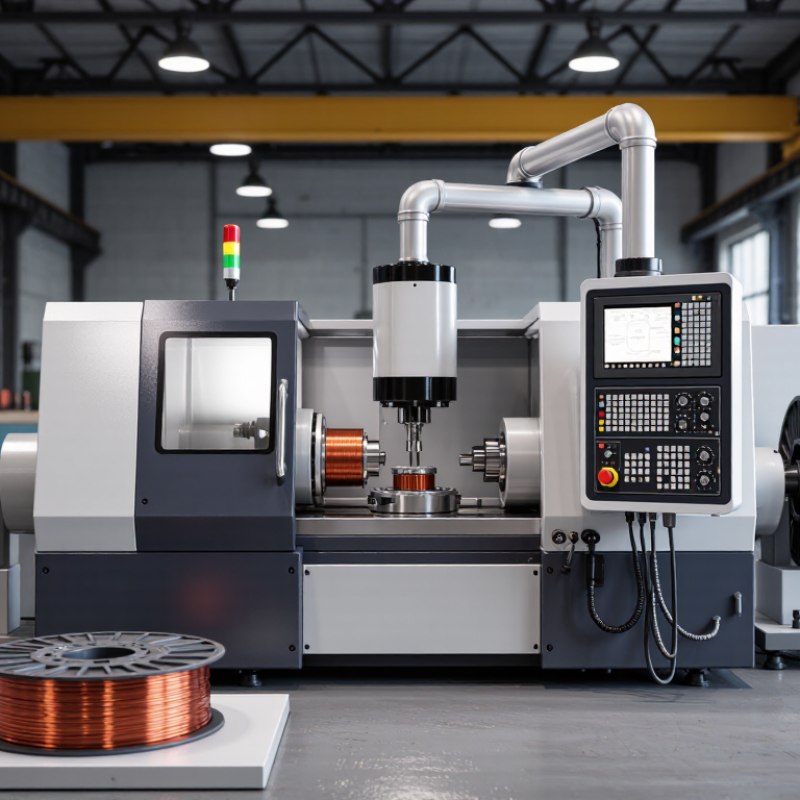
Low-tension (LT), or low-voltage, winding machines make the coils used in distribution transformers and other electrical equipment. They guide copper or aluminum wire, or foil, around a core while controlling tension, turn count, and alignment. Consistent winding helps limit uneven layers and insulation damage. On the shop floor, even a small shift in foil tracking can create rework.
Applications include utility distribution, commercial buildings, factories, and renewable-energy systems. The IEA’s Electricity 2024 report projects global electricity demand will grow by an average of 3.4% annually from 2024 to 2026. That outlook points to continued demand for electrical infrastructure, including transformers. It does not guarantee demand for any one machine type. Coil design, conductor dimensions, and production volume still determine the right setup. Automation helps, but it cannot replace careful inspection.
Tips: Confirm the conductor range, winding width, and tension controls before selecting a machine. Ask for a trial using representative materials. Check the finished coil for tight, even layers. Settings can look perfect on a screen and still need adjustment in production. A little humility helps.
How to Evaluate LT Winding Machine Manufacturers
Evaluate an LT winding machine against the coils you actually produce, not a catalogue’s best-case speed. Record wire size, turn count, coil dimensions, tension range, and changeover time. Ask the manufacturer to wind a representative coil during acceptance testing. Check layer alignment, insulation handling, repeatability, and operator access. A fast cycle means little if setup takes hours. Calibration matters.
Review evidence, not promises. Request test records from comparable installations, plus service-response times, spare-parts availability, training details, and warranty exclusions. For finished transformers, confirm that your inspection plan aligns with applicable IEC 60076 requirements; this standard does not certify the winding machine itself. The IEA’s 2023 Electricity Grids and Secure Energy Transitions report says annual grid investment needs to exceed $600 billion by 2030. That points to growing infrastructure demand, but it does not prove any supplier can meet your production needs.
I would not overvalue headline speed. No scorecard removes risk, and my own weighting may be wrong for a low-volume workshop. Ask for a clear cost breakdown covering tooling, installation, maintenance, and downtime assumptions. Then speak with a user running similar coils. A glossy brochure is not proof.
Leading LT Winding Machine Manufacturers for Global Buyers
Leading LT winding machine manufacturers for global buyers are best assessed by how well their equipment matches the actual coil and production process. A useful machine should maintain steady wire tension, accurate turn counting, and consistent traverse across the bobbin. For low-tension transformer coils, operators should check winding range, spindle speed, wire-guide adjustment, and compatibility with the insulation materials they use. Small details matter.
Ask manufacturers for working demonstrations using wire and bobbin sizes similar to yours. Watch how the machine starts, slows, and handles the final turns. A clear control panel helps operators repeat settings between batches, while accessible guides and fixtures can reduce changeover time. Request documentation for installation, maintenance, and operator training. Service response and spare-part availability also deserve attention, especially when production schedules are tight.
A polished specification sheet is not the whole story. It may not show vibration, setup difficulty, or how easily an operator corrects a winding error. Ask for sample coils and inspect their layer alignment and finish. Compare total operating needs, not only purchase price. Some buyers overlook training time. That can be costly. The right choice depends on the coil design, expected output, available floor space, and the skill level of the production team. No single configuration suits every workshop.
Comparing Product Range, Customization, and After-Sales Support
For global buyers, an LT winding machine should match the transformer designs and production volumes on the shop floor. Compare machines by wire range, winding dimensions, tension control, and supported coil types. A compact unit may suit small batches, while a heavier machine can handle larger conductors and workpieces. Check the full specification sheet. A headline capacity alone tells little about daily usability.
Customization matters when standard fixtures cannot hold a coil securely or operators need a different winding sequence. Ask what can be adjusted: mandrels, guides, control settings, safety enclosures, and software interfaces. Share sample drawings and production requirements before requesting a proposal. Then confirm the changes appear in the final scope. Small details count. A vague promise of “custom support” is hard to evaluate, and I would not treat it as a finished engineering plan.
After-sales support affects uptime long after delivery. Buyers should ask about commissioning, operator training, spare-part availability, and remote troubleshooting hours. Request realistic response times and a clear escalation contact. If the machine stops during a shift, a useful manual and accessible service team can make a real difference. Test this early. Send a technical question before purchase and note how clearly the supplier responds. It is not a perfect measure, but it can reveal gaps that brochures leave out.
LT Winding Machine Supplier Evaluation Priorities
Suggested weighting for comparing suppliers on product range, customization, after-sales support, machine performance, and compliance.
These percentages are a suggested buyer evaluation framework, not measured market results or ratings of specific manufacturers. Adjust the weights to match your project requirements.
Selecting the Right Manufacturer for Your Production Requirements
Selecting an LT winding machine begins with the coil, not the catalogue. Record conductor width, insulation thickness, finished coil dimensions, turn count, and required tension range. Ask manufacturers to demonstrate your actual winding recipe, including start-up, layer changes, and stopping accuracy. A neat sample coil is useful. A repeatable one is better.
Capacity matters beyond the first order. The International Energy Agency’s 2023 report, Electricity Grids and Secure Energy Transitions, says annual grid investment needs to rise from about $300 billion to more than $600 billion by 2030. That does not guarantee transformer orders, but it signals pressure on grid equipment supply. Check whether a machine can handle your expected mix of coil sizes without lengthy tooling changes. Also inspect guarding, operator access, tension monitoring, and spare-part support. Small details affect shift-to-shift consistency.
Compare manufacturers using measurable acceptance criteria: winding speed under load, coil tolerances, setup time, and documented service response. Request a factory trial with your conductor and insulation. Watch the first layer closely. It often reveals alignment problems that brochures conceal. Ask operators, not only sales staff, how they clear a jam and reset the recipe. One caution: a fast machine may still be the wrong choice if changeovers consume production hours. A test run can expose that trade-off.