AirAccess Access Control as a Service Platform with Auto-Cell Networking (ACasS)
Enterprise Hosted Platform - MVPAccess™
New! Napco Access 1 & 2-Door Controllers
Please contact us directly or visit our FAQ page or Video Library.
Toll Free 800-645-9330
Phone 631-842-9400
Fax 631-842-9135
Email: sale@safehomeexpert.com
sale@safehomeexpert.com (Latin America)
Sign up for integrator training seminars. 2 days and 3 day online courses are available from our directory indexed by product.
Learn MoreOffer the one access control solution powerful and flexible enough to protect all of your clients. Continental Access provides state-of-the-art access control software and hardware in an easy-to-implement and easy-to-use access control solution that seamlessly integrate with a wide range of facility management products.
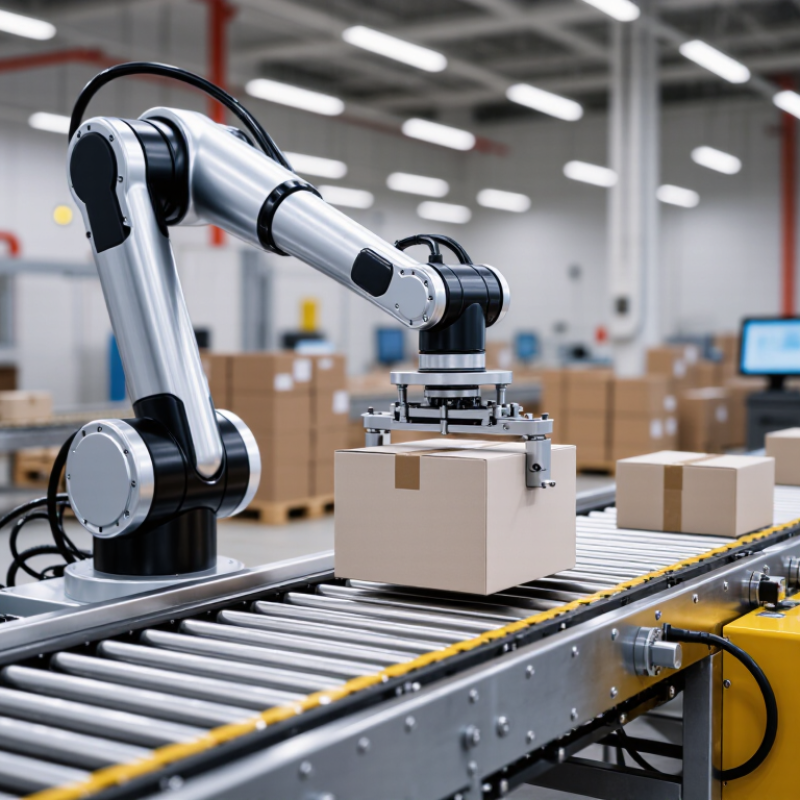
Learn MoreA high speed pick and place robot can move products between conveyors, trays, and packaging stations with impressive speed. In real production, though, speed is only one part of the decision. Accuracy, payload, reach, and cycle time must match the product and the layout. A robot that handles small cartons well may not suit heavier components or a crowded line. The details matter.
This guide to top high speed pick and place robots for sale explores the features buyers should compare before requesting a quote. Look closely at the stated cycle rate, but ask how it was measured. Product size, grip method, spacing, and conveyor speed can all affect actual output. A glossy specification sheet does not show every production condition. That matters.
We also consider end-of-arm tooling, vision options, controls, installation support, and service access. A camera may help locate irregularly placed items, while a carefully selected gripper can reduce slips and product damage. These additions need proper testing with the intended product. Not always easy. Buyers should request a demonstration or sample-run results where possible, then confirm the figures against their own line requirements. Even a strong robot can disappoint if integration is rushed. The best choice is not automatically the fastest model; it is the system that delivers dependable handling, practical maintenance, and a suitable return under real operating conditions. One caveat remains: advertised performance can vary, so verify the assumptions before purchase.
High-speed pick-and-place robots are automated machines that move items from one location to another with short, repeatable motions. A typical system includes a robot arm, gripper, controller, and sometimes a vision camera. The camera can help locate products as they arrive on a moving conveyor. The controller coordinates each pickup and placement. Fast cycles matter, but so do accuracy and consistent handling. A lightweight package and a metal component need different grippers and motion settings.
In production, these robots may sort, orient, load, or pack items. Their speed depends on more than the arm itself. Reach, payload, product spacing, conveyor speed, and the time needed to open or close the gripper all affect output. A quoted cycle time may not match a real line. That detail is easy to overlook. Test the robot with representative products and measure performance under actual operating conditions. Also consider changeover time, maintenance access, and how the cell will be guarded.
Top High Speed Pick and Place Robots for Sale
High-speed pick-and-place performance depends on coordinated motion, not just a fast arm. Servo motors drive each joint, while encoders report position and speed to the controller. The controller compares actual movement with the planned path and corrects deviations in real time. Short, repeated moves demand precise acceleration and braking. Small errors matter. A few milliseconds of vibration can leave a part sliding on the gripper or landing off-center. Vacuum cups or mechanical fingers must match the object’s shape, weight, and surface.
Control software plans the route between pickup and placement, limiting abrupt changes that could cause shaking. Machine vision can locate parts, but lighting, reflective surfaces, and clutter may still confuse detection. The International Federation of Robotics’ World Robotics 2024 report recorded 541,302 industrial robot installations worldwide in 2023. That figure describes the wider industry, not pick-and-place robots alone. When comparing robots for sale, check payload, reach, repeatability, and cycle-time conditions together. A quoted speed may exclude vision checks or conveyor tracking. The uncomfortable detail: faster motion can reduce stability, and real production setups rarely behave exactly like a clean showroom test.
Typical independently controlled axes by robot architecture
Axis counts describe common configurations, not every robot model. The controller coordinates motion along each axis; servo motors move the joints or linear stages, while encoder feedback helps track position. More axes provide additional motion flexibility, but do not by themselves indicate a faster pick-and-place cycle.
High-speed pick-and-place systems usually fall into four types: delta, SCARA, Cartesian, and six-axis articulated robots. Delta robots suit lightweight parts moving across short, open workspaces. Their overhead arms can transfer items between closely spaced conveyor belts. SCARA models handle fast horizontal moves and precise placement, such as loading small components into trays. Cartesian systems use straight-line axes and work well when a process needs a rectangular work area. Six-axis robots offer more reach and orientation flexibility, but added movement can reduce cycle speed.
A useful comparison starts with payload, reach, repeatability, and cycle time under the actual task. The International Federation of Robotics reported 541,302 industrial robot installations worldwide in 2023 in its World Robotics 2024 report. That figure covers industrial robots broadly, not pick-and-place machines alone. Still, it signals a large and expanding automation base. For a real cell, measure the part, gripper, and cable weight together. Small details matter.
Leading models are best compared by configuration rather than name: compact delta units for very light items, medium-payload SCARA units for assembly and packaging, and gantry-style Cartesian systems for larger work envelopes. Check performance using the intended part and travel distance; advertised cycle figures may assume ideal conditions. A slight pause at the belt can change throughput. And sometimes, the “fastest” robot is simply the one that fits the line without awkward handoffs.
When comparing high-speed pick and place robots, look beyond the advertised cycle rate. Ask how the figure was measured, including payload, travel distance, and pause time. A fast empty-arm cycle may not reflect production with a gripper and real parts. Small details matter.
Check payload and reach against the actual layout. A compact robot may move quickly but struggle to reach a distant conveyor without slowing down. Repeatability also matters when placing small components into tight fixtures. Request test results using your parts, not only standard samples. Vision performance should be checked under realistic lighting, especially when parts arrive rotated or slightly misaligned. Even a clean demo can hide awkward changeovers.
Consider uptime, programming effort, and integration with conveyors, sensors, and safety equipment. Ask how routine faults are diagnosed and whether spare parts are readily available. Compare the full production cycle, including loading, gripping, placement, and recovery from missed picks. A short trial across a normal shift can reveal heat-related slowdowns or inconsistent feeding. The test may be less tidy than expected, and that is useful. Record actual cycle times and rejected parts before making a purchase decision.
High-speed pick-and-place robots suit tasks that repeat with tight timing, such as loading small components, sorting packaged goods, or placing parts into trays. The right model depends on the object, not just the advertised cycle rate. A lightweight item may move quickly, while a flexible pouch can wobble or shift during transfer. Small details matter. Check the required reach, payload, and placement accuracy against the actual product and gripper. For mixed products, ask how quickly recipes and end-effector settings can be changed.
Integration starts with the production line. Confirm that the robot can communicate with the conveyor, vision system, safety devices, and plant controls already in use. Ask who supplies mounting hardware, programming, and operator training, and clarify what support is available after installation. A high-speed unit may still create a bottleneck if the feeder presents parts unevenly. Run a timed trial with real products, including awkward shapes and normal line variation. Test it live. Watch for missed picks, jams, and recovery time—not only best-case speed. Compare total installed cost, spare-part availability, and maintenance access. Simulations help, but they can miss small alignment problems; leave room in the schedule for adjustment.
| Robot Configuration | Typical Payload Range | Work Area and Motion | Suitable Applications | Integration Requirements | Key Buying Considerations |
|---|---|---|---|---|---|
| Delta (Parallel) Robot | Often about 1–10 kg, depending on arm design and reach. | Typically a broad, shallow work envelope beneath an overhead frame; designed for rapid, repeated pick-and-place motion. | Food and consumer-goods packaging, sorting, kitting, and handling small parts on conveyors. | Requires a rigid overhead mounting structure, coordinated conveyor tracking when parts are moving, and an end effector suited to product shape and surface. | Check payload including the gripper, usable work envelope, product spacing, washdown or hygiene needs, and performance at the actual pick-and-place distance. |
| SCARA Robot | Commonly around 1–20 kg across available configurations. | Horizontal-plane reach with vertical motion; well suited to fast transfers and insertion tasks within a compact cell. | Electronics assembly, small-component loading, packaging, and transferring parts between fixtures. | Plan for a stable base, accessible fixtures, appropriate part presentation, and controller or PLC communication for interlocks and cycle coordination. | Compare reach, vertical stroke, repeatability, mounting orientation, and required insertion accuracy; verify cycle performance with the real payload and path. |
| High-Speed 6-Axis Robot | Ranges from sub-kilogram models to several tens of kilograms, depending on size and configuration. | Multiple-axis movement provides flexible reach and tool orientation around fixtures, conveyors, and machine openings. | Machine tending, flexible packaging, part transfer, and pick-and-place requiring angled or varied tool approaches. | May require guarding or a risk-assessed collaborative setup, safety-rated control, calibrated tooling, and careful clearance checks across all axes. | Select by payload moment and inertia as well as mass; assess reach, mounting, cable routing, safety measures, and path time rather than maximum joint speed alone. |
| Cartesian / Gantry Robot | Highly variable, from light parts to heavy loads, based on axis and frame sizing. | Straight-line travel along linear axes; can cover long distances or large rectangular work areas. | Palletizing, large-area loading, packaging lines, and transfers between widely separated stations. | Needs a suitably supported frame, axis alignment, cable or hose management, travel-limit planning, and coordination with conveyors or production equipment. | Evaluate total travel, frame deflection, payload at each axis position, floor or overhead mounting, installation space, and access for maintenance. |
| Vision-Guided Pick-and-Place Cell | Determined by the selected robot and gripper; vision equipment does not define robot payload. | Robot type varies; cameras locate, inspect, or identify parts whose position or orientation is not fixed. | Random-bin picking, mixed-part sorting, variable product handling, and quality checks during transfer. | Requires camera and lighting selection, calibration, reliable communications, defined part presentation limits, and testing with representative products. | Confirm detection reliability, image-processing time, lighting stability, part overlap, changeover workflow, and how exceptions or missed picks are handled. |

Note: Payload ranges are broad, indicative market ranges rather than specifications for a particular machine. Actual payload, reach, repeatability, and cycle time vary by model, tooling, mounting, motion path, safety settings, and application. Request an application test using representative parts and the intended end effector before purchase.