AirAccess Access Control as a Service Platform with Auto-Cell Networking (ACasS)
Enterprise Hosted Platform - MVPAccess™
New! Napco Access 1 & 2-Door Controllers
Please contact us directly or visit our FAQ page or Video Library.
Toll Free 800-645-9330
Phone 631-842-9400
Fax 631-842-9135
Email: sale@safehomeexpert.com
sale@safehomeexpert.com (Latin America)
Sign up for integrator training seminars. 2 days and 3 day online courses are available from our directory indexed by product.
Learn MoreOffer the one access control solution powerful and flexible enough to protect all of your clients. Continental Access provides state-of-the-art access control software and hardware in an easy-to-implement and easy-to-use access control solution that seamlessly integrate with a wide range of facility management products.
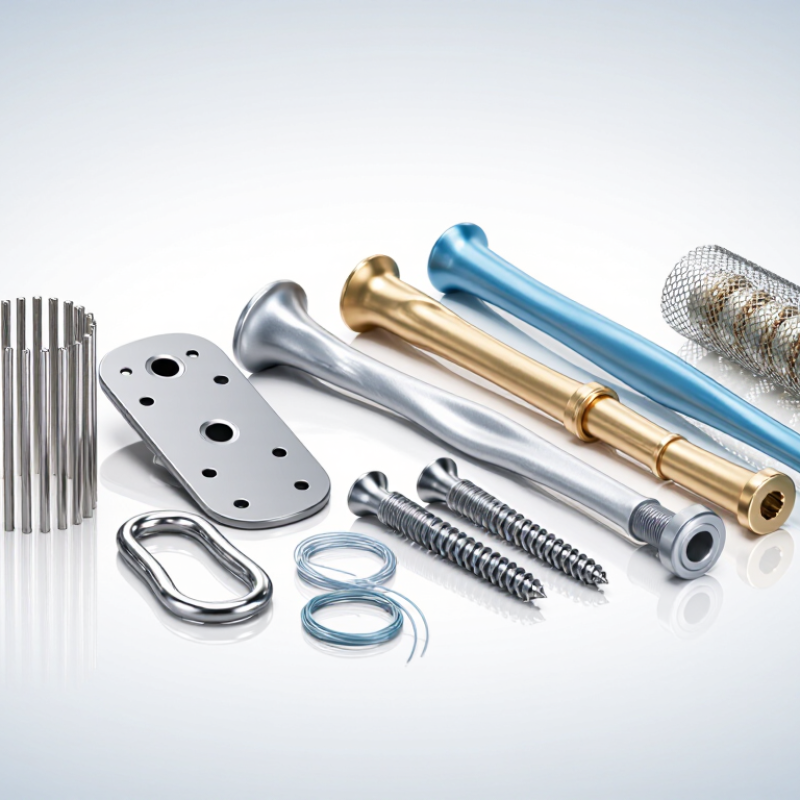
Learn MoreSpine surgery may use implants to stabilize vertebrae, restore spacing, or support a damaged section of the spinal column. Orthopedic Spine Implants include familiar hardware, such as pedicle screws and rods, as well as interbody cages, plates, and artificial discs. Other designs serve more specific needs, including hooks, wires, lateral mass screws, and pelvic fixation systems. Some replace or reinforce a vertebral body.
The names can sound similar. Their roles are not. A screw may anchor a rod, while a cage sits between vertebrae and can help maintain disc height. Materials, shapes, and surgical approaches also vary. A small difference in placement can matter, so implant choice depends on the patient’s diagnosis, anatomy, bone quality, and treatment goals—not on a “best” device for everyone.
This overview introduces ten common implant types and explains their general purposes in plain language. It is educational, not a substitute for advice from a qualified spine specialist. A surgeon can explain which options fit a particular case, along with their limitations and risks. Even a clear overview cannot answer every individual question. That is worth remembering. The terminology can also vary between hospitals and manufacturers, so readers should confirm unfamiliar terms with their care team.
Orthopedic spine implants are medical devices used in selected operations to restore stability, preserve spacing, or support healing. They are not replacement bones. Pedicle screws and rods connect vertebrae and limit unwanted motion; plates stabilize certain segments. Interbody cages sit between vertebral bodies, help maintain disc height, and may hold bone graft material as fusion develops. Artificial discs have a different role: they are designed to preserve motion in carefully selected patients. Small parts, serious jobs.
The scale of spinal surgery does not mean every painful back needs an implant. A 2011 Agency for Healthcare Research and Quality HCUP report recorded U.S. spinal-fusion hospital stays rising from 174,223 in 1998 to 413,171 in 2008. This older dataset counts hospital stays, not current implant use, and is not a treatment recommendation. Device selection depends on the spinal level, diagnosis, bone quality, and surgical plan. Imaging and clinical findings help surgeons assess fit. An implant can stabilize a segment, but it cannot guarantee fusion or eliminate pain. Healing varies. That distinction is easy to understate.
Common implant types and the broad spinal regions where they are used
The values count commonly treated broad regions—cervical, thoracic, and lumbar—not implant frequency or effectiveness. Actual use depends on the diagnosis, anatomy, and surgical plan; some implant types have narrower indications than this simplified comparison suggests.
The top 10 types of orthopedic spine implants serve different purposes: stabilizing vertebrae, supporting healing, or preserving motion. Pedicle screw-and-rod systems anchor segments from the back. Interbody cages sit between vertebrae and help maintain disc-space height. Expandable cages can adjust after placement. Anterior cervical plates support the front of the neck, while artificial discs aim to maintain movement at a treated level. No implant fits every spine.
Other common types include spinal hooks, sublaminar wires, spinous-process plates or spacers, vertebral body replacement cages, and sacroiliac joint fixation implants. Hooks and wires can provide alternative points of fixation. Spacers sit between the small bony projections at the back of the spine. Replacement cages support the spine after removal of a damaged vertebral body. Sacroiliac implants stabilize the joint near the pelvis. Categories can overlap, and names alone do not reveal how an implant will perform in a particular case.
Tips: Ask what each device is intended to do, where it will sit, and what alternatives exist. A surgeon may consider anatomy, bone quality, diagnosis, and expected activity. Bring imaging questions to the appointment. Small details matter. Recovery also depends on the procedure and the person; implant choice alone cannot predict the outcome.
Pedicle screws anchor into the vertebrae and connect to rods, helping hold a spinal segment steady while fusion develops. The rods help maintain alignment. Interbody cages sit between vertebral bodies after a damaged disc is removed; they support disc height and may hold bone graft. Cervical plates attach to the front of the neck vertebrae, often securing a fusion with small screws. Artificial discs serve a different purpose: they replace a worn disc while allowing selected patients to retain motion.
Other implants address specific areas or conditions. Vertebral body replacement cages fill space after a vertebra is removed, while laminar hooks and sublaminar wires provide alternative points of attachment, often in complex deformity surgery. Sacral or iliac screws extend fixation into the pelvis when lower-spine constructs need added support. Spinous-process spacers sit between small rear projections of the vertebrae and may help selected patients with spinal narrowing. Not for every case.
Surgeons choose among these devices based on the affected level, spinal alignment, bone quality, and the planned procedure. A cage that looks suitable on an image may not fit a patient’s anatomy as expected. That detail matters. Implant choice also depends on whether the goal is fusion, stability, or preserved motion; patients should discuss the expected benefits and limitations with their spine-care team.
| No. | Implant type | Typical location or design | How it is used in spine surgery | Common surgical context |
|---|---|---|---|---|
| 1 | Pedicle screw-and-rod system | Screws placed through the vertebral pedicles and connected by rods, usually in the thoracic or lumbar spine. | Provides posterior fixation and helps maintain alignment while a fusion heals. Screws may be placed across one or more motion segments. | Spinal fusion for conditions such as instability, deformity, or selected fractures. |
| 2 | Interbody fusion cage | A spacer placed in the disc space between adjacent vertebral bodies; access may be anterior, posterior, lateral, or transforaminal. | Restores disc-space height and provides a space for bone graft. The goal is for bone to grow through or around the implant and fuse the vertebrae. | Anterior cervical, lumbar, and other interbody fusion procedures. |
| 3 | Anterior cervical plate | A plate secured to the front of the cervical vertebrae with screws. | Stabilizes the operated level or levels after disc removal and fusion, often used with an interbody graft or cage. | Anterior cervical discectomy and fusion (ACDF), when additional fixation is appropriate. |
| 4 | Cervical lateral-mass screw-and-rod system | Screws anchored in the lateral masses of the cervical vertebrae and connected by rods. | Provides posterior fixation in the cervical spine. The specific fixation points depend on anatomy, the levels involved, and the surgical plan. | Selected posterior cervical fusions for instability, deformity, or other conditions requiring fixation. |
| 5 | Spinal hooks | Hooks engage spinal structures such as the lamina; they are connected to rods as part of a fixation construct. | Anchor a rod to the spine when hooks are suitable for the anatomy or when another anchor type is not preferred at a particular level. | Selected thoracic or deformity-fusion constructs; use depends on patient anatomy and surgical judgment. |
| 6 | Vertebral body replacement cage | A structural implant placed in the space left after removal of a vertebral body, often with bone graft. | Reconstructs the anterior column and supports the spine after a corpectomy. Additional fixation may be used to stabilize the reconstruction. | Selected surgeries for vertebral-body damage, tumors, infection, or compression of neural structures. |
| 7 | Artificial cervical or lumbar disc | A motion-preserving implant placed in a disc space after removal of the damaged disc. | Replaces the disc while allowing movement at the treated level. It is intended for carefully selected patients and is not appropriate for every cause of back or neck pain. | Selected cervical or lumbar disc-replacement procedures. |
| 8 | Interspinous process device | A spacer or fixation device positioned between adjacent spinous processes in the posterior spine. | Depending on its design and indication, it may limit extension, support a decompression procedure, or provide supplemental stabilization. It does not replace the function of every type of fusion construct. | Selected lumbar procedures; suitability and supporting evidence vary by device and condition. |
| 9 | Dynamic posterior stabilization system | A posterior construct, commonly using pedicle-based anchors with flexible or motion-modulating components. | Provides stabilization while allowing some controlled movement, rather than aiming for the same rigid fixation as a conventional fusion construct. | Selected lumbar cases; indications and clinical evidence depend on the specific system and patient. |
| 10 | Sacropelvic fixation screws | Long screws anchored into the sacrum and/or pelvis, including iliac or sacral-alar-iliac trajectories. | Extends a spinal fixation construct into the pelvis to improve distal anchorage and help support long fusions that reach the sacrum. | Selected long-segment deformity fusions, complex revisions, and other constructs requiring pelvic fixation. |

These are general implant categories, not a ranking. The implant choice, surgical approach, and need for fusion depend on the diagnosis, anatomy, and individual treatment plan.
Spinal implants rely on material choices as much as their shape. Titanium alloy, commonly Ti-6Al-4V ELI, is used in screws, rods, and cages because it combines strength with corrosion resistance. ASTM F136 specifies requirements for this implant-grade alloy. Its elastic modulus is about 110 GPa, while implant-grade PEEK is typically near 3.6 GPa, according to engineering material data. PEEK can therefore feel less stiff in a construct, but material stiffness alone does not predict healing. Small details matter.
Design adds another layer. Porous or textured titanium surfaces can encourage bone contact, while carefully shaped openings in a cage leave room for graft material. ASTM F2026 covers PEEK for surgical implant applications; some designs add a titanium coating to change the bone-facing surface. Screws may use different thread depths or tip shapes to suit bone purchase, and rods balance contourability with fatigue resistance. These choices affect how loads move through the spine. A polished cage can look precise on a product drawing, yet placement, bone quality, and surgical technique still influence performance. That trade-off is easy to underestimate. Standards define material specifications, not a guarantee that one implant design will suit every patient.
Choosing among rods, screws, cages, plates, artificial discs, and fixation systems starts with diagnosis—not a catalog. Surgeons assess the affected level, instability, deformity, nerve compression, prior operations, and whether motion should be preserved or fused. CT and MRI show bone, discs, and neural structures. Standing and flexion-extension radiographs can reveal alignment and movement. Bone density, smoking history, age, and other health conditions may alter fixation plans. Small details matter. A narrow pedicle or weak vertebral body can change screw size, trajectory, or the need for added support.
Placement also depends on surgical approach, anatomy, and intended load sharing. A cage must fit the disc space without excessive height; screws need secure purchase while avoiding nearby nerves and blood vessels. Surgeons balance stability against tissue disruption and future imaging needs. The choice is not automatic.
AHRQ’s HCUP Statistical Brief No. 170 counted roughly 488,000 inpatient spinal fusion procedures in the United States in 2011. That was about 70% above 2001 levels.
The report describes procedure growth, not proof that fusion suits every patient. It is also dated. Current imaging, clinical findings, and device-specific evidence should inform planning, while patients discuss risks and alternatives with their care team.