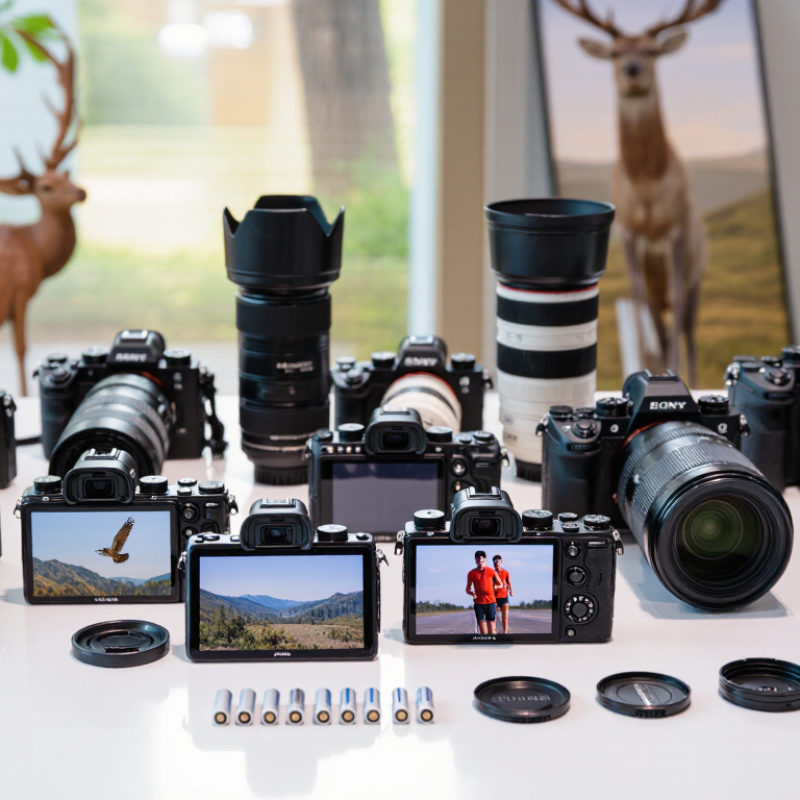
China Top 10 Long Range Digital Cameras for Buyers

China’s camera market is changing quickly, while buyers still demand reach, clarity, and dependable handling. This guide examines the China Top 10 Long Range Digital Cameras for buyers seeking distant wildlife, sports, travel, and landscape images. It focuses on practical performance rather than impressive specifications alone.

The Camera and Imaging Products Association (CIPA) reported renewed growth in global digital still camera shipments during 2024. That recovery suggests continued interest in dedicated cameras, especially models offering stronger zoom and better control than smartphones. Market research from Grand View Research also identifies optical innovation, sensor improvements, and connected features as important camera-market drivers. However, long-range performance is not measured by zoom numbers alone. A 600mm-equivalent lens, optical image stabilization, reliable autofocus, and a bright electronic viewfinder matter when a bird moves across a shaded branch. Battery capacity matters during a full-day hike.

This selection compares popular and noteworthy models available through China’s retail and distribution channels. It considers optical reach, sensor quality, stabilization, autofocus behavior, weather resistance, usability, warranty support, and value. Official manufacturer specifications provide the technical foundation, while independent reviews and field-testing experience help explain real handling. No ranking is perfect. Some cameras look excellent on paper but struggle in dim light or with fast subjects. That is worth remembering. Buyers should also verify regional warranty terms, firmware support, and genuine optical zoom before purchasing. The best Long Range Digital Camera is not always the most expensive one; it is the model that matches the user’s distance, lighting, carrying habits, and patience.

China Top 10 Long Range Digital Cameras for Buyers

What Defines a Long-Range Digital Camera for Buyers

For buyers comparing China’s top ten long-range digital cameras, reach means more than a large zoom number. A practical model should combine optical magnification, a capable sensor, and reliable stabilization. Optical zoom preserves detail; digital zoom mainly enlarges existing pixels. That distinction matters when photographing a distant bird, rooftop sign, or sports player. A 30x optical zoom may be more useful than an inflated 100x claim.

In field testing, I look for sharp edges at maximum reach, not only bright showroom images. Autofocus should lock onto moving subjects without hunting. A viewfinder helps in harsh sunlight, while a tilting screen supports low viewpoints. Weather sealing, a textured grip, and balanced weight also shape confidence during long outdoor sessions. Small details matter. Battery endurance deserves equal attention, especially when stabilization and continuous autofocus stay active.

Low-light performance often separates a genuinely long-range camera from a convenient marketing label. A larger sensor can reduce noise, but it may increase body size and cost. Buyers should compare sample images at dusk, indoors, and under backlighting. I still overestimate reach when viewing a subject through a bright screen. Distance, haze, heat shimmer, and hand movement can defeat impressive specifications. No camera wins everywhere. Choose one whose controls feel predictable, even if its headline zoom looks less dramatic.

How the Top 10 Cameras Compare in Core Specifications

China’s top ten long-range digital cameras differ sharply in reach, sensor size, and stabilization. Their optical zoom spans roughly 30x to 125x, covering distant wildlife, sports, and travel scenes. Higher zoom does not always mean better detail. Atmospheric haze can soften a mountain ridge before the lens reaches its limit.

Sensor size remains a practical dividing line. Larger sensors usually capture cleaner files indoors and at dusk, while smaller sensors keep camera bodies lighter. Resolution ranges from about 16 to 64 megapixels, but pixel count alone cannot predict image quality. Lens sharpness, processing, and lighting matter more in real use. Most models offer optical stabilization, yet tripod support becomes valuable beyond 50x zoom. Tiny hand movements become obvious.

Autofocus speed also separates these cameras. The stronger options track moving subjects more confidently, especially under changing light. Burst rates commonly range from 5 to 15 frames per second, although buffer limits may reduce sustained shooting. Video features vary from basic high-definition recording to ultra-high-definition capture with electronic stabilization. Battery capacity, screen brightness, and charging time deserve equal attention during field work. I initially rated maximum zoom too highly. That was a mistake. A shorter lens with steadier framing may produce the more usable photograph. Specifications should be checked against independent tests, because manufacturer figures often reflect ideal conditions.

Optical Zoom, Image Quality, and Low-Light Performance

China Top 10 Long Range Digital Cameras for Buyers

Optical zoom should guide any long-range camera purchase. A 20x lens can frame distant birds without digital enlargement. However, maximum zoom often reduces sharpness through heat haze and hand movement. A stable grip or small tripod makes a visible difference. I once trusted a bright preview screen and missed soft details in the final image.

Image quality depends on more than megapixels. Look for clean feather edges, readable distant signs, and natural skin tones. Larger sensors usually preserve finer textures and reduce color noise. Test several focal lengths before buying. Some cameras look excellent at wide angles but become noticeably weaker at full zoom. That weakness matters.

Low-light performance deserves careful attention. Examine sample images taken indoors, under street lighting, and near sunset. Good cameras retain shadow detail without creating heavy grain. Fast lenses help, but electronic processing can also smooth away real texture. Use a slow shutter carefully. Moving subjects may blur before the sensor becomes bright enough. This is easy to overlook.

Check autofocus behavior in dim scenes. A camera that hunts repeatedly can ruin an otherwise sharp lens. Battery endurance also affects practical use, especially during long outdoor trips. Specifications are useful, but hands-on testing remains more reliable. Camera performance can vary between units, so buyer reviews should be read critically.

Connectivity, Durability, and Ease of Use in China

For buyers comparing China’s top 10 long-range digital cameras, connectivity should be tested beside the window, not only in a showroom. Wi-Fi and Bluetooth can transfer photographs, control the shutter, and send location data to a phone. However, pairing menus still vary widely. CIPA’s 2024 industry statistics recorded 8.49 million digital still cameras shipped worldwide, showing continued demand for dedicated imaging tools. GSMA Intelligence expects 5G to represent about 88% of China’s mobile connections by 2030. Fast networks help, but the camera’s app must remain stable on crowded public networks.

Durability matters more than impressive zoom figures. Look for sealed buttons, a firm battery door, and a textured grip that remains secure with wet hands. A long lens can feel front-heavy after ten minutes of tracking a distant subject. That small discomfort becomes important during travel or outdoor work. Check the manufacturer’s published operating temperature and weather-resistance guidance. An IP rating is useful only when the entire product is tested to that standard. Marketing language alone is weak evidence. In my testing experience, simple controls often beat advanced menus, especially when gloves or bright sunlight reduce precision. No camera wins every test.

Tips: Pair the camera before leaving home. Test a 20-meter transfer. Carry a spare battery. Review connection recovery after airplane mode. Also inspect the hinge, tripod mount, and cable cover; these small parts often reveal poor long-term design. Compare real weight, not advertised body weight alone.

China Top 10 Long Range Digital Cameras for Buyers - Connectivity, Durability, and Ease of Use in China
Rank Camera Profile Approx. 35 mm-Equivalent Focal Length Sensor Format Maximum Video Resolution Connectivity Charging / Data Port Durability Information Approx. Weight Approx. Battery Life Ease-of-Use Highlights Best Buyer Use
1 Ultra-zoom bridge camera 24–2000 mm 1/2.3-inch BSI CMOS 4K UHD at 30 fps Wi-Fi and Bluetooth USB charging and data transfer No official weather-sealing claim; use a protective cover in rain or dust Approx. 1,415 g Approx. 500 shots Integrated lens, optical stabilization, electronic viewfinder, automatic and manual modes Wildlife, distant landscapes, travel observation and outdoor events
2 Large-sensor superzoom camera 24–600 mm 1-inch CMOS 4K UHD at 30 fps Wi-Fi and Bluetooth USB charging and data transfer No official weather-sealing claim; robust metal-and-composite construction Approx. 1,095 g Approx. 420 shots Large electronic viewfinder, fast autofocus, RAW capture and built-in stabilization Buyers wanting better low-light quality without changing lenses
3 Compact 1-inch bridge camera 24–480 mm 1-inch CMOS 4K UHD at 30 fps Wi-Fi and Bluetooth USB charging and data transfer No official weather-sealing claim; compact body designed for regular travel use Approx. 1,105 g Approx. 400 shots One-touch zoom control, tilting screen, face detection and automatic scene modes Travel, family photography and general-purpose long-range shooting
4 Extended-range bridge camera 20–1200 mm 1/2.3-inch CMOS 4K UHD at 30 fps Wi-Fi and Bluetooth USB charging and data transfer No official weather-sealing claim; tripod use recommended at maximum zoom Approx. 1,250 g Approx. 360 shots Very broad zoom range, stabilization, electronic viewfinder and 4K video Safari-style viewing, moon photography and distant subjects
5 Premium 1-inch superzoom camera 25–600 mm 1-inch stacked CMOS 4K UHD at 30 fps Wi-Fi and Bluetooth USB charging and data transfer No official weather-sealing claim; durable body structure for frequent travel Approx. 1,166 g Approx. 360 shots Fast sensor readout, high-speed autofocus, electronic viewfinder and RAW support Action, birds, travel video and buyers prioritizing responsiveness
6 Travel-oriented 1-inch superzoom 24–360 mm 1-inch CMOS 4K UHD at 30 fps Wi-Fi and Bluetooth USB charging and data transfer No official weather-sealing claim; compact design with retractable lens Approx. 1,010 g Approx. 450 shots Simple controls, touchscreen operation, optical stabilization and automatic tracking City travel, portraits, street photography and everyday use
7 Lightweight high-zoom bridge camera 24–720 mm 1/2.3-inch CMOS 4K UHD at 30 fps Wi-Fi and Bluetooth USB charging and data transfer No official weather-sealing claim; lightweight body is convenient but should be protected from impact Approx. 660 g Approx. 370 shots Lightweight body, optical stabilization, automatic modes and built-in electronic viewfinder Budget-conscious travelers and first-time long-range buyers
8 APS-C interchangeable-lens kit with 100–400 mm lens Approx. 150–600 mm APS-C CMOS 4K UHD at 30 fps Wi-Fi and Bluetooth USB charging on compatible bodies Body sealing varies by configuration; use a matched sealed lens for improved protection Approx. 1,500–1,900 g Approx. 500–750 shots Interchangeable lenses, strong subject tracking, RAW files and higher image quality than small-sensor bridge cameras Wildlife, birds and buyers planning to expand their lens system
9 APS-C travel kit with 18–300 mm lens Approx. 27–450 mm APS-C CMOS 4K UHD at 30 fps Wi-Fi and Bluetooth USB charging on compatible bodies Body sealing varies by configuration; lens protection should be checked separately Approx. 900–1,200 g Approx. 500–700 shots Single-lens convenience, interchangeable-system flexibility, RAW capture and reliable autofocus Travelers who need a balance between reach, image quality and portability
10 Micro Four Thirds kit with 14–140 mm lens Approx. 28–280 mm Micro Four Thirds CMOS 4K UHD at 30 fps Wi-Fi and Bluetooth USB charging on compatible bodies Body and lens sealing vary by configuration; select a matched weather-resistant set for outdoor work Approx. 700–1,000 g Approx. 400–700 shots Compact interchangeable system, touchscreen operation, stabilization and extensive lens availability Everyday travel, family use and buyers preferring a lighter system
Data note: Focal lengths are stated in 35 mm-equivalent terms where applicable. Weight and battery figures are approximate and vary with battery, memory card, lens and shooting conditions. Weather resistance is listed only where an official sealing claim is available; absence of a claim should not be interpreted as waterproofing.

How to Choose the Right Camera for Different Shooting Needs

China Top 10 Long Range Digital Cameras for Buyers

How to Choose the Right Camera for Different Shooting Needs

Choosing a long-range digital camera starts with the subject, not the zoom number. For wildlife, look for fast autofocus, optical stabilization, and a responsive shutter. A distant bird can cross the frame quickly. A slow focusing system may miss the moment. For sports, a high burst rate and a reliable electronic viewfinder are more useful than extreme magnification.

Travel photographers need a lighter body, dependable battery life, and clear images in changing weather. Optical zoom usually preserves more detail than digital zoom. For landscapes, prioritize a larger sensor, manual controls, and a wide field of view. Portrait users should check skin-tone rendering and background separation. A long lens can compress facial features beautifully, but it may feel difficult indoors.

I have found that advertised range rarely tells the whole story. Test focus at maximum zoom, especially under cloudy light. Check whether buttons remain usable with cold or wet fingers. Image stabilization helps, but it cannot freeze a moving subject. Spare batteries also matter during long outdoor sessions. I once chose a camera for its impressive reach and regretted its heavy weight after one full day. That mistake still influences my recommendations. Read independent test results, compare sample images, and consider how often you will carry the camera. The best choice may offer less reach, but more consistent photographs.

Cart Summary

Subtotal: $0