China Top 10 Fashion Raincoat Manufacturers
Choosing a supplier for a Fashion Raincoat is about more than comparing prices or polished product photos. Buyers also need to examine fabric performance, seam construction, zipper quality, sizing consistency, and communication during sampling. Small details matter. A storm can reveal a weak seam faster than a showroom inspection.
Fashion designer Vivienne Westwood’s advice, “Buy less, choose well, make it last,” offers a useful standard for rainwear. A well-made coat should balance weather protection with comfort, fit, and everyday style. Ask manufacturers how they test water resistance, manage repeat orders, and handle custom colors or trims. Request samples, inspect stitching and closures, and clarify specifications before production begins.
This China Top 10 Fashion Raincoat Manufacturers guide is intended to help buyers compare potential partners through practical questions, not impressive claims alone. Manufacturing capabilities and product quality can vary by facility, order, and season. A ranking cannot replace direct verification. That is an imperfect truth, but an important one. Use the profiles as a starting point, then confirm current certifications, sample quality, lead times, and support directly with each company. The best match is not always the largest factory; it is the partner whose process fits your product, volume, and standards.
China’s Fashion Raincoat Manufacturing Landscape
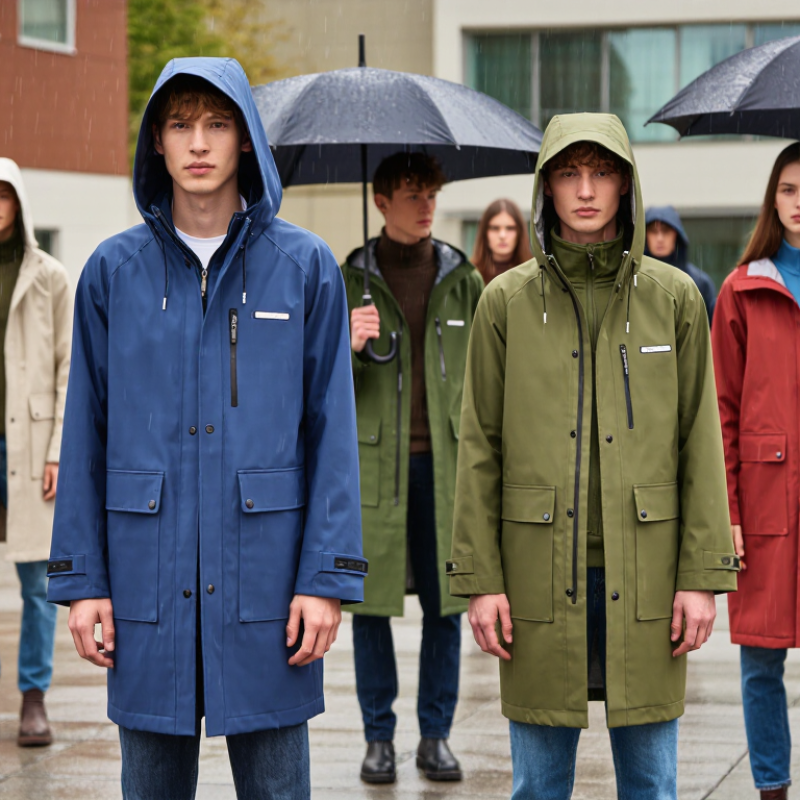
China’s fashion raincoat manufacturing landscape is built on a broad apparel supply base, not a single rainwear cluster. China Customs data cited in the China National Textile and Apparel Council’s 2023 industry review put textile and apparel exports at US$293.6 billion, down 8.1% year on year. The figure covers many product categories, not raincoats alone. Still, it signals substantial sourcing capacity in fabrics, trims, and garment production.
China Customs reported textile and apparel exports of about US$301.1 billion in 2024, up 2.8%. For raincoat buyers, scale matters, but it is only one clue. A factory’s practical capability is better tested through fabric coating consistency, seam sealing, zipper performance, and sample-to-bulk color matching. Ask to inspect finished garments under a steady stream of water. Small details show quickly.
The supply chain can support lightweight packable shells, longer commuter coats, and lined styles with taped seams. Yet export totals do not reveal factory-level defect rates or rainwear-specific capacity. That gap matters. A polished sample may not represent a full production run, and material changes can affect waterproof performance. Request batch test records and confirm which production steps happen in-house. The data is useful, but incomplete.
Materials, Styles, and Production Technologies
Raincoat performance begins with the fabric, not the label. Many manufacturers work with polyester shells, polyurethane coatings, or laminated membranes. Each option balances water resistance, breathability, weight, and cost differently. A lightweight packable coat may feel convenient, but it can trap heat during a long walk. Ask for fabric specifications and sample testing, not just a “waterproof” description. Details matter.
Styles range from simple ponchos to belted trench coats and technical jackets. Adjustable hoods, storm flaps, cuff tabs, and underarm vents affect comfort in real rain. Pattern grading also matters: a coat should allow a sweater underneath without pulling across the shoulders. Digital pattern cutting can improve material use, while seam-taping equipment helps seal needle holes. Some compatible synthetic fabrics can also be joined with ultrasonic welding. It is not suitable for every construction.
Production checks should include seam leakage, zipper function, and consistency across multiple sizes. A useful review compares a finished sample with pieces from a production run. A clean sample can still hide variation. Ask how defects are recorded and corrected, and whether fabric lots receive incoming inspection. No single material or machine guarantees a dependable raincoat; design choices, operator skill, and quality checks have to work together.
Quality Standards and Manufacturing Capabilities
China Top 10 Fashion Raincoat Manufacturers
Quality standards matter more than a polished product photo. When assessing Chinese raincoat manufacturers, ask how they control fabric coating, seam sealing, and garment consistency. Useful checks include water-resistance test reports, seam inspection records, and clear fabric specifications. A factory should explain what each result measures, not just provide a certificate. Test methods and rating systems can differ, so compare like with like.
Manufacturing capability shows in the details. Ask whether the team can develop a sample, adjust pattern fit, and repeat the approved measurements in bulk production. Check how it handles zipper attachment, taped seams, hood construction, and color matching. A reliable supplier should describe its inspection process and how it records defects by production batch. A perfect sample alone proves little. Bulk runs can vary, and even careful factories may need corrective adjustments.
Tips: Request a sample and the relevant test records before confirming an order. Ask for measurements from several finished units, not one. Clarify fabric weight, coating, seam construction, and acceptable defect limits in writing. If a specification sounds vague, pause and ask for a measurable standard. Some trade-offs are unavoidable; thinner fabric may pack easily but feel less durable.
Profiles of 10 Fashion Raincoat Manufacturers in China
China’s fashion raincoat manufacturers differ in more than style. These ten profiles compare practical capabilities: coated-fabric development, seam sealing, lightweight packable construction, outdoor-grade shells, recycled-fiber sourcing, custom prints, rapid sampling, small-batch production, high-volume garment assembly, and children’s sizing. Each capability suits a different brief. A glossy finish may photograph well, but it does not prove reliable water resistance.
Textile Exchange’s Materials Market Report 2024 estimates that global fiber production reached 124 million tonnes in 2023. That figure makes material choices worth checking closely, though it is not specific to rainwear. For each manufacturer, request fabric specifications, sample test results, and details on seam construction. Check the hood’s adjusters, zipper cover, pocket drainage, and how the coat feels over a sweater. Small details matter.
A factory profile should also explain minimum order quantities, sampling timelines, and how defects are handled. Ask whether performance claims apply to the finished coat or only its fabric. That distinction is often overlooked. The comparison is imperfect: public information rarely reveals consistent factory-level testing, and a polished sample can hide production variation. A careful sourcing review should therefore compare physical samples and written specifications, not just catalogue photos.
How to Evaluate and Source from Chinese Manufacturers
Evaluating Chinese raincoat manufacturers starts with the product, not the catalogue. Ask for fabric composition, coating type, seam-sealing details, and a sample made on the intended production line. Textile Exchange’s Materials Market Report 2024 estimates that global fibre production reached 124 million tonnes in 2023. That scale makes material traceability worth checking: request fabric mill details and batch records, not just a generic polyester label. Test samples for water resistance, seam leakage, colour transfer, and zipper function under conditions close to real use. A glossy sample can still hide weak seams.
Then verify whether the factory can repeat the sample at volume. Compare production capacity, minimum order quantity, lead time, defect handling, and inspection procedures in writing. Request recent third-party test reports and confirm that their product details match your fabric and coating. The World Bank’s Logistics Performance Index 2023 reports that goods spend about 2.5 days between port arrival and delivery in high-performing logistics systems, compared with 4.5 days in lower-performing ones. This is a useful reminder: factory readiness and shipping reliability are separate questions. Paperwork can look tidy while a production floor tells another story. I would still question any supplier that refuses a live video walkthrough or cannot explain how rejected pieces are recorded. A small pilot order may cost more per unit. It can reveal problems before they reach a full shipment.