What Is a Sodium Battery and How Does It Work?
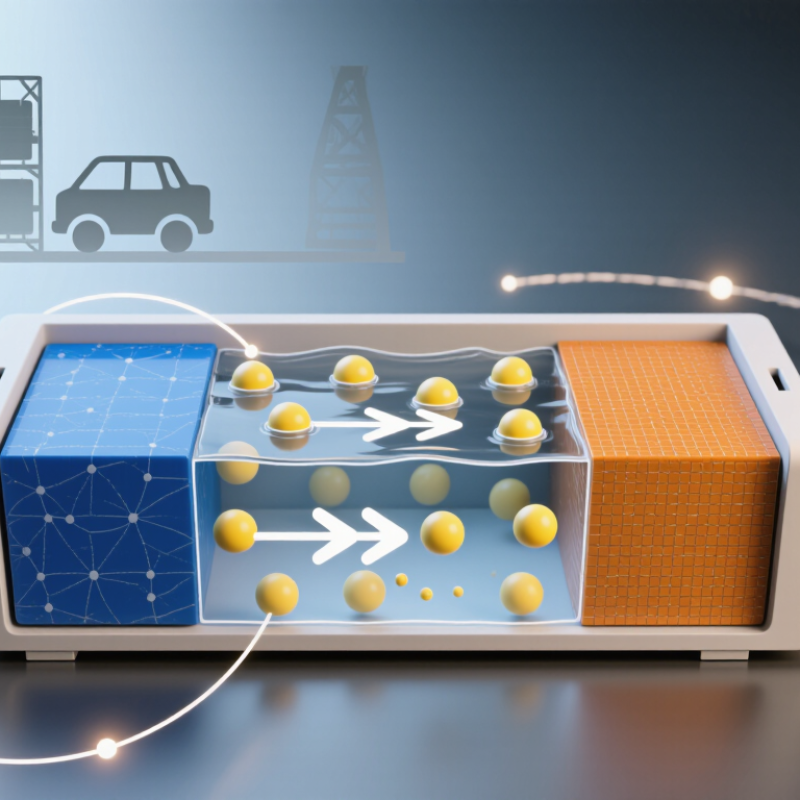
A Sodium Battery stores energy by moving sodium ions between two electrodes. During charging, ions leave the cathode, cross the electrolyte, and enter the anode. During discharge, they travel back, while electrons flow through the external circuit and power a device. Picture ions moving through liquid between thin electrode layers; the chemistry is simple to sketch, but cell design is not.
The International Energy Agency’s Batteries and Secure Energy Transitions report says global battery-cell manufacturing capacity exceeded 2.5 terawatt-hours in 2023, with production heavily concentrated in China. Its Global Critical Minerals Outlook 2024 also tracks sodium-ion projects as a developing part of the battery market. These reports provide useful context, but announced factories are not the same as proven, high-volume supply. That distinction matters.
CATL chief scientist Wu Kai has framed sodium-ion cells as a complement to lithium-ion batteries, rather than a universal replacement. Sodium is abundant, and sodium-based cells may suit applications where cost and supply diversity matter more than maximum energy density. Yet performance varies by chemistry, temperature, and cell design. The technology is promising, not magic. A heavier pack can change what a vehicle or storage system can practically do. This guide explains how the ions move, what the main components do, and where the chemistry still faces trade-offs. The evidence is evolving, and some claims deserve a closer look.
What Defines a Sodium Battery?
A sodium battery usually means a rechargeable sodium-ion battery, not a cell filled with loose sodium metal. Its defining feature is the movement of sodium ions between two electrodes through an electrolyte. The cathode commonly uses a sodium-containing compound, while the anode often uses hard carbon. During charging, ions travel toward the anode; during discharge, they return and drive electrons through an external circuit. The current collectors, separators, and electrolyte complete the cell.
That distinction is easy to blur.
The International Energy Agency’s Global EV Outlook 2024 places sodium-ion cell energy density at roughly 90–160 watt-hours per kilogram, below the upper range reported for lithium-ion cells. This figure helps explain why sodium batteries are often considered for stationary storage, where weight matters less than cost and durability. Sodium is widely available, but abundance alone does not guarantee cheaper batteries: processing, cell design, and production scale still matter.
The chemistry is promising, not magic. In practice, performance varies by design, and a headline energy-density figure cannot describe a full battery system. That nuance deserves attention.
How Sodium Ions Move During Charging
During charging, a sodium-ion battery moves sodium ions from the positive electrode toward the negative electrode. An external charger drives this process. Sodium ions leave sites in the cathode’s layered material and travel through the electrolyte, a liquid or solid medium that carries ions. They pass through a thin separator, which keeps the electrodes apart while allowing ions through.
Electrons take a different route. They move through the charging circuit and enter the negative electrode, often made from hard carbon. There, sodium is stored among carbon layers or inside tiny pores. The ions and electrons must arrive in balance, or charge cannot build safely and efficiently. A separator is not a wall to everything. It blocks direct electrical contact but permits ion movement.
The details vary by battery chemistry. Some materials hold sodium more readily than others, affecting charging speed and capacity. The familiar “ions shuttle across” picture helps, but it leaves out local changes inside electrode particles. Those changes are uneven. A battery is not perfectly uniform, even during a steady charge.
What Is a Sodium Battery and How Does It Work?
How Sodium Ions Move During Charging
During charging, sodium ions move from the cathode through the electrolyte and enter the anode, while electrons travel through the external circuit. The chart shows the ideal ion-transfer rate calculated from Faraday’s constant, assuming one electron passes through the circuit for each sodium ion transferred. Actual cells may differ because of losses and operating conditions.
How a Sodium Battery Produces Electricity During Discharge
A sodium battery stores energy in the chemical balance between its electrodes. During discharge, sodium atoms at the negative electrode release electrons and become sodium ions. That is oxidation. Electrons travel through the external wire, powering a lamp, motor, or sensor. That is the current.
Meanwhile, sodium ions move through the electrolyte and porous separator toward the positive electrode. There, they enter the cathode material as electrons arrive through the circuit, completing the reaction. Many designs use hard carbon at the negative electrode and layered oxides or Prussian-blue-type materials at the positive electrode. Exact chemistry varies. The separator allows ion movement while blocking direct electron flow inside the cell, helping prevent a short circuit.
The voltage comes from the chemical-potential difference between the electrode materials. The IEA’s 2024 Batteries and Secure Energy Transitions report says announced sodium-ion manufacturing capacity could reach about 1.5 TWh annually by 2030. That is a pipeline forecast, not actual output. Capacity figures alone also cannot predict a cell’s performance: temperature, electrode design, and aging affect usable power. I would not treat a large forecast as proof that every design is mature.
Common Sodium Battery Types and Their Uses
Sodium batteries use sodium ions to move between electrodes during charging and discharging. Their types differ in materials, operating temperatures, and practical uses. Sodium-ion batteries are the most familiar emerging option. They can suit home energy storage, renewable-power systems, and some light electric vehicles. Sodium is widely available, but that alone does not make every sodium-ion battery cheap or suitable for every job.
Sodium-sulfur batteries are used mainly in large stationary energy-storage systems. They operate at high temperatures, so insulation and careful system design matter. Sodium-nickel chloride batteries can serve backup power and industrial settings, including sites where dependable storage is valuable. These types are not interchangeable. A battery made for a utility installation may be a poor fit for a small household device.
Tips: Match the chemistry to the task. Check the battery’s operating temperature, expected service life, power output, and maintenance needs. For a home solar setup, compare the full system specifications, not just the cell chemistry. Ask how performance changes in cold weather. Details matter. Sodium-ion technology is still developing, and published figures may reflect specific test conditions. A small caution: “sodium battery” is a broad label, not a guarantee of identical performance.