AirAccess Access Control as a Service Platform with Auto-Cell Networking (ACasS)
Enterprise Hosted Platform - MVPAccess™
New! Napco Access 1 & 2-Door Controllers
Please contact us directly or visit our FAQ page or Video Library.
Toll Free 800-645-9330
Phone 631-842-9400
Fax 631-842-9135
Email: sale@safehomeexpert.com
sale@safehomeexpert.com (Latin America)
Sign up for integrator training seminars. 2 days and 3 day online courses are available from our directory indexed by product.
Learn MoreOffer the one access control solution powerful and flexible enough to protect all of your clients. Continental Access provides state-of-the-art access control software and hardware in an easy-to-implement and easy-to-use access control solution that seamlessly integrate with a wide range of facility management products.
Learn MoreChoosing the right Security And Access Control solution is a practical business decision, not a simple technology purchase. Global buyers must protect offices, warehouses, data centers, and remote facilities. Each location may need different readers, cameras, credentials, and response procedures. A badge reader beside a loading gate faces different risks than a smart lock in a city office.
Bruce Schneier, a respected security technologist, states, “Security is a process, not a product.” That principle remains important for international procurement teams. Strong solutions combine verified identity, role-based permissions, visitor records, alarm monitoring, and reliable audit trails. They should also support local installation, multilingual administration, data protection, and continued technical assistance. Interoperability matters. A new access controller should not create an isolated system that staff cannot manage.
Real-world testing reveals more than attractive product pages. Buyers should examine performance during network outages, power interruptions, crowded entry periods, and emergency evacuations. Vendor certifications, independent testing, warranty terms, and service response times deserve careful review. Cloud platforms may simplify oversight, but they also require clear governance and secure account management.
No shortlist is flawless. That is worth admitting. A biometric feature may improve convenience, yet it can raise privacy and acceptance concerns. A low-cost system may appear efficient, but weak support can become expensive later. This guide examines leading Security And Access Control solutions for global buyers, with attention to resilience, usability, compliance, integration, and measurable operational value. The goal is not to promise perfect protection. It is to help decision-makers ask sharper questions before choosing.
Security and access control are related, but they are not identical.
Security is the broader discipline of protecting people, facilities, systems, and information. Access control decides who or what may enter, use, or change a resource.
A warehouse gate shows the difference clearly. A lock limits entry, while cameras, visitor records, alarms, and trained staff support wider security.
The scope also covers employees, contractors, devices, applications, data, and emergency procedures. Small gaps matter.
Core principles include verified identity, least privilege, separation of duties, traceability, availability, and privacy. Users should receive only the access needed for their roles. Access should change when duties change. It should end promptly when employment or contracts finish.
Buyers should ask who can enter, why, when, and how records are protected. A useful field test involves a temporary visitor badge. Can staff issue it, limit it, track it, and revoke it without confusion?
Global buyers must also assess interoperability, installation conditions, support quality, training, and lifecycle costs. Applicable privacy and safety requirements need careful review.
No design is flawless. Sensors misread. Networks fail. People share credentials. This is where drills and independent audits reveal uncomfortable weaknesses.
I have seen technically strong deployments underperform because daily procedures were unclear. The hardest question is often human: will people follow the control during a busy shift? Honest answers produce safer specifications and more dependable purchasing decisions.
Modern security and access systems now combine several technologies rather than relying on one locked door. Biometric readers verify fingerprints or facial patterns, while encrypted cards and mobile credentials provide practical alternatives. Multi-factor authentication adds another check, such as a temporary code or device approval. Small details matter. A poorly positioned camera can weaken an otherwise strong system.
Artificial intelligence can detect unusual movement, repeated failed entries, or access at abnormal hours. Edge processing reduces the need to send every video stream to a distant server. Zero-trust architecture also checks users, devices, and permissions continuously. The 2024 Data Breach Investigations Report found that human involvement appeared in 68% of analyzed breaches. This supports stronger identity verification and staff training, not technology alone. Systems should also use encryption, audit logs, role-based permissions, and automatic credential expiry.
Interoperability is increasingly important for global buyers. Open standards can connect readers, sensors, visitor platforms, and emergency controls across different sites. The 2024 Cost of a Data Breach Report reported an average breach cost of 4.88 million U.S. dollars, showing why access data needs careful protection. However, advanced analytics can create privacy concerns and false alarms. No system is perfect. A reliable deployment tests lighting, network failure, backup power, and accessibility before launch. It also reviews permissions regularly, because an old account can become a quiet security gap.
| Technology or Solution | Primary Security Function | Typical Authentication or Detection Method | Common Deployment Environment | Key Advantages | Important Considerations | Relevant Standards or Protocols |
|---|---|---|---|---|---|---|
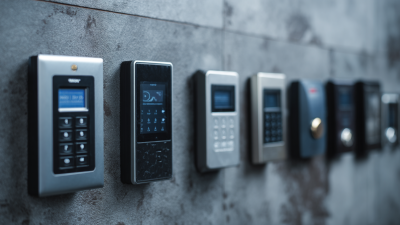
| Smart Cards and Contactless Credentials | Controls entry to doors, restricted areas, equipment rooms, and shared facilities. | Cryptographic credentials stored on contact or contactless cards and presented to a reader. | Corporate offices, campuses, industrial sites, healthcare facilities, and government buildings. | Fast verification Centralized administration Easy credential revocation | Requires card issuance, reader maintenance, lifecycle management, and protection against credential sharing. | ISO/IEC 14443, ISO/IEC 7816, AES-based cryptography, OSDP for reader communication. |
| Mobile Access Credentials | Replaces or supplements physical badges for identity verification and door access. | Encrypted credentials delivered to a mobile device using NFC, Bluetooth Low Energy, or secure application technologies. | Offices, multi-site enterprises, residential properties, hotels, and temporary workspaces. | Remote provisioning Reduced badge costs Flexible permissions | Depends on device security, battery availability, operating-system support, and user privacy controls. | NFC, Bluetooth Low Energy, TLS, mobile device security frameworks, FIDO2 where supported. |
| Biometric Authentication | Verifies a person by using a physical or behavioral characteristic. | Fingerprint, facial, iris, palm, or vein pattern matching against an authorized template. | High-security areas, data centers, laboratories, border facilities, and workforce access points. | Difficult to share Convenient verification Strong identity binding | Requires privacy governance, liveness detection, template protection, fallback methods, and compliance review. | ISO/IEC biometrics standards, ISO/IEC 30107 for presentation attack detection, applicable privacy laws. |
| Multi-Factor Authentication | Reduces account takeover and unauthorized system access by combining independent factors. | Combination of something known, possessed, or inherent, such as a password, security key, mobile approval, or biometric. | Access-control platforms, security management consoles, remote access portals, and enterprise applications. | Layered protection Supports remote access Reduces password risk | Enrollment, recovery procedures, accessibility, phishing resistance, and emergency access must be planned. | FIDO2, WebAuthn, TOTP, HOTP, SAML, OAuth 2.0, OpenID Connect. |
| Video Surveillance and Intelligent Analytics | Monitors sites, supports incident investigation, and detects defined visual events. | Network cameras combined with motion detection, object classification, intrusion zones, or occupancy analysis. | Perimeters, entrances, warehouses, transport facilities, retail sites, and critical infrastructure. | Visual verification Event evidence Remote monitoring | Requires privacy controls, retention policies, lighting assessment, network capacity, and human review of alerts. | ONVIF, RTP/RTSP, TLS, role-based access control, applicable video privacy regulations. |
| Intrusion Detection Systems | Detects unauthorized entry, tampering, forced doors, glass breakage, or movement in protected zones. | Magnetic contacts, motion sensors, vibration sensors, glass-break sensors, pressure sensors, or perimeter beams. | Commercial buildings, warehouses, homes, utilities, logistics centers, and restricted perimeters. | Early warning Wide sensor choice Alarm integration | False-alarm reduction, sensor placement, backup power, environmental conditions, and response procedures are important. | EN 50131, IEC 62676 where video verification is integrated, supervised alarm communication protocols. |
| Intercom and Visitor Management | Verifies visitors and manages temporary or scheduled access. | Audio or video communication, identity checks, invitations, QR codes, temporary credentials, and host approval. | Office reception areas, residential buildings, schools, hospitals, industrial sites, and gated facilities. | Controlled visitor flow Audit records Remote approval | Visitor data retention, accessibility, emergency operation, identity verification quality, and integration with doors must be addressed. | SIP, ONVIF, HTTPS, QR-code standards, role-based permissions, local privacy requirements. |
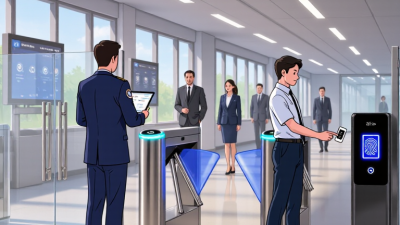
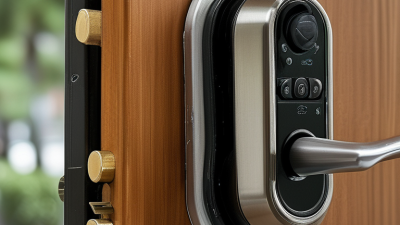
| Physical Access Control Systems | Manages doors, gates, elevators, turnstiles, credentials, access schedules, and security events. | Credential validation against local or cloud-based authorization rules, with monitored door hardware. | Enterprise campuses, factories, airports, universities, healthcare sites, and multi-tenant buildings. | Centralized control Detailed audit trails Scalable permissions | System availability, offline operation, cybersecurity, hardware compatibility, and integration capability affect total cost. | OSDP, Wiegand legacy interfaces, BACnet or other building-management integrations, TLS, RBAC. |
| Cloud and Hybrid Security Management | Provides centralized administration, reporting, monitoring, and software updates across multiple sites. | Web-based management with locally controlled devices and synchronized authorization policies. | Global enterprises, distributed retail, logistics networks, property portfolios, and remote facilities. | Multi-site visibility Remote administration Simplified scaling | Internet dependency, data residency, service availability, vendor interoperability, and subscription costs require evaluation. | TLS, REST APIs, SAML, OAuth 2.0, ISO/IEC 27001-aligned controls, regional data-protection requirements. |
| Encryption and Security Monitoring | Protects security data and identifies suspicious activity across devices, networks, and administrative accounts. | Encryption in transit and at rest, centralized logs, anomaly detection, alerts, and security operations workflows. | Access platforms, surveillance systems, data centers, cloud services, and integrated building systems. | Data confidentiality Incident visibility Accountability | Key management, log integrity, alert prioritization, patching, network segmentation, and incident response should be defined. | AES, TLS, IPsec, syslog, SIEM integration, NIST Cybersecurity Framework, ISO/IEC 27001 controls. |
| Wireless Asset and Location Tracking | Tracks valuable assets, staff safety devices, vehicles, or equipment within defined areas. | RFID, Bluetooth Low Energy beacons, Wi-Fi positioning, GPS, or ultra-wideband ranging. | Warehouses, hospitals, manufacturing plants, campuses, logistics hubs, and high-value storage areas. | Improved visibility Theft deterrence Operational efficiency | Accuracy varies by technology and site design; battery life, radio interference, privacy, and infrastructure coverage matter. | RFID air-interface standards, Bluetooth Core Specification, IEEE 802.11, GNSS, IEEE 802.15.4z for UWB ranging. |
| Emergency Lockdown and Life-Safety Integration | Supports rapid response to threats while coordinating access decisions with emergency procedures. | Centralized commands, emergency inputs, alarm triggers, lockdown schedules, and supervised control paths. | Schools, healthcare facilities, public buildings, industrial sites, and critical infrastructure. | Rapid response Coordinated actions Event traceability | Must preserve safe egress, comply with fire and building codes, provide manual overrides, and undergo regular testing. | NFPA 72, NFPA 101, local fire codes, emergency communication requirements, supervised control circuits. |

Global buyers should evaluate security providers beyond product features. A polished demo can still hide weak support, unclear ownership, or expensive maintenance. Ask how the provider protects credentials, encrypts sensitive data, and records administrator actions. Request current security documentation, independent assessment reports, and a clear explanation of testing methods. Do not accept vague assurances. Require evidence.
During supplier interviews, examine experience with sites similar to yours. A provider serving warehouses may not understand hospitals, schools, or distributed offices. Check integration with existing doors, identity systems, cameras, alarms, and visitor workflows. Ask for a live pilot with realistic users, failed credentials, network outages, and emergency procedures. Measure response times. Then review the findings with your security and operations teams. This reveals practical weaknesses that a sales presentation often misses.
Reliability depends on more than uptime claims. Evaluate support coverage, replacement processes, software update controls, training, and local service capacity. Request customer references, but verify them independently where possible. Study contract terms for data ownership, export options, and exit assistance. The cheapest option may create hidden risk through fragmented tools or limited expertise. No scorecard is perfect. Revisit it after the pilot, because your first assumptions may be wrong. A provider willing to discuss failures openly is often more trustworthy than one promising flawless performance.
Global access control programs must satisfy different privacy, security, and workplace rules. The 2024 Data Breach Investigations Report found that human involvement appeared in 68% of breaches. That figure supports stronger identity checks, clear approval paths, and regular access reviews. However, compliance is not achieved by installing stricter readers alone. Teams should map each user role to local requirements, retention limits, and audit obligations before deployment.
Integration often creates the hardest problems. A site may use badge readers, mobile credentials, visitor systems, and cloud directories together. Interfaces should support secure authentication, event logging, and rapid account removal. The 2024 Cost of a Data Breach Report placed the global average breach cost at 4.88 million dollars. Better integration can reduce exposure, but only when logs are complete and alerts reach the right operators. Test this with inactive accounts and failed entry attempts.
Deployment needs local evidence. Check door types, network stability, emergency procedures, and language requirements at every location. A pilot across one office and one warehouse can expose practical failures early. Small details matter. A damaged badge reader can stop a shift. Remote administration also needs offline recovery procedures. That part is often overlooked. Security teams should document exceptions instead of hiding them, because real operations rarely match the original design perfectly.
International buyers are reshaping security purchasing around connected, measurable protection. The strongest trend is convergence. Access readers, cameras, alarms, and identity systems now exchange risk signals. Cloud-managed platforms support remote sites, but they also increase account and privacy exposure.
Verizon’s 2024 Data Breach Investigations Report found human involvement in 68% of breaches. That makes identity governance a purchasing issue, not merely an IT concern. Small weaknesses matter. The 2024 Cost of a Data Breach Report placed the global average breach cost at USD 4.88 million.
Mobile credentials, adaptive authentication, and biometric verification are gaining attention across offices, logistics hubs, and public facilities. Buyers increasingly request open interfaces, audit logs, offline operation, and rapid credential revocation. A door must still work during a network outage.
Artificial intelligence can flag unusual movement or repeated failed entry attempts. Yet detection is not proof. Human review remains essential, especially when lighting, language, or crowding affects accuracy.
I would question any system promising perfect recognition. Real environments are messier.
Tips:
Compare lifecycle costs, not only installation prices. Require multi-factor authentication, encryption, role-based permissions, and clear retention rules. Test offline access before deployment.
Pilot systems in busy entrances and quiet service areas. Review privacy obligations in every operating region. Keep an independent audit trail.
Door hardware is often overlooked, but weak hinges, shared cards, or delayed revocation can undermine advanced software.