AirAccess Access Control as a Service Platform with Auto-Cell Networking (ACasS)
Enterprise Hosted Platform - MVPAccess™
New! Napco Access 1 & 2-Door Controllers
Please contact us directly or visit our FAQ page or Video Library.
Toll Free 800-645-9330
Phone 631-842-9400
Fax 631-842-9135
Email: sale@safehomeexpert.com
sale@safehomeexpert.com (Latin America)
Sign up for integrator training seminars. 2 days and 3 day online courses are available from our directory indexed by product.
Learn MoreOffer the one access control solution powerful and flexible enough to protect all of your clients. Continental Access provides state-of-the-art access control software and hardware in an easy-to-implement and easy-to-use access control solution that seamlessly integrate with a wide range of facility management products.
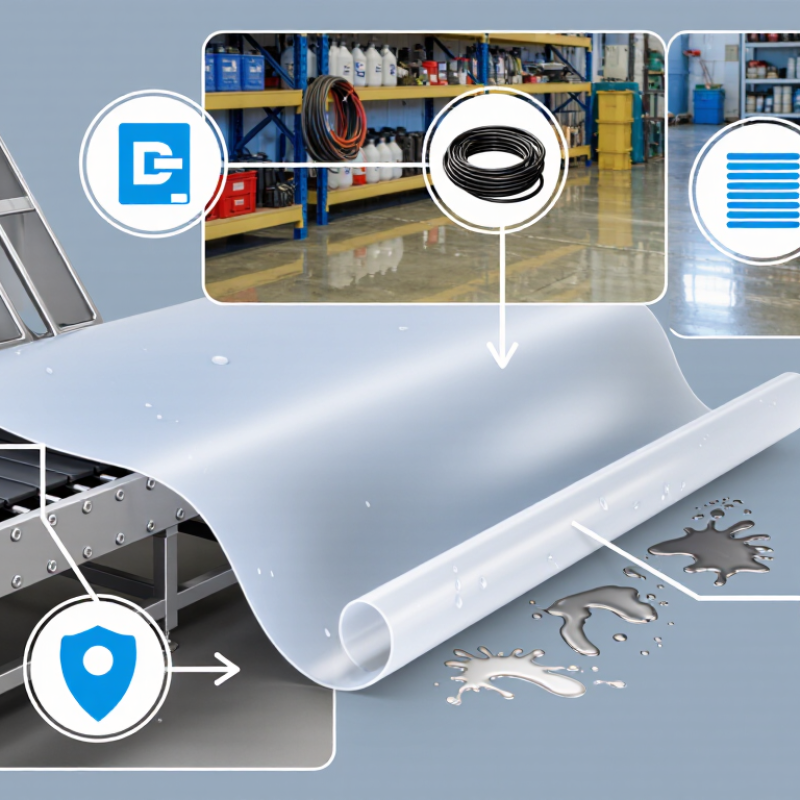
Learn MoreIndustrial equipment faces more than heavy loads. It may also encounter moisture, cleaning chemicals, repeated contact, and rough handling. Hdpe Sheet Plastic is often considered for guards, liners, wear surfaces, and fabricated components because it is lightweight and resists moisture. In a workshop, that can mean a sheet that is easier to cut and install than a metal plate. The right grade still matters. Performance depends on the material specification, operating temperature, chemical exposure, and how the part is supported.
There are trade-offs. HDPE can deform under sustained pressure, and heat may limit its use in demanding environments. Outdoor exposure can also affect some grades over time. Not every application is a good fit. A practical selection process starts with the actual service conditions, not a general claim on a product page. Review the supplier’s technical data, confirm relevant test conditions, and consider a sample or design review before ordering large quantities. Even then, the result may depend on fabrication quality and installation details. That is worth remembering. This guide explores where HDPE sheet can offer practical value, what properties deserve attention, and which questions industrial buyers should ask before choosing a material.
HDPE sheet plastic is made from high-density polyethylene, a thermoplastic whose relatively linear chains pack closely together. This structure gives it useful stiffness and strength without making it brittle in everyday handling. Sheet-grade formulations may also contain pigments, UV stabilizers, or processing aids. Exact composition varies. ASTM D4976 provides a standard for classifying polyethylene molding and extrusion materials, but it does not replace a sheet supplier’s grade-specific data.
Industrial HDPE is commonly supplied as flat, solid sheet, with smooth or textured surfaces and natural or colored finishes. Sheets can be cut, drilled, and welded into machine guards, wear panels, and tank liners. A freshly sawn edge feels waxy; that small detail can matter when selecting adhesives or planning a joint. Thickness, grade, and fabrication method all affect performance. Not every sheet is identical.
The OECD’s 2022 Global Plastics Outlook reports that global plastics production reached 460 million tonnes in 2019, over twice the 2000 level. That figure covers all plastics, not HDPE alone, but it shows the scale of material selection in industry. HDPE resists moisture and many chemicals, yet compatibility depends on the specific substance, temperature, and exposure time. It can also expand with heat and deform under sustained loads. Check operating conditions and technical data before specifying a sheet.
HDPE sheet is valued in industrial settings because it handles moisture, many common chemicals, and repeated knocks without rusting. A sheet used for a machine guard or tank liner can be cut and machined with standard shop tools. Its low-friction surface also helps sliding parts move smoothly. In daily use, that can mean fewer snags and simpler cleaning. Not every job. HDPE is less rigid than metal, and sustained loads may cause gradual bending or creep.
Tips: Check the chemical, temperature, and load conditions before choosing a thickness. Leave room for thermal expansion, especially on long panels. Test a small sample first if the sheet will contact an unfamiliar fluid or face frequent cleaning.
Fabricators should also consider how edges and joints will be finished. HDPE can be welded, but joint quality depends on suitable preparation and controlled technique. A poorly made seam may become the weak point, even when the sheet itself resists impact. The material’s temperature limits matter, too: heat can soften it and change its dimensions. For equipment near warm pipes or motors, verify actual operating temperatures rather than relying on a general material description. There is no perfect sheet for every plant; sometimes HDPE’s toughness is useful, but its flexibility needs more support than expected.
HDPE sheets are common in wastewater plants, chemical-processing areas, and water-treatment facilities. They can be fabricated into tank liners, covers, splash guards, and secondary-containment panels. Smooth surfaces are easy to rinse, while the material resists moisture and many commonly handled chemicals. Compatibility still depends on the chemical, its concentration, and operating temperature.
In food-processing facilities, suitable HDPE grades may be used for cutting surfaces, work tables, and equipment guides. On conveyors, low-friction strips help products move with less snagging. Thick sheets also serve as wear pads beneath sliding equipment or as protective liners in bins carrying abrasive materials. Fit matters. Poorly supported panels can flex under load, and fasteners may loosen with repeated vibration.
Outdoor and marine operations use HDPE for dock components, protective fender panels, and agricultural equipment parts exposed to damp conditions. It does not rust, but sunlight and heat can affect performance over time. Check the grade and technical data before specifying a sheet, especially for chemical contact or food use. One detail is easy to miss: HDPE expands with temperature changes, so installation gaps and secure support deserve attention. Industry conditions vary, and no sheet suits every job.
HDPE sheets are valued for their chemical resistance, impact resistance, and low moisture absorption. The chart shows a typical density range; actual values vary by grade and manufacturer.
Typical density: 940–970 kg/m³ (0.94–0.97 g/cm³).
Common industrial uses: chemical tank linings and fabrication, water and wastewater systems, marine components, and food-processing surfaces.
HDPE sheet offers a useful weight advantage over metal, but material choice depends on stiffness, heat, and exposure. The Society of Plastics Engineers’ Plastics Engineering Handbook places typical HDPE density near 0.94–0.97 g/cm³. ASM Handbook data puts aluminum near 2.70 g/cm³ and carbon steel near 7.85 g/cm³. That difference matters when workers lift access panels or equipment guards. Less weight helps. But HDPE flexes more under load, so unsupported spans may need reinforcement.
Against PVC, HDPE often handles impact and many aqueous chemicals well, though exact performance depends on concentration and temperature. PVC can offer greater rigidity in some formulations. Acrylic provides clearer viewing, but it can crack more readily under impact. Aluminum is much stiffer and tolerates higher service temperatures, yet it weighs more and may corrode in certain environments. No material wins every test. That deserves a closer look.
HDPE also expands noticeably with temperature and can degrade outdoors without suitable UV stabilization. ASTM D543 describes practices for evaluating chemical resistance; actual sheet performance should be checked against the intended fluid and operating conditions. A simple shop trial may miss long-term creep or heat effects. Use supplier-neutral test data, and verify thickness, support spacing, and service temperature before specifying a sheet.
| Comparison Factor | HDPE | Polypropylene (PP) | Rigid PVC | UHMW-PE | Acrylic (PMMA) |
|---|---|---|---|---|---|
| Typical density | 0.94–0.97 g/cm³ | 0.90–0.91 g/cm³ | About 1.35–1.45 g/cm³ | About 0.93–0.94 g/cm³ | About 1.17–1.20 g/cm³ |
| Typical tensile strength | About 20–37 MPa | About 25–40 MPa | About 40–55 MPa | About 35–45 MPa | About 55–75 MPa |
| Impact performance | Good impact resistance; retains toughness at low temperatures, depending on grade and test conditions. | Good impact resistance in many grades; can become brittle at low temperatures. | Generally more impact-sensitive than polyethylene; impact-modified grades are available. | Excellent abrasion and impact resistance; often selected for high-wear parts. | Clear and rigid, but more susceptible to impact cracking than polyethylene sheets. |
| Water absorption | Very low; commonly below 0.01% in standard short-term tests. | Very low; typically below 0.03% in standard short-term tests. | Low; varies with formulation and test method. | Very low; commonly below 0.01% in standard short-term tests. | Higher than polyethylene; typically around 0.2–0.4% in standard short-term tests. |
| Chemical resistance | Excellent resistance to many acids, alkalis, and aqueous salts. Some solvents and oxidizing chemicals can cause swelling, stress cracking, or damage. | Excellent resistance to many acids, alkalis, and aqueous chemicals; suitability depends on chemical, concentration, and temperature. | Good resistance to many acids and alkalis; compatibility varies by formulation, solvent, and temperature. | Similar to HDPE for many common chemicals; specific chemical compatibility still requires verification. | Good resistance to some dilute acids and salts, but vulnerable to many organic solvents and stress cracking. |
| Typical continuous-use temperature range | Approximately −50°C to 80°C | Approximately 0°C to 100°C; low-temperature impact performance depends on grade. | Approximately 0°C to 60°C | Approximately −200°C to 80°C | Approximately −40°C to 80°C |
| Wear and friction | Good wear resistance and a low-friction surface for many sliding applications. | Good general wear performance; suitability depends on load and surface conditions. | Moderate wear performance; often chosen for chemical or fabrication requirements rather than heavy sliding wear. | Outstanding wear resistance and very low friction; often preferred for liners, guides, and wear strips. | Not typically selected for heavy-duty sliding wear. |
| Fabrication and joining | Can be cut, routed, drilled, and welded with suitable equipment. Its flexibility and thermal expansion require design consideration. | Can be fabricated and welded; heat control and grade selection matter. | Can be cut, machined, and joined using methods suited to rigid PVC; avoid unsuitable heat exposure. | Machinable, but its softness and high thermal expansion can make tight tolerances challenging. | Can be machined and bonded, but care is needed to prevent cracking and surface damage. |
| Common industrial uses | Tanks, cutting boards, chute liners, wear strips, water-related components, and general-purpose fabricated parts. | Chemical tanks, ducting, laboratory components, and parts requiring a light sheet with good chemical resistance. | Chemical-processing components, tanks, covers, and rigid fabricated structures. | Hoppers, conveyor components, impact surfaces, guides, and high-wear liners. | Transparent guards, viewing panels, signs, and enclosures where visibility and rigidity are important. |
| Where HDPE is a strong choice | Offers a useful balance of low weight, toughness, low water absorption, chemical resistance, and straightforward fabrication for many industrial uses. | Consider when lower density or higher service temperature is important and the selected grade meets impact requirements. | Consider when greater rigidity or a particular chemical-service requirement outweighs the higher density and impact trade-offs. | Consider when abrasion resistance and low friction are more important than cost, stiffness, or ease of holding tight tolerances. | Consider when optical clarity and a rigid, smooth appearance are primary requirements. |
| Data note: Values are representative ranges for common unfilled sheet grades, not product specifications. Properties vary by grade, thickness, manufacturing method, temperature, and test standard. Confirm the material grade and chemical compatibility for the intended service conditions before design or procurement. | |||||

Choosing HDPE sheet begins with the job, not the material’s reputation. Check the expected load, operating temperature, chemical contact, and exposure to sunlight. A thick sheet may resist bending, but thickness alone cannot fix poor support or an unsuitable grade. Compare supplier data with actual conditions, and confirm compatibility when chemicals or temperatures vary. Small details matter.
During fabrication, HDPE’s movement with temperature deserves attention. Leave suitable clearance around fasteners and allow for expansion across long panels. Use sharp tools to limit rough edges and excess heat. For welded joints, consistent preparation and controlled technique help produce reliable seams; test a sample when the joint carries a critical load. It is easy to assume a clean-looking weld is strong. That assumption can be wrong.
Maintenance is usually simple, but not optional. Remove grit with a soft cloth and a compatible detergent, then inspect edges, welds, and mounting points for wear or distortion. Avoid cleaners unless their compatibility is confirmed. Record changes in temperature, load, or chemical exposure, since these can explain unexpected movement. One practical reflection: inspection intervals should match the application, not a convenient calendar. A panel near heat or repeated impact may need closer checks than a protected liner.