What Is a Frame Hydraulic Press and How Does It Work?
A frame hydraulic press turns fluid pressure into controlled force. Its rigid frame holds the bed, ram, and hydraulic cylinder in alignment while a pump drives oil through the system. The ram descends. A die closes against the workpiece. Metal bends, forms, or compresses under measured pressure. Simple in principle, but sensitive to setup.
Market context helps explain its growing visibility. Grand View Research estimated the global hydraulic press market at about USD 2.11 billion in 2022 and projected a 4.3% compound annual growth rate from 2023 to 2030. The report covers hydraulic presses broadly, not frame presses alone, so its figures should not be treated as a frame-press sales count. Still, it signals continued industrial demand for hydraulic forming and pressing equipment. A frame hydraulic press is one design within that wider market.
The operating principle traces to Blaise Pascal’s work on fluid pressure. His principle is commonly summarized this way: “Pressure applied to a confined fluid is transmitted equally in every direction.” That explains how force travels from the pump to the cylinder, though it does not explain every real-world complication. Oil temperature, seal wear, tooling alignment, and operator settings all affect performance. Small details matter. This guide examines the frame, hydraulic circuit, working cycle, and practical limits, using clear terms and careful distinctions. Because machine designs vary, one explanation cannot replace the manufacturer’s operating manual or a qualified technician’s inspection.
What a Frame Hydraulic Press Is
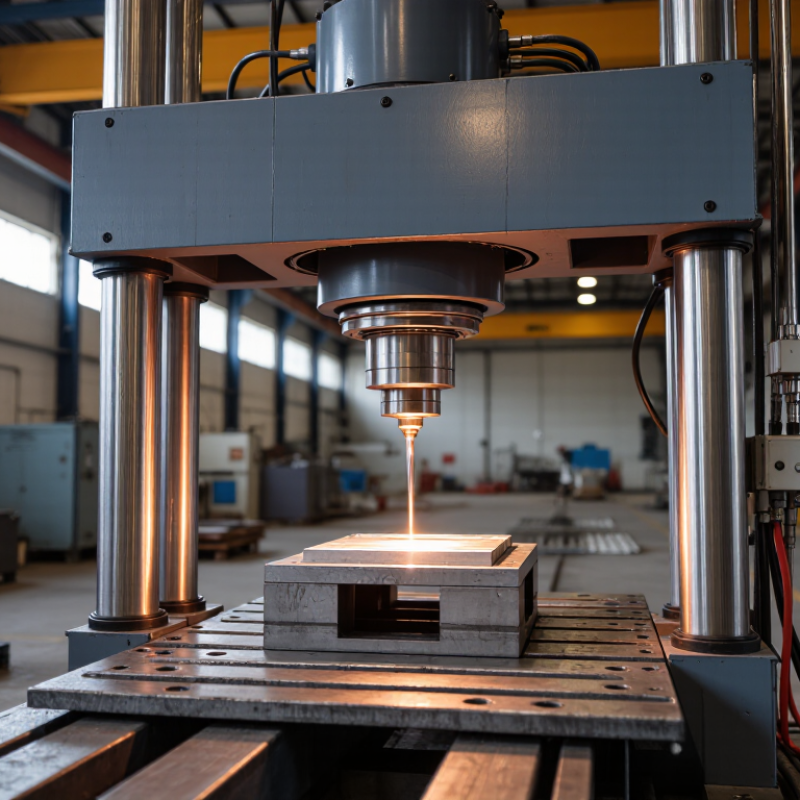
A frame hydraulic press is a machine that uses fluid pressure to move a ram against a workpiece. Its frame supports the cylinder, bed, and moving platen, while resisting the force generated during pressing. The frame may be open-sided, as in a C-frame design, or enclosed for greater stiffness. That shape matters. It affects access, alignment, and how well the machine handles off-center loads.
The basic relationship is force equals hydraulic pressure multiplied by piston area. A larger cylinder can deliver greater force at the same pressure, but the frame must also withstand the resulting load. Operators should match press capacity to the job and keep the workpiece centered; a rated tonnage alone does not describe every operating condition. ISO 16092-3:2017 sets safety requirements specifically for hydraulic presses. Market context is also growing: Grand View Research estimated the global hydraulic press machine market at about USD 2.18 billion in 2023, with projected growth through 2030. That is industry context, not a measure of any single press’s capability. In practice, frame stiffness and tooling setup can be easy to underestimate. An apparently simple pressing task may still need careful adjustment.
What Is a Frame Hydraulic Press and How Does It Work?
A frame hydraulic press uses pressurized fluid to move a ram and apply force to a workpiece. The chart shows the theoretical force produced by a ram with a piston area of 100 cm² at different hydraulic pressures. Force is calculated as pressure multiplied by piston area; actual output may be lower due to mechanical and hydraulic losses.
Key Components and Their Functions
Key Components and Their Functions
A frame hydraulic press is built around a rigid steel frame that carries the pressing load. H-frame designs support work between two uprights, while C-frame designs leave one side open for access. The frame is not just a stand. If it flexes, alignment can suffer, and the tooling may wear unevenly. The bed or bolster supports the workpiece and often adjusts to suit different job heights.
The hydraulic system supplies force. A motor-driven pump draws oil from a reservoir and sends it through control valves to a cylinder. Pressurized oil moves the piston and attached ram downward. The ram applies force through a punch, die, or flat pressing plate. When the operator releases the control, the valve redirects or releases pressure, and the ram returns. It is a simple sequence, but oil temperature, leaks, and worn seals can affect performance.
A pressure gauge helps operators monitor system pressure, though it does not measure force at the workpiece with perfect precision. Cylinder area and machine condition also matter. Controls manage ram movement; guards and emergency stops help reduce exposure to pinch points. Keep hands clear. During setup, check that the workpiece sits squarely on the bed. Real jobs are rarely as tidy as diagrams suggest, so alignment deserves a second look.
How Hydraulic Pressure Creates Pressing Force
A frame hydraulic press creates force by directing pressurized oil into a cylinder. A pump moves the oil through a closed circuit, and pressure acts on the cylinder’s piston. Because the piston has a larger area than the pump’s working surface, a modest input can produce a much greater pressing force. The basic relationship is force equals pressure multiplied by piston area. It is a simple formula, but real machines also have friction, leakage, and changing loads.
As the piston extends, the ram pushes material against a bed or die. The rigid frame holds the opposing load and helps keep the ram aligned. A pressure gauge shows circuit pressure, while a relief valve limits excessive pressure. For example, when pressing a metal plate, the ram may slow as resistance rises. The machine’s actual force depends on pressure and cylinder size, not on appearance alone. That distinction is easy to overlook.
Tips: Check the gauge and workpiece alignment before pressing. Keep hands clear of the ram and use suitable tooling. Never assume the frame is safe just because it looks heavy; inspect it for cracks, loose fasteners, or distortion. A small misalignment can change how the load travels through the press. That part deserves attention.
The Operating Cycle, Step by Step
A frame hydraulic press cycle starts with the workpiece positioned on the bed, between the tooling. The operator checks alignment, secures any required guards, and selects the approved settings. Small setup errors matter. A crooked part can shift under load.
When the cycle starts, a motor-driven pump moves hydraulic fluid into the cylinder. Pressure drives the ram downward through the frame’s open working area. The ram contacts the tooling, then applies force to form, assemble, or compress the material. The frame supports the load, while sensors or controls may monitor pressure, travel, or timing. Exact controls vary by machine.
At the set pressure or travel limit, the press pauses or changes direction according to its programmed cycle. Some jobs need a brief dwell; others release pressure immediately. The valve then routes fluid so the ram retracts. Only after motion stops should the operator remove the finished piece and check its shape, marks, and dimensions. Keep hands clear. In practice, the cycle may feel less smooth than a diagram suggests: material thickness, tooling wear, and temperature can affect results. Follow the machine’s operating instructions and investigate unusual noise, leakage, or uneven movement before continuing.
Common Frame Designs and Applications
Frame design shapes access, stiffness, and the jobs a hydraulic press handles well. A C-frame leaves three sides open, making it practical for punching, trimming, and small-part assembly. That access matters. Under off-center loads, however, its throat can deflect, so operators should check alignment and rated capacity before choosing it.
An H-frame uses welded uprights and cross-members to support heavier straightening, pressing, and forming work. Four-column presses guide a moving platen along tie rods, which helps maintain parallelism during molding and powder compaction.
Grand View Research estimated the global hydraulic press market at about US$2.5 billion in 2023 and projected 4.8% annual growth from 2024 to 2030. That market-wide estimate signals broad demand, not the share of any particular frame design.
In practice, automotive plants may use H-frame presses for forming brackets, while manufacturers of rubber or composite parts often favor four-column layouts. The right choice still depends on the workpiece, tooling clearance, and load position. A catalog tonnage alone can mislead.