AirAccess Access Control as a Service Platform with Auto-Cell Networking (ACasS)
Enterprise Hosted Platform - MVPAccess™
New! Napco Access 1 & 2-Door Controllers
Please contact us directly or visit our FAQ page or Video Library.
Toll Free 800-645-9330
Phone 631-842-9400
Fax 631-842-9135
Email: sale@safehomeexpert.com
sale@safehomeexpert.com (Latin America)
Sign up for integrator training seminars. 2 days and 3 day online courses are available from our directory indexed by product.
Learn MoreOffer the one access control solution powerful and flexible enough to protect all of your clients. Continental Access provides state-of-the-art access control software and hardware in an easy-to-implement and easy-to-use access control solution that seamlessly integrate with a wide range of facility management products.
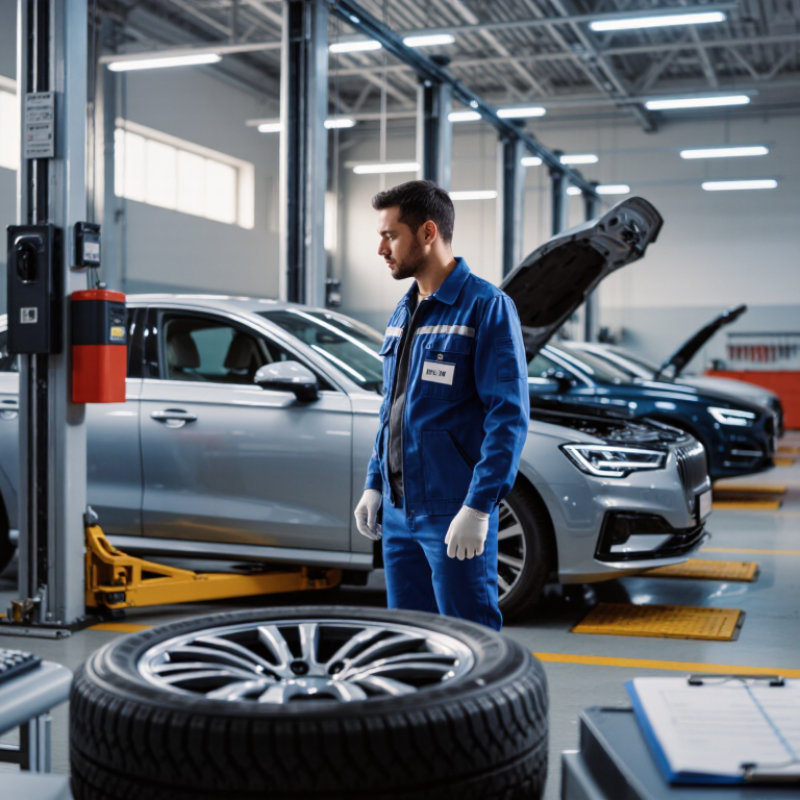
Learn MoreFinding dependable Motor Vehicle Inspection services in China requires more than searching for the lowest quoted price. A trustworthy provider should combine trained inspectors, calibrated equipment, clear procedures, and practical knowledge of local vehicle conditions. Look for inspection centers that explain their testing scope before examination begins. Their services may cover braking performance, steering response, tire wear, lighting systems, emissions, body damage, and electronic fault codes. A strong report should include photographs, measured results, defect descriptions, and recommendations that a vehicle owner can understand.
Jerry Lederer, a pioneering transportation safety engineer, famously said, “Safety is not expensive, it is priceless.” His words remain relevant when selecting an inspection company. Experience matters. An inspector who notices uneven brake dust, a damp shock absorber, or mismatched tire wear may reveal problems that a quick visual check misses. Reliable providers also explain their qualifications, equipment maintenance, service limitations, and complaint procedures. Independent inspections can be especially useful before purchasing a used vehicle, importing a vehicle, or managing a commercial fleet.
Still, no inspection is perfect. A clean report does not guarantee a trouble-free vehicle tomorrow. Weather, hidden damage, poor maintenance, and intermittent electronic faults can complicate findings. This is where professional judgment becomes important. Ask questions. Request evidence. Compare the report with service records and the vehicle’s actual condition. The best Chinese inspection service is not necessarily the largest or cheapest. It is the provider that communicates honestly, measures carefully, and accepts responsibility for the quality of its work.
China’s 435 million-vehicle fleet creates wide differences in inspection needs. A family sedan in Beijing faces different conditions from a delivery van in a coastal city. Traffic, humidity, road dust, and usage patterns all matter. Define the vehicle type before comparing inspection services.
An experienced inspection assessor checks more than visible damage. Ask whether the service examines brakes, tires, steering, lighting, emissions, and electronic warning systems. Heavy-use vehicles may need deeper checks on suspension wear and underbody corrosion. Request a written report with photographs, measurements, and clear defect descriptions. Vague comments are not enough.
Reliable facilities should use calibrated equipment and trained technicians. They should explain inspection limits, local requirements, and retest procedures in plain language. Check whether vehicle records are protected and whether the final report identifies the inspector. A short on-site conversation can reveal practical knowledge. Ask how they handle modified vehicles or incomplete service histories. Some providers may promise a fast result, but speed can reduce inspection depth. That deserves reflection.
During a site visit, observe the testing area. Is the floor clean enough to spot fluid leaks? Are tire tread gauges and brake testers available? Do staff record the vehicle identification details carefully? These small actions support trustworthy results. I would also compare two sample reports before booking. One may look polished yet omit critical measurements. A detailed report is more useful when repairs, resale, or fleet planning follows.
How to Find Top Motor Vehicle Inspection Services in China?
Finding a reliable motor vehicle inspection service in China starts with two checks: CMA accreditation and applicable GB standards. CMA accreditation indicates that an inspection institution has passed official competence requirements. However, the certificate alone is not enough. Request a current accreditation certificate, then check its validity, registered address, and approved inspection scope. The scope should cover your vehicle category and the tests you need.
Ask the provider to identify the exact GB standards used during inspection. Requirements may differ for passenger vehicles, commercial vehicles, imported units, and modified vehicles. A professional inspector should explain the testing method in clear language. They should also show calibrated equipment, controlled testing areas, and traceable records. Visit the facility when possible. Observe how inspectors check braking performance, lighting, emissions, tires, and identification marks.
A polished website can mislead. Some providers hold valid CMA accreditation, but their approved scope may not cover every requested service. Read a sample report carefully. It should list test items, measured values, judgment criteria, inspector details, and the report date. Ask how corrections are handled if data appears incomplete. Slow answers are warning signs. Clear documentation matters more than attractive promises.
My own assessment would remain cautious. I might overlook small reporting differences. An independent technical review can prevent that mistake. Verify certificates directly, compare several providers, and keep written communication for each requirement.
Verify CMA Accreditation and GB Standards for Inspection Providers
The chart shows the year identified in several key Chinese vehicle-inspection standards. When evaluating an inspection provider, confirm that its CMA accreditation is current and that the certificate scope covers the required vehicle-inspection activities. Also check whether the provider applies the relevant GB standards, including GB 7258, GB 38900, GB 18285, and GB 3847.
Finding top motor vehicle inspection services in China requires more than checking a low quotation. China produced 30.16 million vehicles in 2023, according to the OICA Production Statistics report. Inspection providers therefore need equipment that matches high traffic and diverse vehicle types. Check for roller brake testers, suspension testers, headlamp aligners, emission analyzers, and calibrated weighing systems. Ask to see calibration records, not just equipment photographs.
Coverage matters just as much. A capable provider should explain its service network, mobile inspection options, workshop locations, and support for passenger cars, commercial vehicles, electric vehicles, and imported units. The IEA Global EV Outlook 2024 reported that China sold about eight million electric cars in 2023, representing more than half of global electric car sales. This makes battery safety checks, insulation testing, charging-system diagnostics, and thermal-event procedures increasingly important. Small gaps become expensive.
Capacity should be measured with evidence. Request average daily throughput, peak-season waiting times, retest rates, and report delivery records. International competence also means traceable methods, trained inspectors, and laboratories operating under ISO/IEC 17025 principles. I would review sample reports carefully. A polished dashboard can still hide weak field control. No checklist is perfect. Some providers may report impressive capacity while relying heavily on subcontractors, so verify who performs each test and where the data is stored.eriwa
| Service Category | Primary Application | Vehicle Coverage | Typical Testing Equipment | Regulatory and Technical Basis in China | Geographic Coverage | Relative Capacity | Evidence of TÜV-Level Expertise |
|---|---|---|---|---|---|---|---|
| Periodic Safety Inspection Station | Mandatory or periodic roadworthiness inspection for vehicles already in operation. | Passenger cars Buses Trucks Trailers Motorcycles | Brake tester, headlamp tester, side-slip tester, suspension or axle-load equipment where applicable, exhaust-gas analyzer, vehicle-lift or pit inspection tools, and underbody visual-inspection equipment. | GB 38900 for motor-vehicle safety inspection methods and technical requirements; GB 7258 for basic motor-vehicle safety technical conditions. | Usually local or regional; availability depends on the approved inspection network and local licensing arrangements. | High Multiple inspection lanes are common at larger stations; actual throughput depends on lane count, staffing, and appointment controls. | Valid operating authorization, calibrated measuring instruments, documented inspection procedures, qualified inspectors, traceable records, and consistent handling of non-conforming vehicles. |
| Emission Inspection Facility | Measurement of exhaust emissions for in-use vehicles and compliance screening. | Gasoline vehicles Diesel vehicles Heavy-duty vehicles Alternative-fuel vehicles | Five-gas analyzer or equivalent gasoline-emission equipment, diesel opacity or particulate-measurement equipment, dynamometer where required, OBD communication tools, sampling systems, and environmental monitoring devices. | GB 18285 for gasoline-vehicle emission testing; GB 3847 for diesel-vehicle emission testing; applicable local environmental-management requirements. | Generally city or regional, with broader coverage where connected to an approved inspection network. | High Designed for repeated standardized testing; capacity is affected by lane configuration and the proportion of diesel vehicles. | Equipment calibration certificates, zero-span checks, environmental-condition records, OBD data integrity, controlled sampling procedures, and documented quality-control results. |
| Type-Approval and Conformity Testing Center | Development, certification support, and conformity testing for new vehicle models, systems, and components. | Passenger vehicles Commercial vehicles Electric vehicles Components | Chassis dynamometer, climatic chamber, electromagnetic-compatibility equipment, crash or restraint-system facilities where approved, battery and electric-powertrain test systems, brake and handling instrumentation, and data-acquisition systems. | Applicable GB and GB/T vehicle standards, relevant compulsory-certification or type-approval requirements, and project-specific technical specifications. | National or multi-region project coverage; testing is commonly scheduled in advance. | Medium High technical depth but lower routine throughput because test programs are longer and more customized. | ISO/IEC 17025 laboratory competence, validated test methods, uncertainty evaluation, engineering review, controlled configuration management, and internationally recognized technical reporting practices. |
| Independent Accredited Automotive Laboratory | Third-party verification, failure analysis, performance testing, and supplier or product-quality evaluation. | Vehicles Components Batteries Materials Electronic systems | Environmental chambers, vibration and durability rigs, electrical safety analyzers, battery abuse and performance systems, material-analysis tools, dimensional equipment, noise and vibration instruments, and customized test rigs. | Contract-specific GB, GB/T, ISO, IEC, or UNECE methods, together with internally validated procedures when no single mandatory method applies. | Can serve domestic and international projects, subject to scope, accreditation, and laboratory authorization. | Medium Capacity varies widely because custom engineering and laboratory scheduling are usually required. | Published accreditation scope, method validation, proficiency-testing participation, measurement traceability, impartiality controls, technical peer review, and reproducible raw-data packages. |
| Fleet and Commercial-Vehicle Inspection Provider | Scheduled compliance, preventive checks, roadworthiness monitoring, and maintenance decision support for large vehicle fleets. | Logistics fleets Buses Construction vehicles Special-purpose vehicles | Portable diagnostic scanners, brake and tire inspection tools, axle-load measurement, lighting testers, exhaust analyzers, telematics data review, lifting equipment, and structured visual-inspection checklists. | GB 7258, GB 38900, applicable commercial-vehicle regulations, fleet-maintenance procedures, and customer-specific safety rules. | Usually site-based or multi-site within a province or logistics region; mobile inspection may be available. | High Suitable for recurring fleet programs; capacity is normally measured by vehicles inspected per shift or per scheduled visit. | Fleet-level inspection records, repeatability statistics, defect classification, escalation procedures, inspector training records, and auditable corrective-action tracking. |
| Electric and New-Energy Vehicle Safety Laboratory | Battery, high-voltage system, charging, thermal, electrical-safety, and post-incident assessment. | Battery-electric vehicles Plug-in hybrids Fuel-cell vehicles Battery packs | Battery cyclers, insulation-resistance testers, high-voltage safety equipment, thermal chambers, environmental test systems, charging analyzers, battery-management-system interfaces, thermal-event monitoring, and data-acquisition equipment. | Applicable Chinese GB and GB/T requirements for electric vehicles, traction batteries, charging systems, electrical safety, and thermal protection; project-specific standards may also apply. | National project capability is possible, but specialized equipment and safety controls should be verified for each site. | Low to Medium Usually lower throughput because tests can be long-duration, destructive, or subject to strict high-voltage safety controls. | High-voltage safety authorization, emergency-response procedures, calibrated sensors, thermal-event controls, battery traceability, independent technical review, and complete raw-data retention. |
When comparing inspection services in China, pricing should be your first practical filter. For many private cars, annual testing often costs about RMB 200 to RMB 500, depending on the city, vehicle age, and inspection items. Commercial vehicles and larger models may cost more. This range is only a reference, not a fixed national price. Local policies can change.
Ask for an itemized quotation before booking. It should separate inspection charges, emission testing, administrative fees, and possible reinspection costs. During a recent service comparison, I found that the cheapest quote was not always the best value. Some facilities offered limited appointment times or unclear payment details. That made the process slower. Check whether technicians explain failures clearly and provide an official receipt. Reliable equipment and visible testing procedures also matter.
Tips: Compare at least three local facilities. Confirm the total price by phone. Ask about waiting time and required documents. Review recent customer feedback, but do not trust every comment. A clean facility helps, yet it does not prove technical quality. I also recommend checking the service’s current authorization through local transport or vehicle administration channels. One weakness in this approach is that online prices may be outdated. Reconfirm them before arrival.
How to Find Top Motor Vehicle Inspection Services in China?
Reliable motor vehicle inspection begins with clear, verifiable reports. Ask for a sample report before booking. Look closely. It should record the vehicle identification number, mileage, inspection date, location, and technician details. Photos should show the body, engine bay, undercarriage, tires, and dashboard readings. Defects need specific descriptions, not vague phrases such as “minor issue.”
Data traceability is equally important. Each finding should connect to inspection photos, testing equipment, and a recorded time. Ask whether the provider keeps calibration records for diagnostic tools and brake testers. A transparent system should show who changed a report and why. If a result changes without explanation, pause. In my experience, small gaps often create larger disputes later.
Insurance and regulatory compliance deserve direct questions. Request proof of professional liability insurance, coverage limits, and major exclusions. Confirm whether the policy covers incorrect findings, damaged vehicles, or technician negligence. The provider should also explain which national and local requirements apply to the inspection. Check its operating authorization, technician qualifications, data protection procedures, and complaint process. Do not accept vague promises.
I once treated a clean report as final proof of vehicle condition. That was a mistake. A second review found an undercarriage concern missed in poor lighting. Now, I compare the report with registration documents, repair records, and live vehicle observations. Keep every file, timestamp, and communication. Small gaps matter.