Why Choose a Veterinary Syringe Set for Animal Care?
A Veterinary Syringe Set can make routine animal care more organized and precise. It keeps essential supplies together, helping veterinary teams prepare for vaccinations, prescribed treatments, and other procedures. A clearly marked barrel, a secure plunger, and a suitable needle can support accurate handling. Small details matter. A rushed setup can lead to avoidable confusion.
Animal-welfare scientist Dr. Temple Grandin is often quoted as saying, “Nature is cruel, but we don’t have to be.” That principle belongs in everyday clinical work, too. A syringe set does not replace training, careful restraint, or a veterinarian’s judgment. It can, however, help a trained professional work calmly and consistently. The right set depends on the animal’s size, the prescribed medication, and the intended use. One size does not fit every patient.
Good equipment should feel dependable in the hand. Clear graduations help with measurement; intact packaging and clean, properly handled components support safe practice. Check compatibility before use, and follow the product instructions and veterinary guidance. These steps sound basic. They are easy to overlook when a clinic is busy. A Veterinary Syringe Set is most useful when it fits the task, the patient, and the care team’s routine—not simply when it looks comprehensive.
What a Veterinary Syringe Set Includes
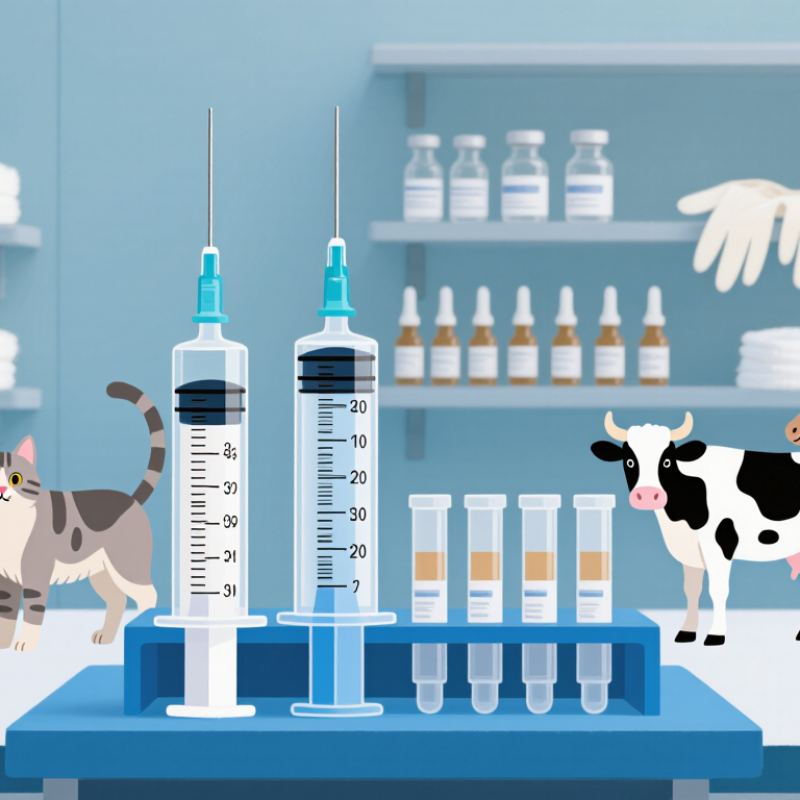
A veterinary syringe set commonly includes syringes in several capacities, with clear graduations for measuring liquid accurately. The barrel holds the dose, while the plunger helps draw up and dispense it smoothly. Needle options may be included, but sizes and fittings differ between sets. Some kits also provide protective caps or a small storage tray. Details matter.
Not every set contains the same components. Check the package for syringe capacity, needle dimensions, and whether items are sterile and intended for single use. A set may suit oral dosing, while another is designed for injections; these uses are not interchangeable.
For example, a caregiver measuring a small liquid dose needs markings that are easy to read and a barrel suited to that volume. Even experienced handlers can miss a tiny graduation in poor light. It happens.
Follow a veterinarian’s instructions for the animal, medication, and route of use, and do not reuse disposable components. If a syringe feels stiff or its markings are unclear, pause and ask the clinic to confirm the right equipment.
How Syringes Support Routine Animal Care
A veterinary syringe set supports small, repeatable tasks: measuring liquid medicine, giving prescribed oral doses, and administering vaccines or other injections under veterinary direction. The details matter. A clearly marked barrel helps measure the prescribed volume, while a suitable tip can make oral dosing easier for a nervous animal. Use the syringe type and route specified by the veterinary team; an oral syringe is not an injection device.
The American Pet Products Association’s 2023–2024 National Pet Owners Survey estimated that 66% of U.S. households, or about 86.9 million homes, owned a pet. That scale makes reliable routine care important, though a syringe alone cannot make treatment safe. Ask the clinic to demonstrate the dose and technique, especially for a small animal where a slight measurement error can matter. Keep the animal calm, check the markings at eye level, and record each dose. Clean or discard equipment as directed; never assume a syringe can be reused safely. A messy first attempt happens. Pause and ask the veterinary team rather than guessing or changing the dose.
Why Choose a Veterinary Syringe Set for Animal Care? — How Syringes Support Routine Animal Care | Syringe capacity | Common routine-care role | Practical selection point | Safe-use reminder |
| 1 mL | Measuring small liquid volumes when directed by a veterinary professional. | Check the printed scale and graduation size; these can differ between syringe models. | Confirm the prescribed amount and units before measuring. |
| 3 mL | Measuring modest liquid volumes for care tasks specified by a veterinarian. | A smaller barrel can make low-volume measurements easier to read than a much larger syringe. | Use an oral syringe for oral liquids; do not attach a needle for oral administration. |
| 5–10 mL | Measuring larger liquid volumes or flushing a site when specifically advised by a veterinary professional. | Choose a capacity that allows the required volume to be read clearly on the scale. | Use only the fluid and method recommended for the animal and care task. |
| 20–60 mL | Handling comparatively larger volumes for veterinary-directed tasks, such as certain flushing or fluid-handling procedures. | Larger syringes may have coarser graduations, so they are not automatically suitable for small-volume measurement. | Do not use for injection or administer fluids unless trained and instructed to do so. |
| Needle-free oral syringe | Giving veterinarian-approved liquid medication by mouth. | A clearly marked scale and an appropriately sized barrel support accurate measurement. | Administer slowly and carefully; follow veterinary instructions to reduce the risk of choking or aspiration. |
| Needle-compatible syringe | Veterinary-directed procedures that require a needle or other compatible attachment. | Check connection compatibility and use a sterile, appropriate needle when prescribed. | Injections should be performed only by someone trained and authorized to do so. |
Capacities and scale markings vary by product. A syringe set can provide different barrel sizes for different measurement needs, but it does not determine the correct dose. Follow the veterinarian’s instructions and the medication label.
Choosing a Set for Different Animals and Treatments
A veterinary syringe set should match the animal, the treatment, and the amount being measured. A small cat may need a syringe with fine, easy-to-read graduations, while a larger animal may require a higher-capacity barrel. Fit matters.
For oral medicines, a needle-free syringe can help deliver liquid gently along the side of the mouth. Injectable treatments require equipment selected by a veterinarian, including the appropriate syringe and needle. The two uses are not interchangeable.
Check that markings are clear and that the plunger moves smoothly without sticking. Small details count. A set with several sizes can be useful when care involves animals of different weights, but a large assortment is not automatically better.
For tiny doses, a wide barrel may make accurate measurement harder. For thicker liquids, the syringe opening must suit the medication and the veterinarian’s instructions. Keep clean equipment separate from used items, and do not reuse disposable syringes.
It is easy to focus on quantity; suitability deserves more attention. When an animal resists, pause rather than forcing the syringe, and ask a veterinary professional to demonstrate safe handling.
Safe Handling, Cleaning, and Storage
Why Choose a Veterinary Syringe Set for Animal Care?
Safe handling starts before the needle leaves its wrapper. Check the syringe, needle, and packaging for damage, then match the equipment to the prescribed dose. Keep animals calmly restrained; a sudden movement can turn a routine injection into an injury. Use each needle and syringe for one animal only, and never reuse them, even after changing the needle. CDC estimates about 385,000 needlestick and sharps injuries occur each year among U.S. hospital-based healthcare workers. That figure is not veterinary-specific, but it shows why careful sharps handling matters.
After use, place the needle directly into an approved sharps container. Do not recap it by hand or leave it on a treatment tray. CDC injection-safety guidance emphasizes using a new, sterile needle and syringe for every injection. For reusable equipment, follow the manufacturer’s instructions and veterinary protocols: remove visible residue promptly, wash with suitable detergent, rinse thoroughly, and allow parts to dry completely. Disinfection does not replace sterilization when sterile equipment is required. Small details matter.
Store clean, dry syringes in a closed, labeled container, away from dust, moisture, chemicals, and direct sunlight. Keep sterile items in intact packaging until needed. Separate clean supplies from used equipment, and check seals and expiry dates before use. A crowded drawer makes this harder than it sounds. Review the storage routine regularly; even a sensible system can drift during a busy clinic day.
Benefits and Limitations of Veterinary Syringe Sets
Why Choose a Veterinary Syringe Set for Animal Care?
Benefits and Limitations of Veterinary Syringe Sets
A veterinary syringe set can keep measuring tools together and make routine care less chaotic. Different syringe sizes may suit different prescribed volumes, while clear graduations help users measure doses more consistently. That matters when a small difference is significant. A well-organized set can also reduce the scramble for supplies during a busy appointment or at-home treatment. Less searching helps.
However, a set does not guarantee accuracy. Markings may be difficult to read in dim light, and tiny volumes can be challenging to measure precisely. Syringes and needles must also match the medication and intended route. Some products are incompatible, and a set may contain sizes that are rarely useful for a particular animal. Check the packaging and follow veterinary instructions.
Hygiene needs attention. Reusing equipment when it is intended for single use can create contamination risks, while cleaning reusable components incorrectly may leave residue. Animals may also move suddenly, making careful handling essential. I have seen how a tidy kit can create confidence, perhaps too much confidence. Pause and check the dose, the label, and the fit before use. A veterinarian can help select suitable equipment for an animal’s size and treatment.