






AirAccess Access Control as a Service Platform with Auto-Cell Networking (ACasS)
Enterprise Hosted Platform - MVPAccess™
New! Napco Access 1 & 2-Door Controllers
Please contact us directly or visit our FAQ page or Video Library.
Toll Free 800-645-9330
Phone 631-842-9400
Fax 631-842-9135
Email: sale@safehomeexpert.com
sale@safehomeexpert.com (Latin America)
Sign up for integrator training seminars. 2 days and 3 day online courses are available from our directory indexed by product.
Learn MoreOffer the one access control solution powerful and flexible enough to protect all of your clients. Continental Access provides state-of-the-art access control software and hardware in an easy-to-implement and easy-to-use access control solution that seamlessly integrate with a wide range of facility management products.
Learn MoreChoosing an Alloy Wheel Curing Oven is not just a matter of finding the largest unit or the lowest price. The right oven must match your wheel sizes, coating process, daily production volume, and available floor space. A compact workshop may need a different layout from a high-output finishing line. Small details matter. A wheel that cannot be positioned securely, or an oven with uneven airflow, may produce inconsistent curing results. That can mean rework, wasted coating, and delays.
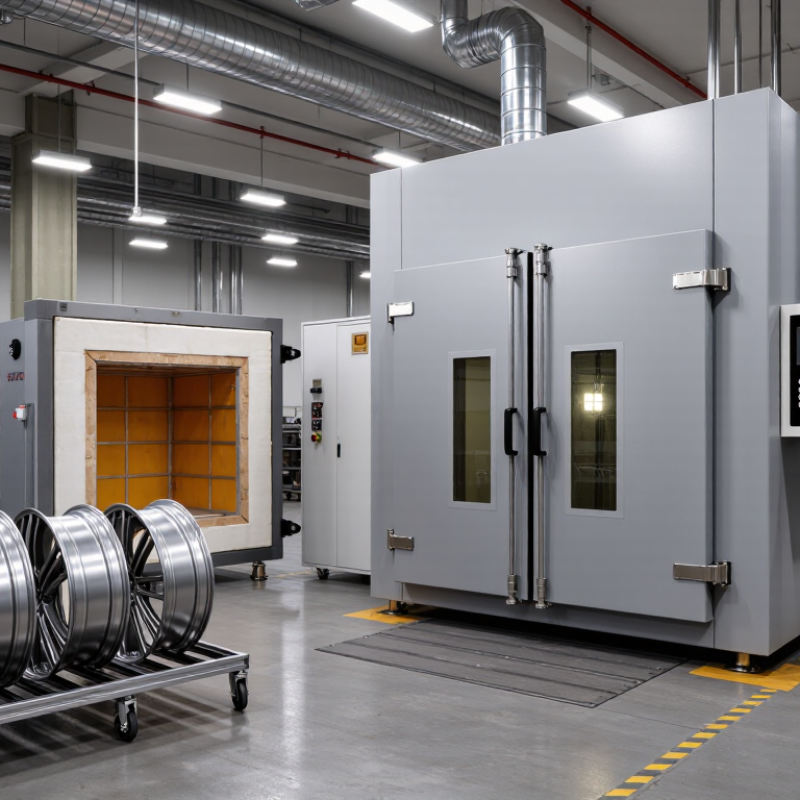
Before comparing models, clarify the coating manufacturer’s curing requirements and the temperatures your process actually needs. Then assess usable chamber dimensions, loading method, temperature controls, heat distribution, insulation, and energy use. Ask suppliers how they verify temperature uniformity and what support they provide for installation, calibration, and maintenance. These are practical questions, not just sales details. A clear service plan can matter when production is waiting.
There is no universal oven that suits every operation. I would not choose from a brochure alone; specifications can look convincing while leaving important gaps. Request drawings, review operating instructions, and, where possible, see a comparable system working with similar parts. Think about future demand too, but avoid paying for capacity your shop cannot use. The best choice is the one that consistently meets the coating process, fits the workspace, and can be operated and maintained reliably. One point deserves reflection: a higher purchase price does not automatically mean better results, but the cheapest option may leave costly questions unanswered.
Choosing an alloy wheel curing oven starts with the coating, not the catalogue temperature. Powder coatings can require different cure schedules, so check the coating supplier’s technical data sheet for part-metal temperature and hold time. The oven’s air setting is not the wheel’s temperature. Attach thermocouples to representative wheels, including a thick spoke and the barrel, then verify the full load reaches the specified cure window. Record the results. One test load may not represent every rack arrangement.
Tips: Match the oven’s usable dimensions to your largest wheel and rack. Leave space for even airflow. Track actual wheel temperature, not just the control-panel reading.
Then match capacity to production. Estimate wheels per batch, loading time, and the required cycle rate; a fast empty-oven recovery does not guarantee fast production. The U.S. Department of Energy’s 2018 Improving Process Heating System Performance: A Sourcebook for Industry identifies process heating as roughly two-thirds of manufacturing energy use. That makes insulation, door seals, and sensible loading worth checking alongside throughput. Ask for a loaded-oven temperature-uniformity test and review its measurement locations. I would avoid choosing solely from a stated maximum temperature. It can look reassuring, but it says little about consistent curing across a real wheel load.
How to Choose an Alloy Wheel Curing Oven?
Compare Curing Oven Types and Heating Methods
Alloy wheels need even heat across spokes, rims, and recessed pockets. A batch oven suits varied wheel sizes and smaller production runs. Operators can adjust loading and recipes, but each cart may heat differently. Conveyor ovens support steady, higher-volume production. Their pace is useful, though line speed leaves less room for curing delays. That matters.
Heating method changes the result. Convection circulates heated air and is generally suited to complex wheel shapes. Electric systems offer controllable heat; gas-fired systems may suit larger, continuous loads, depending on site energy costs. Infrared can heat surfaces quickly, but shadowed areas may receive less energy. A mixed system can help, yet adds complexity.
The U.S. Department of Energy’s Improving Process Heating System Performance: A Sourcebook for Industry reports that process heating accounts for about 17% of U.S. manufacturing energy use. That figure is not specific to wheel coating, but it shows why oven efficiency deserves attention. Compare energy use, airflow, temperature uniformity, and recovery time—not just the maximum setpoint. Most importantly, verify the coating supplier’s cure schedule against the wheel’s actual metal temperature. Oven-air readings can mislead. I would still test loaded carts: real wheel geometry can expose weak airflow that an empty-oven check misses.
| Oven type / heating method | How it works | Best suited to | Key advantages | Points to consider | Typical fit |
|---|---|---|---|---|---|
| Batch oven — electric convection | Electric elements heat circulating air, which transfers heat to the wheels and coating. | Low-to-medium production, varied wheel sizes, and shops without gas service. | Straightforward temperature control; no combustion exhaust in the workspace; flexible batch loading. | Warm-up and recovery can take time. Electricity cost and available supply may affect operating economics. | A practical choice for variable workloads and smaller production runs. |
| Batch oven — gas-fired convection | A gas burner heats the oven air, which is circulated around the load. | Medium-to-high batch volumes where natural gas or another approved fuel is available. | Can provide rapid heat-up and recovery; may have lower energy costs where fuel pricing is favorable. | Requires suitable fuel, ventilation, combustion safeguards, and installation that meets local codes. | A strong option for regular batch production and higher oven utilization. |
| Infrared (IR) oven | Infrared emitters transfer radiant energy to exposed surfaces; some systems combine IR with air circulation. | Short-cycle processes and coatings or line layouts validated for radiant heating. | Fast response and localized heating can reduce the time needed to bring exposed areas up to temperature. | Wheel spokes, recesses, and shadowed areas may heat differently. Validate the complete wheel, not just the visible surface. | Best when wheel geometry and coating performance have been tested with the specific IR setup. |
| Hybrid IR and convection oven | IR provides rapid radiant heating while forced hot air helps heat less-exposed areas and maintain oven conditions. | Production lines needing a balance of faster heating and more complete heat distribution. | Combines quick response with air circulation; can be configured around specific wheel and coating requirements. | More complex controls and system design; performance depends on emitter placement, airflow, and load spacing. | Consider for higher-throughput lines after process trials confirm uniform cure. |
| Continuous conveyor oven — convection | Wheels move through heated zones on a conveyor, with airflow and line speed controlling the thermal process. | High, consistent production volumes with a predictable product mix. | Supports repeatable throughput and can integrate with upstream and downstream coating equipment. | Needs floor space and coordinated line operation. Changeovers and low-volume operation may be less efficient. | Suitable for established production lines with steady demand. |
Selection note: Follow the coating manufacturer’s specified part-metal temperature and time-at-temperature requirements. Oven air temperature is not the same as wheel temperature; verify the full heating and curing cycle with temperature probes attached to representative wheels, including areas that may heat slowly.
Start with the largest wheel you expect to process, not the average one. Measure its diameter, width, and mounted position, then allow space around it for airflow and safe handling. Check the oven’s usable chamber dimensions; external dimensions do not tell you how many wheels will fit. Leave enough room for fixtures, door movement, and loading access.
Capacity should reflect your actual production rhythm. Estimate how many wheels need curing per batch, then account for heating, curing, cooling, and unloading time. A chamber packed to its physical limit may slow work if operators cannot load it smoothly. Small test batches can reveal awkward gaps or blocked airflow. They are worth doing.
Choose a loading arrangement that keeps coated surfaces from touching. Hanging fixtures can provide open airflow, while racks may suit a stable, repeatable layout. Confirm that each wheel is supported securely and that fixtures tolerate the required temperature. Follow the coating process specifications when setting cure conditions. A paper capacity estimate can be misleading; real loading trials may expose a layout that looked fine on screen.
How to Choose an Alloy Wheel Curing Oven?
Evaluate Temperature Control, Airflow, and Curing Uniformity
A reliable oven controls the wheel’s actual temperature, not just the air near its sensor. The U.S. Department of Energy’s Improving Process Heating System Performance sourcebook estimates that process heating uses about 36% of U.S. manufacturing energy. That figure makes efficiency worth checking, but it does not prove a coating will cure evenly. Ask for temperature records from a fully loaded oven. Place thermocouples near the wheel face, barrel, and shadowed areas. Small differences matter.
Airflow shapes those differences. Check whether supply and return ducts reach the load without strong hot spots beside the burners. On a trial run, compare readings across several wheels and repeat the test after changing the load pattern. A fast recovery after the door opens is useful, but it cannot replace stable temperature control. Look for clear alarm limits and calibrated sensors. A neat control screen can still miss a cold wheel center. That is easy to overlook.
Curing uniformity also depends on time at the coating maker’s specified metal temperature. Record both temperature and dwell time; oven setpoint alone is incomplete evidence. Ask the supplier for a temperature-uniformity survey under representative loading, and review the raw readings rather than only an average. One caveat: a survey adds work and may expose uneven results. Better to find that before production.
Compare temperature readings across oven zones to assess temperature control and curing uniformity.
Illustrative example readings only—not product test data. A smaller temperature spread across zones suggests more uniform heating. When evaluating an oven, also map airflow at the wheel positions and verify that the actual part temperature follows the coating supplier’s specified cure schedule.
An alloy wheel curing oven must protect operators as well as coated parts. Check for an independent over-temperature cutoff, a door interlock, and an alarm for failed airflow. Emergency stops should be easy to reach, not hidden behind a loading trolley. Ask how temperature sensors are checked and how often they need calibration. Small details matter. A clear alarm can prevent a minor fault from becoming a serious production delay.
Energy use depends on more than the heater’s rated power. Compare insulation thickness, batch capacity, warm-up time, and heat recovery between cycles. Request consumption figures at the temperature and workload you actually expect. A large chamber may seem efficient per wheel, but only when it runs near capacity. That trade-off is easy to miss. Record real cycle times during a trial if possible; supplier estimates may not match a drafty workshop or frequent door openings.
Before ordering, measure the entrance, floor space, ceiling height, and route to the installation area. Confirm electrical supply, exhaust requirements, floor loading, and clearance around hot surfaces with a qualified installer. Service support deserves the same scrutiny. Ask about spare-part availability, technician response times, operating manuals, and practical training for shift staff. A low purchase price can feel less attractive when one sensor causes days of downtime. Check the service terms in writing, and leave room for questions you have not thought to ask yet.