AirAccess Access Control as a Service Platform with Auto-Cell Networking (ACasS)
Enterprise Hosted Platform - MVPAccess™
New! Napco Access 1 & 2-Door Controllers
Please contact us directly or visit our FAQ page or Video Library.
Toll Free 800-645-9330
Phone 631-842-9400
Fax 631-842-9135
Email: sale@safehomeexpert.com
sale@safehomeexpert.com (Latin America)
Sign up for integrator training seminars. 2 days and 3 day online courses are available from our directory indexed by product.
Learn MoreOffer the one access control solution powerful and flexible enough to protect all of your clients. Continental Access provides state-of-the-art access control software and hardware in an easy-to-implement and easy-to-use access control solution that seamlessly integrate with a wide range of facility management products.
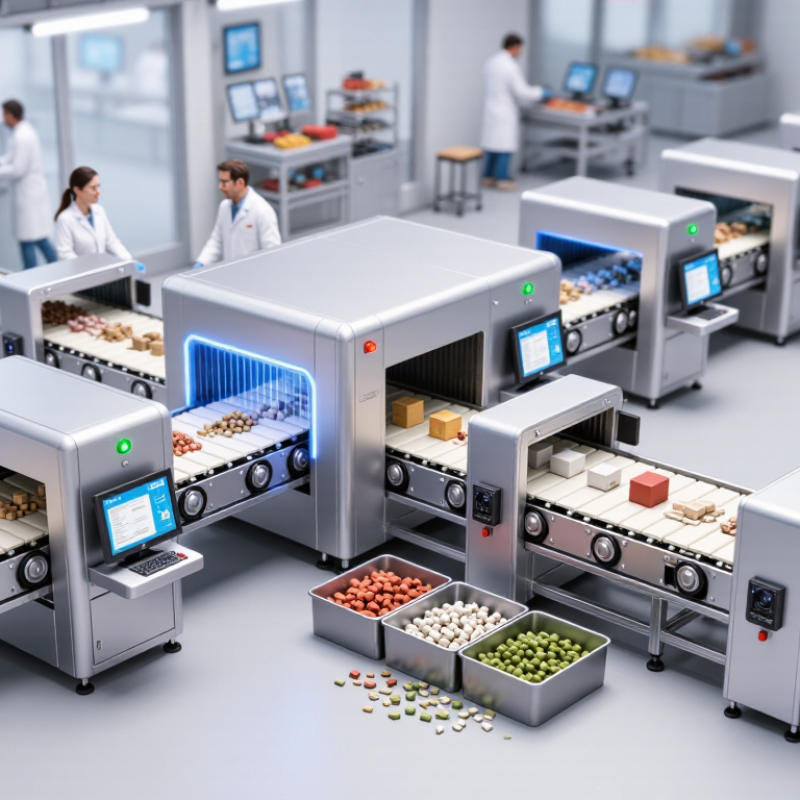
Learn MoreChoosing the best Optical Sorting Systems starts with a clear view of your material, not a brochure. What are you sorting, and what counts as an acceptable result? A camera may detect color differences well, while another sensor may better identify shape, size, or composition. The right choice depends on the product, contamination levels, line speed, and the cost of missed or incorrect sorting.
Look closely at real samples. Dust, glare, overlapping pieces, and uneven lighting can change results on a busy line. Small details matter. Ask suppliers to run representative material through the equipment, then review accuracy, throughput, and reject rates together. Check whether operators can adjust settings easily and whether cleaning or maintenance interrupts production. Ask how performance is measured; a single headline accuracy figure may not describe everyday operation.
Specifications are useful, but they can look cleaner than real production. A test with a small, carefully prepared sample may not reflect a difficult shift. That deserves a second look. Compare systems under similar conditions, and record what each one detects, misses, or rejects unnecessarily. This guide examines the practical criteria behind a sound decision, from sensor technology and software to integration, service, and long-term operating costs. There is no universal best machine—only a better fit for your material and process.
Choosing an optical sorter starts with the job, not the machine. Define what must be removed, what must be kept, and the required throughput per hour. Then describe the material: particle size, shape, moisture, surface texture, color variation, and how pieces overlap on the belt. A glossy red object may look different under wet conditions. Small differences matter. FAO’s 2023 report estimated that 13.2% of food was lost between harvest and retail in 2021. That figure is not a sorter performance benchmark, but it shows why careful handling and measurement matter.
Tips: Test representative batches, including dusty, wet, damaged, and unusually colored samples. Record false rejects and missed contaminants, not just overall accuracy. UNEP’s Food Waste Index Report 2024 estimated 1.05 billion tonnes of food waste in 2022 across retail, food service, and households. This is not all sortable material, so avoid treating the headline number as a sizing estimate. Use your own line data.
Check how material flows at actual operating speed. A clean lab sample can mislead; I would not trust one test run. Ask for results by material type and operating condition, then compare them with your acceptable loss rate and cleaning needs. If the target is unclear, pause before specifying sensors. It is an easy detail to overlook.
How to Choose the Best Optical Sorting Systems?
Compare Optical Sorting Technologies and Detection Methods
Optical sorters differ in what they detect, so match the sensor to the material and defect. RGB cameras identify visible color, shape, and surface differences. They can work well when clean, bright pieces move in a steady, single layer. Near-infrared sensors distinguish some materials by how they reflect light, even when colors look alike. But moisture, coatings, and mixed layers can complicate readings. Hyperspectral systems capture more wavelengths and reveal finer material differences, though they may require more setup and careful validation. Laser or fluorescence detection can help identify specific surface features. No sensor sees everything.
Compare more than detection claims. Ask for trials using your actual feed, including dusty pieces, overlapping items, and normal changes in lighting. Check detection accuracy, false rejects, throughput, and how quickly operators can adjust settings. Watch the reject mechanism, too: a correct detection is not useful if an air jet misses the target. Small details matter. A few wet pieces can shift results. Request sample data and repeat tests across different batches; one clean demonstration is not enough. It is tempting to choose the most advanced sensor, but that can be the wrong call when a simpler camera meets the specification. Some uncertainty remains, so leave room for recalibration as the feed changes.
| Technology / Detection Method | What It Measures | Typical Sorting Applications | Key Strengths | Limitations and Selection Factors |
|---|---|---|---|---|
| Visible RGB cameras | Reflected visible light, commonly used to assess color, shape, size, and surface appearance. | Food color grading, removal of visibly discolored or damaged items, and sorting materials by visible appearance. | Good for clear visual differences; supports color and shape-based classification; widely applicable to surface inspection. | May not distinguish materials that look alike. Results can be affected by lighting, dust, surface moisture, and overlapping objects. |
| Near-infrared (NIR) spectroscopy | Reflected near-infrared light, which can reveal differences in chemical composition and material type. | Plastic identification, food and agricultural product sorting, and separation of some materials that appear similar in visible light. | Can identify material differences that are not apparent to RGB cameras; useful for classifying many organic and polymer materials. | Detection is generally limited to the exposed surface. Performance depends on material, surface condition, calibration, and the spectral differences between target categories. |
| Short-wave infrared (SWIR) | Reflected light in the short-wave infrared region; systems use spectral response to distinguish certain materials and moisture-related differences. | Selected plastic, mineral, agricultural, and recycling applications where visible-light contrast is insufficient. | Can provide additional spectral contrast beyond visible imaging and may help separate some visually similar materials. | Not all materials have distinguishable SWIR signatures. Equipment cost, illumination, calibration, and sample presentation should be evaluated for the specific feed. |
| Hyperspectral imaging | A detailed spectrum at each image location across multiple wavelength bands, rather than only a few color channels. | Complex material classification, food quality inspection, and research or production tasks requiring fine spectral discrimination. | Provides richer spectral information than standard RGB imaging and can support classification of subtle material differences. | Generates more data and can require greater processing capacity, calibration, and integration effort. The extra spectral detail may not improve results for simpler sorting tasks. |
| Laser-induced fluorescence | Fluorescent light emitted by a material after laser excitation at selected wavelengths. | Detection of certain biological or organic characteristics, such as chlorophyll-related signals in produce and selected contamination or quality applications. | Can reveal fluorescence differences that are not visible under ordinary illumination; useful for targeted detection tasks. | Applicable only when the target produces a measurable and sufficiently distinct fluorescence response. Natural variation and surface conditions may affect classification. |
| Laser profile / 3D sensing | Surface height, contour, or shape derived from reflected laser light and camera measurements. | Sorting by shape or thickness, identifying surface defects, and separating items with distinct three-dimensional profiles. | Adds shape and height information that a two-dimensional image may not provide; can complement color or spectral sensors. | Does not identify chemical composition on its own. Occlusion, irregular presentation, and fast-changing surface conditions can affect measurements. |
| X-ray transmission (XRT) | How much X-ray radiation passes through an object; attenuation varies with density, thickness, and composition. | Detection of dense foreign bodies in food and separation tasks involving differences in internal density or atomic composition. | Can inspect internal structure and detect some contaminants that are hidden from surface-viewing optical sensors. | XRT is an X-ray sensing method, not a visible-light optical method. Detection depends on contrast and product geometry; radiation-safety controls are required. |

Selection tip: Match the sensor to the difference that separates the target from the rest of the feed. Test representative samples under realistic conditions, including expected variation in size, moisture, surface condition, throughput, and contamination. Combined sensing methods may be appropriate when one sensor cannot provide sufficient discrimination.
Choosing an optical sorting system starts with the material, not the machine’s headline specifications. Test representative samples, including dusty pieces, overlapping items, and natural color variations. Record what the system accepts and rejects. A clean laboratory sample can make performance look better than it is.
Accuracy is more than a single percentage. Track missed defects and good material rejected by mistake, since each creates a different cost. Ask how detection changes when product size, lighting, or belt loading shifts. Small differences matter. Review the results with operators who know the material. Their observations may reveal a recurring issue that a short test misses.
Throughput should be measured at the required accuracy, not in isolation. Run the sorter at realistic feed rates and note stoppages, buildup, and how consistently items spread across the belt. A faster setting may reduce inspection quality. It may also increase rework. Compare steady operation over several shifts, and check whether routine cleaning or calibration interrupts production. There is no perfect test; sample variation can still distort the picture. Keep the test conditions and assumptions documented.
Choosing an optical sorting system means looking beyond detection accuracy. Integration can shape daily output as much as the camera itself. Map the line before requesting quotes: belt width, product speed, drop height, dust levels, and available floor space. Ask how the sorter will exchange signals with conveyors, reject gates, and plant controls. Small mismatches matter. An ejector timed for a faster belt may send good product into the reject bin.
Maintenance deserves equal attention. Review access to lenses, lights, filters, and air nozzles; technicians should reach them without dismantling nearby equipment. Request a written cleaning interval and realistic service-time estimate, then compare both with your shift schedule. Also check spare-part availability and staff training requirements. Downtime rarely arrives neatly. Even a short stop during peak production can outweigh a modest purchase-price saving.
Operating costs include electricity, compressed air, consumables, labor, software support, and lost material during setup or false rejects. Ask suppliers to model cost per accepted tonne using your own samples, not a polished demonstration batch. Include changeovers and seasonal variation. Some estimates will still be rough; that is worth admitting. Track reject rate, recovery, and uptime during a trial, and record who verifies each figure. Otherwise, a tidy spreadsheet can hide a costly assumption.
A supplier should explain how its optical sorting system fits your material, production rate, and facility layout. Ask who will configure the equipment, train operators, and support maintenance after installation. Request a test using representative samples, not only clean demonstration pieces. Include variations in color, size, moisture, and surface condition. A credible supplier will describe both expected results and operating limits. Small details matter. Check how quickly settings can be adjusted and whether operators can review sorting data. Before comparing proposals, define measurable targets for throughput, acceptable product purity, and false rejects.
Validate the system with your own material under realistic conditions. Bring samples from different production shifts, including batches that are harder to sort. Run repeated tests at the speed you expect to use, and record each result. A single successful run can be misleading. Track rejected good material, missed defects, stoppages, and time needed for cleaning or recalibration. Ask the supplier to explain any gap between test results and your targets. A test plan can look tidy on paper, but real production is less predictable. Include operators in the trial; their feedback may reveal awkward controls or unclear alarms. Keep the raw data, and agree on follow-up tests if conditions change.