How to Choose the Best Commercial EV Charger?

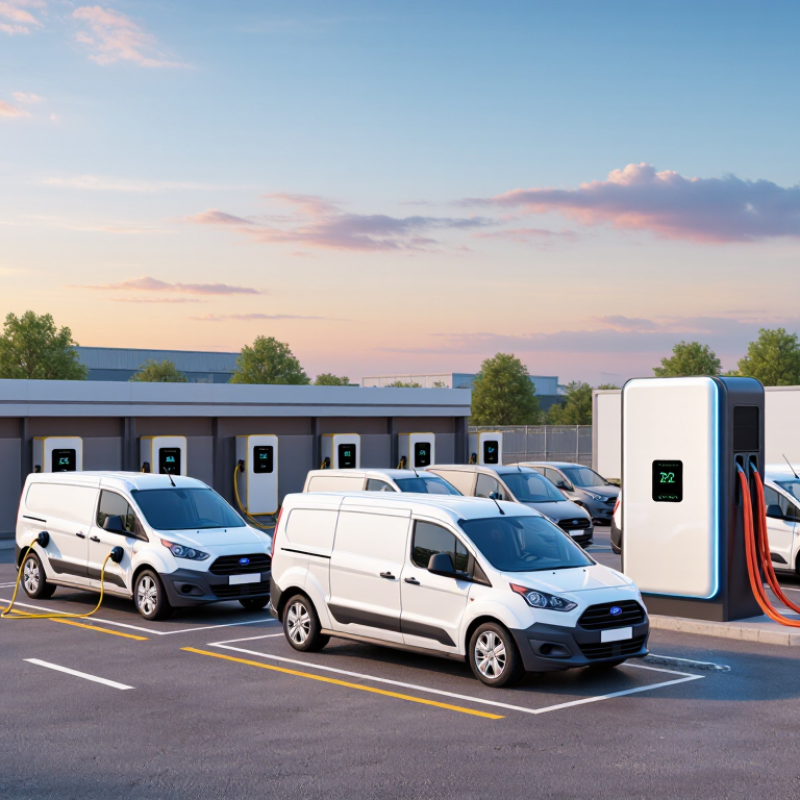
Choosing the best Commercial Ev Charger is not a simple matter of comparing charging speed and purchase prices. Fleet managers must examine daily mileage, vehicle battery capacity, parking duration, electrical supply, and future expansion plans. A delivery depot may need several 22-kilowatt AC units, while a highway service site may require powerful DC fast chargers. The right choice depends on actual operations, not impressive specifications.

Claas Bracklo, a longtime CharIN e-mobility expert, has stressed that “interoperability is the key to successful e-mobility.” That principle matters in commercial charging. A charger should communicate reliably with different vehicles, payment systems, energy platforms, and management software. Check connector compatibility, load balancing, remote monitoring, weather protection, and maintenance response times. Small details matter. A frozen screen at 6 a.m. can delay an entire route.

Experience also reveals an uncomfortable truth: the cheapest charger may become the most expensive asset. Poor uptime, difficult software, and limited technical support can create hidden operating costs. However, the most expensive model is not automatically better. Buyers should request documented uptime data, warranty terms, installation requirements, and references from similar businesses.

Safety and compliance must remain central. Qualified electricians should assess the site before installation. Energy demand should be measured carefully. Plans should also allow room for future vehicles, even when budgets feel tight today. There is no perfect system. A careful buyer still reviews usage data after installation and adjusts the network when real-world behavior differs from the original plan.

How to Choose the Best Commercial EV Charger?

Define Your Commercial Charging Needs and Fleet Requirements

Choosing the best commercial EV charger starts with your fleet, not the charger cabinet. Record vehicle types, daily mileage, battery capacity, parking duration, and return times. A delivery van parked for eight hours needs a different solution from a taxi stopping for twenty minutes.

The International Energy Agency reported over 14 million electric cars sold globally in 2023. Its Global EV Outlook 2024 also estimates that public charging capacity may need to expand sixfold by 2035. These figures signal growing demand, but they do not define your site. Review electricity capacity, shift schedules, route lengths, and seasonal usage. A 150 kW charger may look powerful, yet it can create expensive demand peaks. Slower charging may work better when vehicles remain overnight.

Tips: Build a one-week charging profile before requesting quotes. Measure arrival state of charge, departure targets, and missed charging windows. Include future vehicles, but avoid paying for capacity you cannot use. The U.S. Department of Energy’s Alternative Fuels Data Center recommends evaluating charging levels, connector compatibility, and electrical requirements together. That sounds simple. It is often overlooked.

Leave room for operational mistakes. Drivers may return late. Batteries may arrive nearly empty. Software data may also be incomplete. Choose equipment that supports load management, access control, maintenance alerts, and clear energy reporting. A practical pilot with several vehicles can reveal problems that spreadsheets miss. Test it during the busiest week, not the easiest one.

How to Choose the Best Commercial EV Charger? - Define Your Commercial Charging Needs and Fleet Requirements

Planning Dimension Key Question Typical Requirement Recommended Charger Configuration Selection Consideration
Fleet Size How many vehicles need regular charging? 1–10 vehicles for a small commercial fleet AC chargers with multiple charging ports and basic load sharing Allow capacity for fleet growth and temporary vehicle replacement.
Daily Energy Demand How much energy does each vehicle typically consume per day? Approximately 30–120 kWh per vehicle per day, depending on vehicle type and route Size the system using daily kWh demand, charging losses, and available charging hours Use actual route data where possible instead of relying only on battery capacity.
Vehicle Dwell Time How long are vehicles parked at the charging location? 8–12 hours overnight or 1–4 hours between shifts AC charging for long dwell periods; DC charging for short turnaround times A longer dwell time can reduce required charger power and installation cost.
Charging Speed How quickly must the vehicle return to service? Overnight charging or rapid top-up during scheduled breaks Typically 7–22 kW AC for scheduled charging; approximately 50–150 kW DC for faster fleet turnaround The vehicle’s maximum charging rate may be lower than the charger’s rated output.
Vehicle Type What types of electric vehicles will be charged? Passenger cars, vans, light commercial vehicles, buses, or trucks Select power, cable reach, connector type, and physical protection based on vehicle class Larger vehicles may require longer cables, higher power, and wider parking bays.
Electrical Capacity Can the existing electrical service support the planned chargers? Capacity must cover simultaneous charging, building loads, and future expansion Use dynamic load management, scheduled charging, or staged electrical upgrades A site electrical assessment should be completed before final equipment selection.
Charging Standards Which connectors and electrical standards are required? Depends on vehicle models, country, and local electrical regulations Provide compatible AC and/or DC connectors with suitable voltage and current ratings Confirm compatibility with every vehicle currently in the fleet and planned additions.
Operating Environment Will the charger be installed indoors or outdoors? Exposure to rain, dust, temperature changes, impact, or corrosive conditions Outdoor-rated enclosure, suitable ingress protection, cable management, and impact protection Check local conditions and installation requirements rather than selecting by power alone.
Load Management How many vehicles may charge at the same time? Multiple vehicles with varying departure times and energy requirements Dynamic power allocation, charging priorities, and time-based scheduling Smart load management can reduce peak demand and improve available site capacity.
Software and Reporting How will charging sessions and energy costs be monitored? Need for user access control, energy records, alerts, and fleet reports Networked charging with session history, remote monitoring, and exportable usage data Verify data ownership, connectivity options, software fees, and system integration needs.
Reliability and Maintenance What level of uptime is required for daily operations? High availability for vehicles with fixed routes or multiple shifts Remote diagnostics, replaceable components, clear maintenance procedures, and service support Evaluate total downtime risk, not only the initial equipment price.
Future Expansion Will the fleet or energy demand increase? Additional vehicles, longer routes, or increased daily charging sessions Modular charger layout, spare electrical capacity, conduit planning, and scalable software Designing for expansion during the initial project can reduce future construction work.
Planning note: Charger power, quantity, and electrical infrastructure should be confirmed through vehicle specifications, route-energy records, parking schedules, and a site electrical assessment.

Compare Charger Types, Power Levels, and Charging Speeds

How to Choose the Best Commercial EV Charger?

Commercial charging decisions should begin with vehicle use, not charger advertisements. AC Level 2 chargers commonly provide 7 to 22 kW, making them suitable for offices, hotels, apartments, and workplaces. A vehicle may need several hours to charge, but that can fit an overnight parking schedule. Installation is usually simpler, although available electrical capacity still matters.

DC fast chargers deliver much higher power, often from 50 kW to over 300 kW. They can add substantial range during a short stop, which suits highway services, delivery depots, and busy urban sites. However, charging speed depends on the vehicle, battery temperature, state of charge, and shared power management. A 150 kW charger will not always supply 150 kW.

Power is not the only comparison.

A charger with multiple outlets can serve more vehicles, but its power may be divided between them. This can create slower sessions during busy periods. Check cable length, connector compatibility, weather protection, payment controls, monitoring software, and maintenance access.

A practical site assessment should measure parking patterns and peak demand before equipment is selected. I have seen early plans overvalue maximum speed and undervalue queue space. That mistake is expensive to correct.

Future expansion also deserves attention, because a small electrical panel today may limit useful capacity later. Real performance often differs from the specification sheet.

Evaluate Site Capacity, Installation Needs, and Grid Connections

How to Choose the Best Commercial EV Charger?

Evaluate the site before comparing charger specifications. The International Energy Agency’s Global EV Outlook 2024 reports more than four million public charging points worldwide at the end of 2023. Demand is growing quickly. Your parking area may need several chargers, but the existing electrical service may not support them. Check the main switchboard, transformer rating, spare breaker capacity, cable routes, and peak building loads. A charger rated at 22 kW can create a serious demand increase when multiple vehicles charge together.

Start with measured data. Review twelve months of utility bills and inspect the site during its busiest hours. The U.S. Department of Energy identifies typical Level 2 charging equipment in the 7–19 kW range, while DC fast chargers can require far more power. Installation costs can rise sharply when trenching, utility upgrades, or transformer replacements are needed. The National Renewable Energy Laboratory estimates that the United States may require about 1.2 million public Level 2 ports and 182,000 public DC fast ports by 2030. Grid coordination matters. Ask the utility about available capacity, interconnection studies, demand charges, and approval timelines. Managed charging can reduce peaks, but it is not magic. A spreadsheet can miss a weak cable route, a flooded trench, or a charger queue at 6 p.m. I would rather oversize conduits than discover that limitation later.cuntegn

How to Choose the Best Commercial EV Charger?

Evaluate site capacity, installation needs, and grid connections before selecting charger power.

The figures are representative planning benchmarks for common commercial charger configurations. Indicative site capacity includes approximately 15% allowance for electrical losses and operating margin. Higher-power DC chargers may require a dedicated transformer, utility coordination, load management, or a grid upgrade.

Check Safety Standards, Smart Features, and Network Compatibility

How to Choose the Best Commercial EV Charger?

A commercial EV charger should meet recognized safety standards before adding smart features. Look for compliance with IEC 61851, IEC 62196, or the applicable national certification system. These standards address electrical protection, charging communication, and connector safety. Residual-current monitoring, over-temperature protection, emergency stopping, and secure cable handling matter in busy parking areas. A charger that passes inspection but lacks clear maintenance records is still a practical risk.

Smart controls can reduce operating costs and prevent overloaded circuits. Choose load balancing, scheduled charging, remote diagnostics, user authentication, and energy reporting.

According to the International Energy Agency’s Global EV Outlook 2024, public charging points exceeded four million worldwide in 2023, growing by more than 40% in one year. That rapid expansion makes reliable monitoring less optional. It also creates more complexity. Network interruptions happen.

Check network compatibility before installation. Support for OCPP 1.6 or OCPP 2.0.1 can improve software flexibility and reduce dependence on one network operator. ISO 15118 support may enable vehicle identification and future bidirectional charging, where local regulations and vehicles permit it. The U.S. Department of Energy’s Alternative Fuels Data Center shows how connector types and station availability vary across regions, so local vehicle demand should guide the final choice. A charger may have impressive specifications, yet perform poorly with weak connectivity or limited service support. No checklist is perfect. Test the full charging process, from payment to fault recovery, before opening the site.

Compare Total Costs, Maintenance Plans, and Supplier Support

Choosing the best commercial EV charger requires more than comparing purchase prices. The total cost includes electrical upgrades, installation, permits, software, payment processing, and energy demand charges. A 22-kilowatt charger may deliver faster service, but it can require expensive panel upgrades. A lower-power unit might suit a workplace with longer parking periods. Request a five-year cost estimate with every assumption clearly listed. Small omissions become expensive.

Maintenance plans also deserve close attention. Look for preventive inspections, remote diagnostics, firmware support, and clear replacement procedures. Ask how quickly technicians respond and whether spare parts are stored locally. Check warranty exclusions carefully. Supplier support should include installation guidance, staff training, usage reports, and reliable technical assistance after launch. Request service-level targets and recent uptime records. Speak with current operators, not only sales representatives. One supplier may promise rapid repairs, yet an actual service visit could take several days. That gap changed my evaluation.

Tips:

Compare three written proposals using the same charger capacity and operating schedule. Ask each supplier to separate equipment, labor, software, and maintenance costs. Test the support line before signing. Also confirm who handles network outages and payment failures. Clear answers matter. Small details matter.

Cart Summary

Subtotal: $0