How to Choose Shuttle Automation for Your Warehouse in 2026?

Choosing Shuttle Automation in 2026 is not simply a matter of buying faster equipment. It means matching storage density, order profiles, SKU sizes, and peak demand to the way your warehouse actually works. A shuttle may glide through deep lanes, but the wrong system can leave workers waiting at the pick face. Small details matter: tote dimensions, replenishment timing, aisle access, and what happens when one component needs service.

Warehouse automation analyst Marc Wulfraat is a useful reference for evaluating operational fit. The guiding line here is editorial, not a verified quotation from him: “Choose the system for the work it must handle every day, not the speed promised on a slide.” Keep that test close. It sounds obvious. It isn’t always followed.

This guide outlines how to compare shuttle types, assess throughput and storage needs, and examine software, maintenance, and integration requirements. It also considers the less polished questions: Can the system handle uneven order peaks? Is there a clear recovery plan for a stalled shuttle? Will your team be able to maintain performance as inventory changes? No forecast is perfect. A careful decision uses measured data, realistic growth assumptions, and site-specific advice from qualified integrators. It may still involve trade-offs—and naming them early is part of choosing well.

How to Choose Shuttle Automation for Your Warehouse in 2026?

Define Warehouse Requirements and Operating Constraints

How to Choose Shuttle Automation for Your Warehouse in 2026?
Define Warehouse Requirements and Operating Constraints

Start with the work your warehouse must handle, not the equipment you hope to install. Record daily and peak-hour order lines, inventory volume, SKU sizes, and seasonal changes. Measure actual cartons, totes, or pallets, including their maximum weight. Peak hours matter. A system sized for average demand may struggle when several waves arrive together.

Walk the storage area with a tape measure and a floor plan. Note aisle widths, ceiling height, column locations, sprinkler clearance, floor condition, and dock distances. Measure the narrow spots twice. Small obstructions can change how much storage a design can use. Check temperature, dust, and moisture too, since operating conditions affect equipment and maintenance needs.

Map how goods move between receiving, storage, picking, packing, and dispatch. Identify existing conveyors, software, charging access, and manual work that cannot stop during installation. Ask operators where congestion really happens; a dashboard may miss a recurring queue near one packing station. We have seen early throughput estimates prove optimistic when replenishment timing was overlooked. That is worth revisiting. Define acceptable downtime, staffing limits, and future growth, then test proposed capacity against both normal shifts and realistic peak scenarios.

How to Choose Shuttle Automation for Your Warehouse in 2026?

Define Warehouse Requirements and Operating Constraints

Prioritize the factors that shape shuttle-system design. Scores are an illustrative planning assessment, not industry benchmark data.

Impact scale: 1 = lower impact, 5 = higher impact. Validate scores against your SKU profile, peak demand, facility layout, and operating plan.

Compare Shuttle Automation Types and Storage Configurations

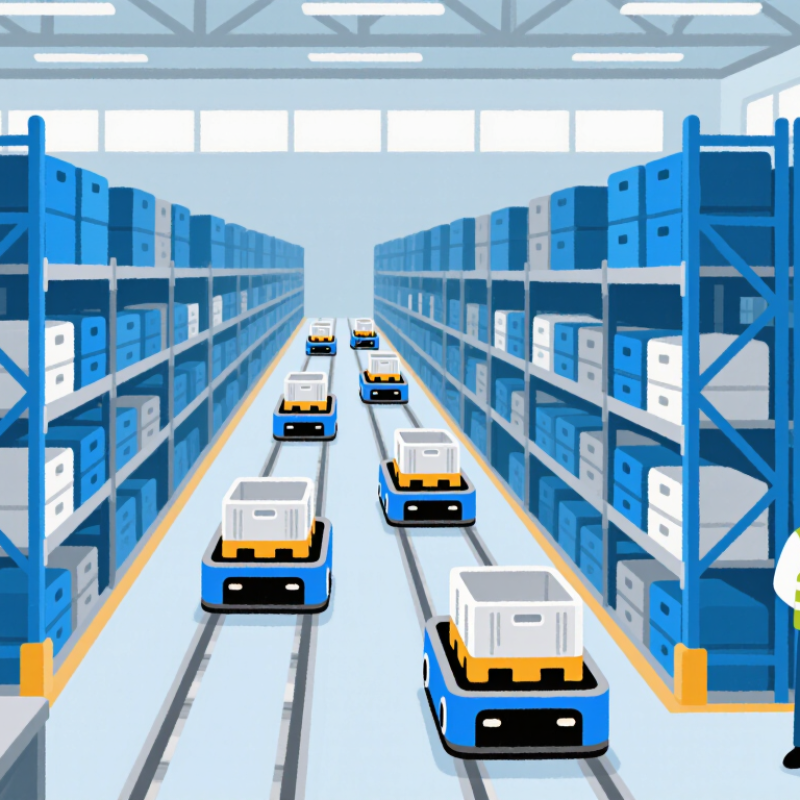
Tote shuttles suit small-item picking, where bins travel between storage and workstations. They can support high-density storage, but replenishment and picking traffic still need careful separation. Pallet shuttles move full loads through deep lanes, making them useful for case or pallet buffers. Multi-level, four-way systems add routing flexibility, though they also bring more controls and maintenance demands.

Storage configuration matters as much as shuttle type. Single-deep lanes offer simpler access; deeper lanes increase capacity but may limit selectivity. MHI and Deloitte’s 2024 Annual Industry Report found that 55% of surveyed organizations planned to adopt robotics and automation within five years. The report also found 88% expected digital supply chains to offer competitive advantage by 2026. Those figures show interest, not guaranteed returns. Fit matters more. Compare SKU count, peak order lines, pallet dimensions, and replenishment frequency using actual operating data. Leave space for service access and seasonal peaks. A layout can look efficient on paper and still create queues at the lift. That part is easy to underestimate.

Assess Compatibility with Inventory, Layout, and Material Flow

Choosing shuttle automation in 2026 starts with the inventory, not the equipment. List the dimensions, weights, packaging, and turnover rates of the loads you actually handle. A system designed for uniform pallets may struggle with mixed sizes or damaged packaging. Small details matter. Check whether load carriers stay stable during movement, and leave room for unusual stock. A tidy spreadsheet can still hide awkward exceptions.

Next, compare the shuttle layout with the building. Measure aisle widths, rack heights, column positions, floor conditions, and access for maintenance. Consider where people, forklifts, and replenishment loads travel. A dense layout may increase storage capacity but create congestion at transfer points. That trade-off deserves a real site review. Drawings can be outdated, so verify key measurements on the floor.

Finally, map material flow from receiving through storage, picking, and dispatch. Estimate typical and peak demand, including when several orders arrive together. Check how the shuttle system will exchange inventory data with warehouse software and other equipment. A promising model may still miss a shift’s actual bottleneck. Test representative loads and order patterns before committing, and record where queues form. Revisit assumptions when the product mix changes.

Evaluate Throughput, Integration, Safety, and Lifecycle Costs

Choose shuttle automation against real order patterns, not a peak-rate figure alone. Measure the peaks. Track orders per hour, SKU mix, tote dimensions, replenishment tasks, and the time containers spend at transfer points. A system may move loads quickly but still miss dispatch targets when lifts or conveyors become bottlenecks. Ask for performance assumptions, including shift length and buffer capacity, then compare them with a representative week of warehouse data.

Integration affects the result as much as shuttle speed. Check how the controls exchange inventory, task, and fault messages with your warehouse systems. Test recovery after a stalled tote, lost connection, or blocked aisle; operators need clear alerts and a safe way to resume work. Walk the site with maintenance staff. Guarded transfer points, visible emergency stops, and practical access for service can reduce avoidable risk. A pilot helps expose awkward handoffs, though one quiet week is not enough evidence.

Compare lifecycle costs over the expected operating period, including installation, software changes, energy, spare parts, training, and planned downtime. Request maintenance intervals and realistic support response times, not just a purchase price. Estimate cost per handled load under normal and peak conditions. A spreadsheet can still miss the messiness of daily operations, so check assumptions with the people who refill, clear, and repair the system. Some costs will remain uncertain; record them rather than hiding them in a contingency line.

How to Choose Shuttle Automation for Your Warehouse in 2026? - Evaluate Throughput, Integration, Safety, and Lifecycle Costs

Evaluation dimension What to measure Pallet shuttle 4-way pallet shuttle Tote/bin shuttle Selection guidance
Throughput Required inbound and outbound moves per hour; peak-hour demand; order profile Best assessed against pallet moves and lane replenishment cycles; performance depends on lane depth and lift-truck interface. Assess vehicle count, travel paths, lifts, transfers, and traffic management together; flexible routing does not guarantee higher throughput. Assess tote presentations and order lines per hour, including picking stations and replenishment; not directly comparable to pallet moves. Request a peak-period simulation using actual SKU mix, task history, shift pattern, and planned growth—not a single headline rate.
Storage density Usable locations; aisle and staging footprint; clear height; access and fire-protection requirements Deep-lane storage can reduce aisle space for compatible, high-volume pallet stock. Can support dense storage with more flexible movement between lanes, subject to the rack and building layout. Uses vertical and horizontal space for small-item inventory; requires allowance for stations, lifts, and tote circulation. Compare net usable capacity in the same building envelope, including buffers, maintenance access, and required clearances.
SKU selectivity Number of SKUs; pallets or totes per SKU; expiry and lot-control rules; retrieval frequency Deep lanes are most suitable when each lane can hold one SKU or a controlled product group. More adaptable access can help when inventory is spread across locations, but slotting and traffic rules still matter. Well suited to many small SKUs and frequent item-level retrieval, subject to tote size and picking design. Validate lane or bin assignment against real inventory history, including seasonal peaks and replenishment behavior.
Load compatibility Pallet or tote dimensions; maximum gross load; load stability; packaging condition Requires pallets and loads compatible with the shuttle, rack, and handling equipment. Requires defined load and pallet specifications; inconsistent or damaged loads can disrupt automated handling. Requires compatible containers and item presentation; verify weight, dimensions, and handling of irregular items. Check the full range of actual loads—not only nominal sizes—and define inspection and exception-handling processes.
Integration WMS/WCS interfaces; task release; inventory accuracy; ERP and conveyor connections Requires coordinated tasking between the shuttle controls and pallet transport or lift-truck processes. Requires orchestration of vehicle routes, lifts, transfers, charging, and storage tasks. Requires coordination among inventory software, shuttle controls, tote presentation, and picking stations. Confirm interface ownership, message and recovery logic, test environments, and responsibility for end-to-end commissioning.
Safety and access People and vehicle interaction; restricted zones; emergency stops; inspection and rescue access Plan controlled access to rack aisles and safe procedures for clearing faults or recovering loads. Assess vehicle movement, transfer points, access controls, and safe maintenance procedures across the system. Assess operator interfaces, station ergonomics, access to moving equipment, and safe jam-clearing procedures. Require a site-specific risk assessment, documented safeguards, training, and maintenance access before commissioning.
Resilience and recovery Failure modes; spare units; manual fallback; recovery time; backup and support arrangements Consider shuttle availability, access to affected lanes, spare equipment, and alternate pallet-handling routes. Consider vehicle redundancy, route alternatives, lift availability, and recovery from blocked transfers. Consider shuttle and lift redundancy, alternative picking capacity, and how orders proceed during equipment faults. Set recovery-time and business-continuity targets; test exception scenarios as part of acceptance.
Lifecycle cost Capital cost; software; installation; energy; labor; maintenance; spares; upgrades; downtime Include shuttle and rack costs, charging, transport interfaces, maintenance, and the effect of lane assignment on labor. Include vehicles, lifts and transfers, controls, charging, spares, software support, and planned service interruptions. Include shuttles, lifts, containers, picking stations, software, maintenance, and ongoing replenishment labor. Compare total cost over the same study period and operating assumptions; include upgrade and end-of-life costs where known.
Best-fit profile Product type; inventory profile; service promise; building constraints; growth plan A candidate for dense pallet storage when lane-based storage suits the SKU and retrieval profile. A candidate when pallet storage needs more routing flexibility and the additional system complexity is justified. A candidate for small-item storage and order fulfillment where tote handling and picking are central requirements. Shortlist by handling unit and operating profile first; confirm the choice with a site-specific design and cost model.

Note: The comparisons are qualitative screening guidance, not guaranteed performance or cost benchmarks. Final throughput, capacity, safety design, and lifecycle cost depend on the site layout, inventory and order data, equipment configuration, local requirements, and operating practices.

Select a Scalable System and Plan Implementation in 2026

Choosing shuttle automation in 2026 starts with the work your warehouse actually handles, not a headline throughput figure. Map daily order lines, peak-hour surges, SKU dimensions, and replenishment patterns. A system sized only for average demand may struggle when several waves arrive together. Measure the pinch points.

Select a design that can grow in practical steps. Modular storage lanes, additional shuttle units, and adaptable lift capacity can support expansion without rebuilding every aisle. Check that the control software can connect with your warehouse systems and provide clear inventory and equipment alerts. Ask operators to test the interface using real tasks, such as locating a short-pick tote during a busy shift. Plans miss things.

Build implementation around a measured baseline. Record current travel time, order accuracy, and throughput before installation, then compare results during a limited pilot. Test peak traffic, recovery after equipment stoppages, and maintenance access before extending automation across the site. Assign staff training time and define who handles exceptions; software cannot resolve every unusual order by itself. Leave room in the schedule for adjustments. A tidy simulation may not capture dust, uneven workloads, or the habits people develop under pressure. Use those findings to refine the rollout, rather than treating the first design as final.

Cart Summary

Subtotal: $0