AirAccess Access Control as a Service Platform with Auto-Cell Networking (ACasS)
Enterprise Hosted Platform - MVPAccess™
New! Napco Access 1 & 2-Door Controllers
Please contact us directly or visit our FAQ page or Video Library.
Toll Free 800-645-9330
Phone 631-842-9400
Fax 631-842-9135
Email: sale@safehomeexpert.com
sale@safehomeexpert.com (Latin America)
Sign up for integrator training seminars. 2 days and 3 day online courses are available from our directory indexed by product.
Learn MoreOffer the one access control solution powerful and flexible enough to protect all of your clients. Continental Access provides state-of-the-art access control software and hardware in an easy-to-implement and easy-to-use access control solution that seamlessly integrate with a wide range of facility management products.
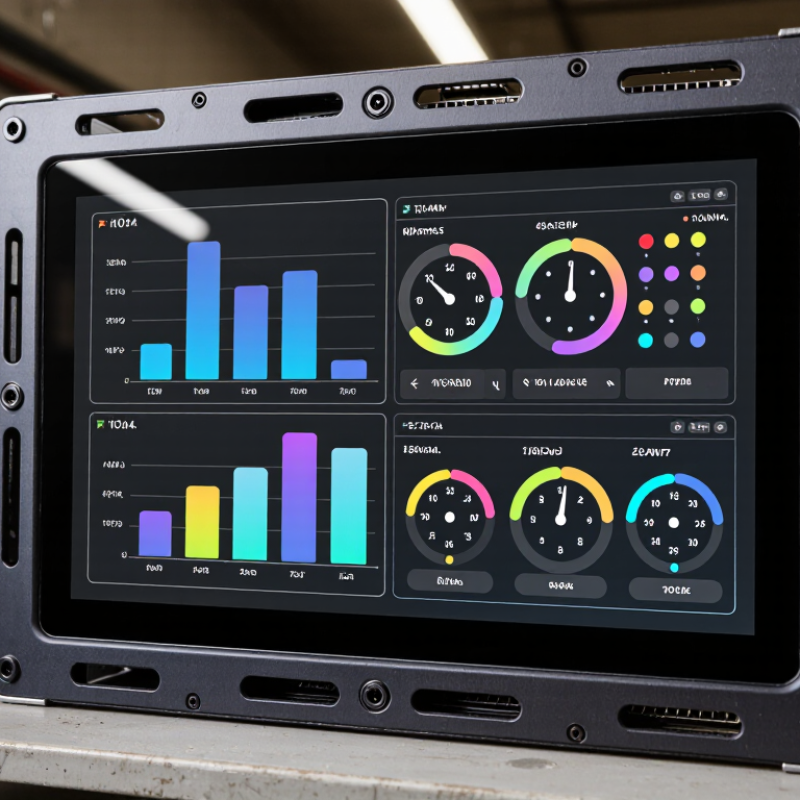
Learn MoreChoosing a 10.4-Inch Industrial Display in 2026 starts with the machine, not the catalog. Will the screen sit behind a dusty control-room window, face bright factory lights, or be operated with gloves? Those details shape the right touch technology, brightness, viewing angle, and front-panel protection. A 10.4-Inch Industrial Display can look perfect on a specification sheet and still disappoint on the production floor. Small details matter.
“Choose for the conditions around the screen, not the diagonal size alone.” This is a practical editorial principle, not a verified quotation from a named industry expert. No source was provided for a real expert’s name and exact words, so attaching a quotation to one would risk misleading readers. A reliable choice should instead be grounded in documented specifications, supplier evidence, and the demands of the actual installation.
Compare resolution with the interface, check whether the connector matches your controller, and confirm how the unit handles heat, vibration, and long operating hours. Ask about replacement availability, warranty terms, and support—not just the initial price. If the display will be mounted behind a panel, measure the cutout and depth before ordering. Easy to overlook. This guide will help you assess these trade-offs clearly, while recognizing that no single model suits every application. Some requirements may only become obvious during testing. That is worth admitting early.
A 10.4-inch 4:3 panel measures about 8.32 inches wide and 6.24 inches high, excluding its bezel. At 800 × 600, it displays 480,000 pixels. VESA’s Display Monitor Timing standard recognizes 800 × 600 as a standard display timing, making SVGA a well-established format rather than an unusual custom resolution. The square-ish screen suits control panels where operators read stacked values, alarm lists, and machine diagrams. It also preserves familiar proportions for legacy interfaces.
Pixel density is about 77 pixels per inch on a 10.4-inch diagonal screen. Small text can look coarse. Check actual viewing distance and the interface’s smallest labels before choosing this resolution. For example, a screen mounted beside a machine may need larger buttons and higher contrast, not merely more pixels. At this size, 4:3 can leave useful vertical room for menus and status rows. But it is not automatically the best fit. Wide trend charts may feel cramped, and modern interfaces designed for widescreen layouts can waste space. VESA timing compatibility also does not guarantee that a particular panel accepts every signal format; verify input timing, active-area dimensions, and controller support with the supplier. I would check a real interface mock-up. Specs alone can mislead.
For a 10.4-inch industrial display, start with the light around the operator, not the brightness number alone. About 500 cd/m² is often suitable for indoor equipment rooms, workshops, and control cabinets with moderate lighting. Check the screen at its installed angle, too. Overhead LEDs can create glare even when the display looks bright on a desk. Small text should remain clear without forcing operators to lean closer.
Outdoor installations usually need 1,000 cd/m² or more, especially when sunlight reaches the screen directly. But higher output is not a complete fix. Reflections, viewing angle, and protective glass all affect readability. Optical bonding or an anti-reflective surface may help, depending on the enclosure and site conditions. Numbers can mislead. A display rated at 1,000 cd/m² may still look washed out beside a bright window.
There is no perfectly tidy brightness rule. A practical check is to test the display at the actual location during the brightest part of the workday. Note glare, text contrast, and whether brightness changes create heat or power concerns. For an outdoor unit, confirm that the specified brightness is continuous, not merely a short-term peak. It is tempting to choose the highest rating and move on; that can add cost without fixing reflections. The installation deserves a real-world test.
A 10.4-inch industrial display should be chosen around the operator’s hands, not just its diagonal measurement. Resistive touch responds to pressure. It can work with thick gloves or a blunt stylus, making it suitable for panels in wet or dusty settings. PCAP offers a smooth glass surface and familiar gestures, yet glove response depends on controller tuning and glove thickness. Test the actual gloves. A bright showroom demo may not reveal missed taps on a cold shop floor. Consider cover-glass thickness, water droplets, and frequent cleaning, too.
For video, LVDS can suit embedded systems, but its timing, signal mapping, and electrical requirements must match the host. A connector that fits is not proof of compatibility. eDP is common in newer panel designs; confirm the host supports the required version and lane configuration. HDMI is convenient with standard sources and easier service access, though it may add bulk or conversion hardware. Touch data usually travels separately through USB or serial, so verify that connection as well. Check resolution and cable routing inside the actual enclosure. A display may power on while touch response or image timing remains unreliable.
| Decision Area | Option | Key Characteristics | Advantages | Trade-Offs and Checks | Best Fit |
|---|---|---|---|---|---|
| Touch Technology | Resistive | Responds to pressure on the screen surface. Common designs support operation with a finger, gloved hand, or stylus. | Can work with many types of gloves and input tools; does not depend on the electrical properties of the user’s finger. | Typically requires physical pressure; the surface layer may be more susceptible to wear or scratching. Confirm the touch controller, connection, and supported operating systems. | Equipment operated with gloves, a stylus, or in settings where users may not have bare fingers available. |
| Touch Technology | PCAP (Projected Capacitive) | Detects changes in capacitance through a protective glass surface. Multi-touch support depends on the panel and controller. | Supports a smooth, glass-front design and can provide responsive touch input; multi-touch is available on compatible systems. | Glove, moisture, and thick-cover-glass performance depends on controller tuning and system design. Verify operation with the exact gloves, overlay, and environment. | Applications that prioritize a glass front, multi-touch interaction, or a contemporary user interface. |
| Display Interface | LVDS | A differential signaling interface commonly used between embedded systems and display panels. Connector, pinout, voltage, and lane configuration are implementation-specific. | Can suit embedded designs that connect directly to a compatible panel and provide the required LVDS output. | Not a universal plug-and-play connector. Confirm resolution, timing, lane mapping, pinout, voltage, and cable before selecting a panel. | Embedded systems with a documented, compatible LVDS display output. |
| Display Interface | eDP (embedded DisplayPort) | An internal digital display interface used to connect a host to a panel. Compatibility depends on the host and panel specifications. | Provides a digital connection designed for integrated display systems; can reduce the need for analog conversion in compatible designs. | Check supported eDP version, link configuration, resolution, connector pinout, power, and cable. Similar-looking connectors may not share the same pin assignment. | New embedded designs whose processor or display controller natively supports the panel’s eDP requirements. |
| Display Interface | HDMI | A digital audio/video interface widely used on computers and other host devices. The display must support the host’s output mode. | Convenient for external connections and prototyping when the host already provides a compatible HDMI output. | Confirm the supported resolution and refresh rate, connector type, cable arrangement, and whether the display requires an adapter or conversion board. | Systems using an HDMI-equipped host or installations where a readily accessible external video connection is useful. |
| Touch Connection | USB or serial touch output | Touch data is carried separately from the display’s video signal in many configurations. The controller determines the available connection and protocol. | Allows touch input to be connected to a compatible host independently of the video link. | Do not assume video-interface choice determines touch connectivity. Confirm the touch controller interface, driver support, cable, and host ports. | Any touch-enabled setup where the host must receive touch coordinates as well as display video. |
| Size and Resolution | 10.4-inch panel specification | Diagonal size alone does not define resolution, aspect ratio, brightness, viewing angles, or active area. | Matching the panel’s native resolution to the application can keep text and graphics clear and correctly proportioned. | Check the exact datasheet for active area, native resolution, aspect ratio, brightness, viewing direction, and required display timing. | Every project: select by the complete panel specification rather than diagonal size alone. |
| Environment and Integration | Operating conditions and mechanics | Industrial suitability depends on the complete assembly, including panel, touch cover, controller, enclosure, and thermal design. | Early verification can reduce integration issues and help ensure the display fits the actual installation. | Check operating and storage temperature, brightness, sunlight readability, ingress protection of the assembled product, mounting dimensions, power requirements, and serviceability. | Installations exposed to temperature variation, dust, moisture, vibration, or extended operating hours. |
| Selection Checklist | Verify before ordering | Compare the full panel and touch specifications with the target host and intended operating conditions. | Helps confirm that the mechanical, electrical, and software elements work together. | Request the datasheet and confirm interface pinout, native resolution, touch behavior, connector and cable, power, dimensions, operating temperature, and driver compatibility. | Use for final comparison of candidate 10.4-inch industrial displays. |

Important: Interface names do not guarantee direct compatibility. Confirm the exact panel datasheet, host output, connector pinout, signal requirements, and touch-controller connection before integration.
When choosing a 10.4-inch industrial display, treat protection and temperature ratings as installation limits, not decoration. An IP65 front can resist dust and water jets when the display is correctly sealed into a suitable cutout. The rear connectors may have different protection. Important detail. Check the gasket, clamp spacing, and cable exits; a small gap can undermine the front rating. If washdown is expected, confirm what the rating covers rather than assuming the entire unit is sealed.
A stated −20 to 70°C operating range does not guarantee identical performance across that span. Cold starts can slow touch response, while a sunlit panel or warm cabinet can push internal temperatures higher. Check whether the figure describes operation or storage, and review the recommended airflow and mounting conditions. Still, the range alone does not tell the whole story. Test the display in its actual enclosure, with the intended cables and brightness setting. That takes time, but it can reveal a heat problem that a specification sheet cannot.
For a 10.4-inch industrial display, a 50,000-hour backlight rating is a useful target, not a promise of service life. Check how the figure was measured: brightness level, operating temperature, and the definition of end-of-life all matter. Some specifications refer to the time until brightness falls to 50% of its initial value; others use a different threshold. Ask for the test conditions. Small details count. A display mounted near a warm motor cabinet may age faster than one used in a cool control room. Also consider whether the backlight can be replaced and whether dimming is needed during night shifts.
EMC performance deserves the same careful review. IEC 61000-6-2 sets generic immunity requirements for industrial environments, but citing the standard alone does not show how a display performs in your installation. Request test documentation and check the applied edition, test levels, and operating criteria. Pay attention to electrostatic discharge, conducted disturbances, and radiated radio-frequency fields. These can affect touch response or cause brief image interruptions. A compliant test result is reassuring, but cable routing, grounding, and nearby drives still matter. I would not treat “50,000 hours” or “IEC 61000-6-2” as complete answers; both need context.