China Top Steam Turbine Blade Manufacturers for Global Buyers
China’s steam turbine supply chain serves power stations, industrial plants, and equipment rebuilders worldwide. For buyers, choosing a Steam Turbine Blade manufacturer is a technical decision, not merely a price comparison. Blade geometry, alloy selection, machining accuracy, and inspection records can affect efficiency and service life. Small defects matter.
The International Energy Agency’s Electricity 2024 report projected global electricity demand growth averaging 3.4% annually from 2024 to 2026. That outlook supports continued demand for dependable generation equipment, including turbine components. It does not guarantee demand for every supplier. Buyers still need to verify production capability, quality controls, and delivery commitments directly.
This guide examines China-based manufacturers through practical criteria: engineering support, material documentation, machining and balancing capacity, non-destructive testing, and export experience. Request drawings, inspection plans, and relevant project references before comparing quotations. A polished brochure is not proof of manufacturing quality. Nor does a low unit price reveal the full cost of replacement, downtime, or delayed commissioning. Some details are difficult to compare from a distance. That deserves careful scrutiny. The aim is to help global buyers build a shortlist, ask better questions, and assess supplier claims against project requirements.
Steam Turbine Blades: Types, Functions, and Key Design Features
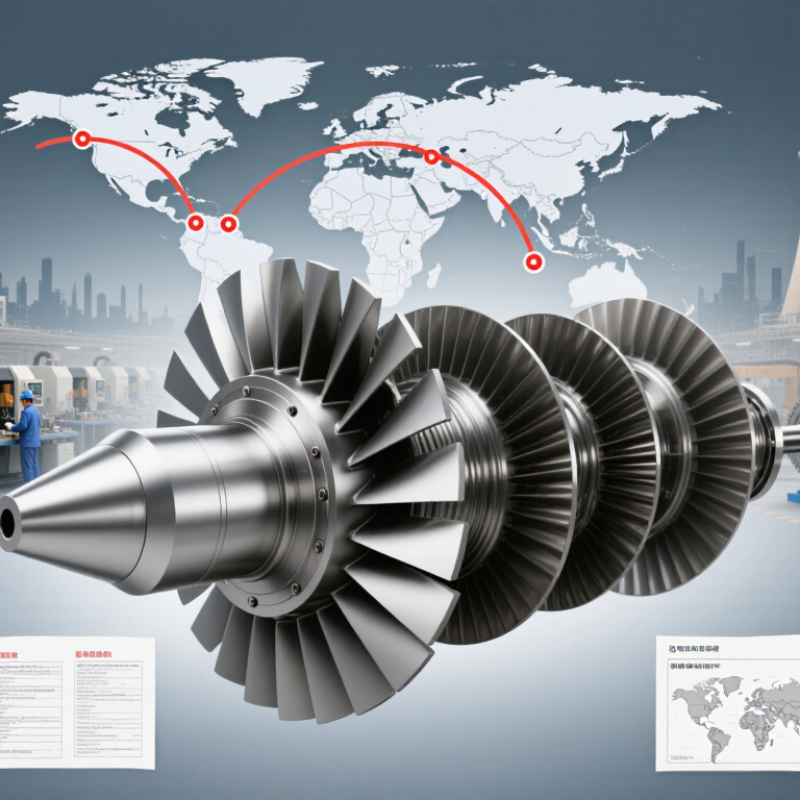
Steam turbine blades convert steam energy into rotation. Fixed blades, often called vanes, direct steam toward moving rotor blades. Impulse designs mainly use steam jets to drive the rotor; reaction designs also generate force as steam expands across moving blades. Real machines may combine both principles. The distinction matters when comparing operating speed, efficiency, and maintenance needs.
Blade shape is only part of the design. Engineers also consider alloy strength, temperature resistance, root attachment, surface finish, and dimensional tolerances. A curved profile guides steam, while a carefully fitted root transfers force to the rotor. Some high-temperature stages use internal cooling passages. Tiny surface defects can grow under repeated stress, so inspection records and manufacturing quality controls deserve close attention. Specifications should match the turbine’s steam conditions, not just a general product category.
Tips: Share operating pressure, temperature, speed, and stage drawings when requesting quotations. Ask how dimensions and material properties are verified. Check compatibility with the existing rotor. A low purchase price may hide fit-up or service-life compromises. Even experienced teams can miss a detail; review assumptions before final approval.
China’s Blade Manufacturers: Turbine OEMs, Forgers, and Specialist Suppliers
China’s steam-turbine blade supply chain includes three distinct groups. Turbine OEMs engineer blades around a machine’s speed, steam conditions, and rotor geometry. Forgers supply shaped metal stock and control its grain flow and heat treatment. Specialist suppliers handle narrower tasks, such as precision machining, coatings, or replacement-blade production. Different roles, different risks.
Global Energy Monitor’s 2024 Boom and Bust Coal report recorded 70.1 gigawatts of coal power projects starting construction in China in 2023, about 95% of the global total. That figure indicates a substantial domestic project pipeline, but it does not prove export demand for any particular blade supplier. Buyers should compare drawing control, alloy traceability, dimensional inspection, and documented balancing tests. Ask how the supplier handles repairs and material substitutions, too. A polished sample is not enough. Small profile errors can affect clearances and vibration. One practical limitation: public reports rarely disclose blade-level defect rates, so buyers must verify quality records directly. A factory visit can reveal more than a brochure. The evidence may still be incomplete.
Supercritical Steam Benchmarks: 22.064 MPa and 374°C
China Top Steam Turbine Blade Manufacturers for Global Buyers
Supercritical Steam Benchmarks: 22.064 MPa and 374°C
The figures 22.064 MPa and about 374°C mark water’s critical point. Above both conditions, water behaves as a supercritical fluid, without a clear boundary between liquid and gas. These numbers are useful reference points, not a complete turbine specification. Actual inlet pressure and temperature depend on the plant’s design and operating conditions. A blade must suit those conditions, along with steam flow, rotational speed, and stage position.
For global buyers comparing Chinese manufacturers, ask how blade geometry and materials match the intended duty. Request traceable material records, dimensional inspection results, and evidence of balancing and non-destructive testing. Check tolerances at the root and airfoil; small deviations can affect fit or vibration. A polished datasheet helps, but it cannot replace clear test documentation. Honestly, buyers can still miss details when they focus only on headline pressure and temperature.
Tips: Share the operating envelope, not just the critical-point benchmark. Confirm the inspection plan, coating requirements, and acceptance criteria before production. Keep the questions specific. That makes comparisons more useful.
Steam Turbine Blade Market: Steam-Condition Benchmarks
Reference pressure and temperature values for comparing steam conditions relevant to turbine design.
Water’s critical point is 22.064 MPa and approximately 373.946°C. The 25 MPa/600°C supercritical condition is representative, not a universal plant specification; 30 MPa/700°C is an illustrative advanced ultra-supercritical development target. Actual turbine inlet conditions vary by plant and design.
How to Compare Suppliers: Materials, Precision, Quality Systems, and Test Data
China Top Steam Turbine Blade Manufacturers for Global Buyers
Comparing suppliers starts with material traceability, not a polished brochure. Ask for the alloy specification, heat-treatment records, and mill certificates for each blade batch. Then check how suppliers measure airfoil profiles, root geometry, and surface finish. A useful inspection report lists the instrument, calibration status, measured value, and acceptance limit. Tiny deviations matter.
Quality systems need evidence. Review nonconformance records, corrective actions, and nondestructive testing procedures, rather than relying on certification alone. ASME PTC 6 provides a recognized framework for steam turbine performance testing; request test conditions and measured results that can be compared against its methods. The U.S. Department of Energy’s Improving Steam System Performance sourcebook reports that assessments can identify energy savings of 10–15% in steam systems. That figure is not a blade-performance guarantee, but it shows why operating data deserves scrutiny. Supplier data is sometimes incomplete; that is worth admitting, not glossing over.
Tips: Request a sample inspection pack with material certificates, dimensional maps, NDT results, and test conditions. Compare like with like. Check whether reported values come from the actual production batch, not a prototype. Ask how the supplier handles out-of-tolerance parts. One missing detail can change the decision.
Global Buyer Checklist: Certifications, Traceability, Export Support, and Lead Times
A steam turbine blade purchase should begin with evidence, not polished claims. Ask each manufacturer for its quality-system certificate and confirm its scope covers the relevant production site. Request material certificates linked to the blade’s heat or batch number. That link matters. It helps buyers trace an individual part back to its material records and inspection history. Dimensional reports, non-destructive testing results, and final inspection records should match the drawing revision in the purchase order. Small gaps matter. A certificate pack can look complete while leaving one batch or inspection step unclear.
Export support deserves equal attention. Ask who prepares the packing list, commercial documents, and wooden-crate specifications, and how the supplier handles questions during shipment. Clarify whether technical drawings and inspection records arrive before dispatch or with the goods. Lead times should separate manufacturing, inspection, and transport estimates; a single delivery date hides useful detail. Request milestone updates and written notice of delays. It is tempting to compare suppliers by price and promised speed alone, but that can miss the effort needed to resolve a drawing mismatch. No checklist removes all uncertainty. A short sample review of a previous, anonymized documentation set can reveal how clearly a supplier communicates.