What Are Cargo Tie Down Straps Used For?
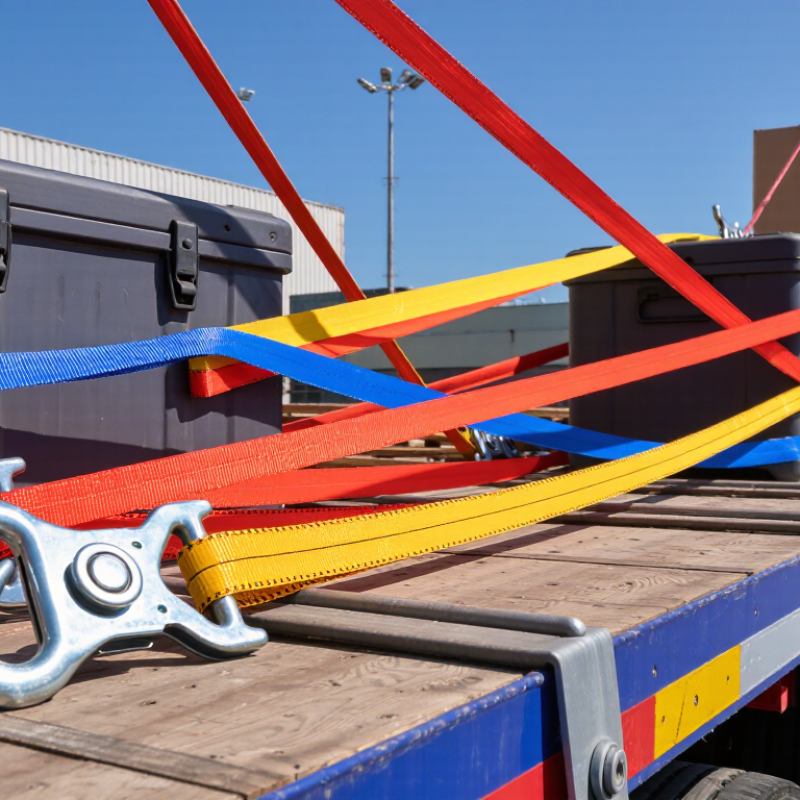
Cargo Tie Down Straps help keep freight steady while a vehicle moves, brakes, or turns. They connect cargo to anchor points and limit shifting, tipping, and sliding. Picture a strapped-down tool chest: the webbing crosses its frame, while the hooks meet secure points on the trailer. The strap is not decoration. It is part of a larger securement system.
Choosing the right strap means checking its working load limit, length, hardware, and condition. The anchor points matter, too. A strap with a high rating cannot make a weak attachment safe. Look for cuts, fraying, damaged stitching, bent hooks, or worn ratchets before use. Small defects count. And cargo shape changes the setup; a smooth box behaves differently from stacked lumber or a wheeled machine. The details can be easy to miss.
One transparency note: no source article or verifiable expert quotation was provided, so the line below is original, not a real person’s documented statement. It is voiced by a fictional cargo-securement specialist, Jordan Lee: “A strap is only as dependable as its rating, condition, and anchor point.” That principle is useful, but it is not a substitute for checking the equipment maker’s instructions. This guide explores what Cargo Tie Down Straps are used for, how their parts work, and what to inspect before loading. Tie-down work takes judgment. A second look is worthwhile.
What Cargo Tie-Down Straps Are
Cargo tie-down straps are flexible restraints used to hold freight in place during transport. A typical assembly has woven webbing, a tensioning device such as a ratchet or cam buckle, and end fittings that connect to suitable anchor points. The webbing carries tension; the buckle helps apply it. The hooks or other fittings transfer that force to the vehicle. That rating matters. A strap’s working load limit (WLL) is its rated capacity for use, not its breaking strength. Check the sewn label, stitching, hardware, and webbing for damage before relying on it.
For context, the Federal Motor Carrier Safety Administration’s cargo securement rules set a measurable benchmark: the combined WLL of the tie-downs securing an article must be at least half the article’s weight. This appears in 49 CFR 393.106(d). It is a minimum calculation, not a promise that any strap arrangement will work; anchor positions, load shape, and movement in transit also matter. A narrow box may need different restraint placement than a broad pallet. In practice, I would not treat a missing or unreadable label as a minor issue. The exact setup can be less obvious than the arithmetic, so checking the cargo and restraint points together is worth the extra moment.
How Tie-Down Straps Keep Loads in Place
Cargo tie-down straps keep loads in place by creating controlled tension between the cargo and secure anchor points. When tightened, a strap presses a box, tool chest, or stack of lumber against the vehicle bed, limiting movement during braking, turns, and bumps. The restraint works best when the strap follows a direct path and bears on a sturdy part of the load. A loose corner can shift. That matters.
Choose a strap with a working load limit suited to the cargo, and check the label rather than judging by appearance. Place edge protection under webbing where it crosses sharp metal or rough timber; abrasion can weaken fibers before damage is obvious. Tighten evenly, then tug the load by hand to check for movement. Recheck after a short drive, since vibration can settle cargo and reduce tension. Do not twist the webbing or attach a hook to a weak rail. Not always easy. Sometimes the load’s shape makes a neat strap path impossible, and that is a reason to rethink the arrangement, not simply pull harder. A strap can restrain cargo, but it cannot make an unstable stack stable.
What Are Cargo Tie-Down Straps Used For?
Tie-down straps help restrain cargo from shifting during transport. This chart shows the securement-system performance forces for a hypothetical 1,000 kg load, calculated using the acceleration criteria in U.S. regulation 49 CFR §393.102.
These are forces acting on the cargo—not the working load limit or tension of an individual strap. Actual restraint needs depend on the cargo, tie-down arrangement, and applicable rules.
Common Strap Types and Their Key Components
Ratchet straps suit heavy or bulky cargo because their geared handle creates strong tension in small, controlled pulls. Cam-buckle straps tighten by hand, making them useful for lighter loads that could be crushed by excessive force. Endless-loop straps wrap around items without separate hooks. Each type has limits; a tight strap is not automatically a safe one.
The main components are the webbing, tensioning device, end fittings, and sewn label. Polyester webbing resists stretching and abrasion, but cuts, frayed edges, or damaged stitching can weaken it. Ratchets need straight, freely moving gears. Hooks and rings should sit fully against secure anchor points, not at awkward angles. Labels are easy to overlook, even during a careful check. They carry important working-load-limit information.
FMCSA’s Cargo Securement Rules in 49 CFR Part 393 require aggregate tiedown working load limits to equal at least 50 percent of the cargo’s weight. That figure is a baseline, not a promise that any strap arrangement will work. The Web Sling & Tie Down Association’s WSTDA-T-1 standard covers synthetic web tiedowns and their testing. Match strap capacity to the load and anchor points, then inspect the webbing and hardware before use. A small defect matters.
Where Cargo Tie-Down Straps Are Used
Cargo tie-down straps are used wherever a load could shift during handling or transport. In pickup beds, they can secure toolboxes, furniture, or bundled lumber to suitable anchor points. On utility trailers, straps help hold equipment steady over bumps and turns. The load still needs to be balanced. A strap cannot fix poor placement.
In warehouses and delivery vehicles, straps can keep cartons, appliances, and palletized goods from sliding when a vehicle brakes. Movers also use them to secure large items inside vans, often with padding between the strap and delicate surfaces. On roof racks, straps may hold bulky gear in place, but the rack and its attachment points must be suitable for the load. Small details matter.
Choose straps with a working-load limit appropriate for the cargo, and check the label before use. Keep webbing flat, avoid sharp edges, and use edge protectors where needed. Tighten the strap firmly, but do not crush fragile cargo. That sounds simple. It isn’t always. A strap may look intact while hidden cuts or worn stitching weaken it, so inspect it before each trip. Recheck tension after loading, especially if the cargo settles or shifts.
How to Select and Use Straps Safely
What Are Cargo Tie Down Straps Used For?
Cargo tie-down straps help keep boxes, furniture, tools, and outdoor equipment from sliding during transport. Choose a strap rated for the load, and check its working load limit on the sewn label. Do not confuse that limit with breaking strength. The vehicle’s anchor points must also be suitable for the load. A strong strap cannot compensate for a weak attachment point.
The label matters. Before loading, inspect the webbing, stitching, hooks, and ratchet for cuts, fraying, bends, or corrosion. Replace damaged straps rather than trusting a quick repair. Position straps across stable parts of the cargo, away from sharp edges; use edge protection where needed. Keep the webbing flat and untwisted. Tighten it until the load is secure, but avoid crushing delicate items. I have seen people pull harder simply because the ratchet allows it. That is not always safer.
After fastening, secure loose strap ends so they cannot flap or catch. Give the cargo a firm push from different sides; if it shifts, adjust the restraint or add suitable straps. Avoid tying knots in the webbing, since knots can weaken it. Recheck tension after a short stretch of travel, especially when the load may settle. Straps hold cargo in place; they are not lifting slings unless specifically designed and labeled for lifting.