What Are the Best Rubber Wheels in 2026?
Choosing the best Rubber Wheels in 2026 starts with the job, not the product label. A wheel that rolls quietly across a warehouse floor may struggle on gravel, hot pavement, or a ramp. Load capacity matters, but it is only one part of the decision. Check the total load on each wheel, including uneven weight distribution and frequent stops. Small details count. A cart carrying metal parts can place sudden stress on its wheels, even when its average load seems modest.
Look closely at tread hardness, wheel diameter, bearing type, and operating temperature. Softer rubber can improve grip and reduce noise, while harder compounds may roll more easily on smooth floors. There are trade-offs. Rubber formulations also vary, so confirm resistance to oils, cleaning agents, and outdoor exposure with the manufacturer’s specifications. For a busy facility, inspect how the wheels perform under repeated use, not just during a quick showroom test. That is where a tidy spec sheet can fall short.
This guide compares common wheel types and explains which features suit different settings, from workshop carts to material-handling equipment. It also highlights questions worth asking suppliers, such as how ratings were tested and whether replacement wheels fit existing mounts. The “best” choice is rarely universal. It may take a trial run to catch vibration, flat spots, or unexpected floor marks. Those practical checks are easy to overlook, and they deserve a place in the decision.
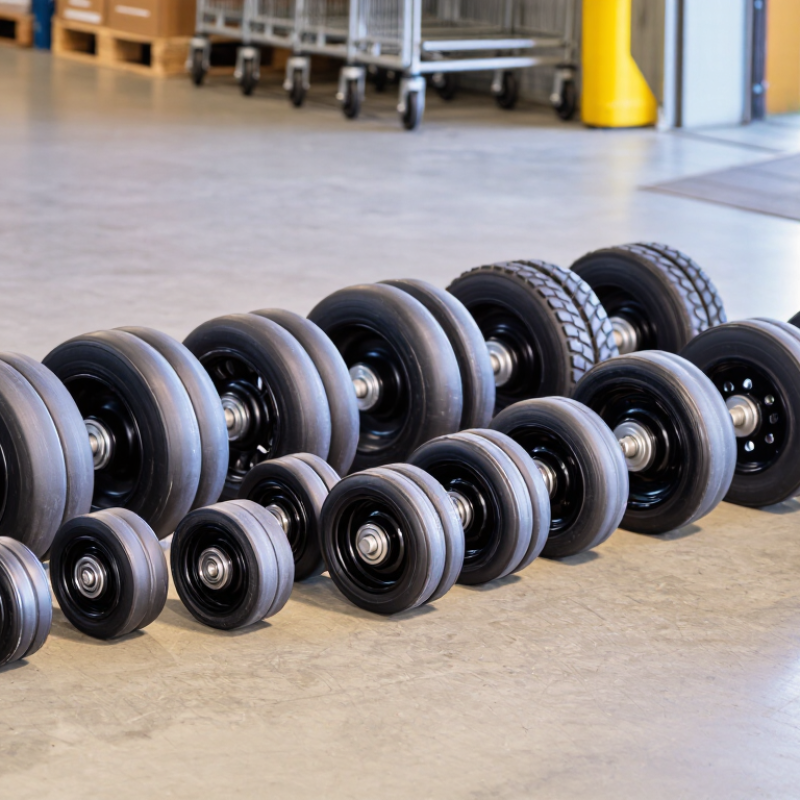
Understanding Rubber Wheels and Their Main Components
What Are the Best Rubber Wheels in 2026?
Understanding Rubber Wheels and Their Main Components
A rubber wheel is more than a soft outer layer. Its tread contacts the floor, grips the surface, and absorbs some vibration. Beneath it, a core supports the tread and transfers force to the axle. Cores may use steel, aluminum, or reinforced polymer, depending on the wheel’s intended load and environment. Small parts matter.
The hub holds the bearing or forms a simple bore for the axle. A bearing can help the wheel roll smoothly, but dirt, corrosion, or poor alignment may increase resistance. The tread’s hardness, often described by its durometer rating, also affects grip and rolling effort. It is tempting to judge a wheel by softness alone. That misses important details: a softer tread may grip well but deform more under heavy loads.
When choosing a wheel, consider its diameter, width, rated capacity, floor type, and operating temperature. A narrow wheel may sink into a rough surface, while a wider one can spread the load. Check for cracks, flat spots, loose bearings, and tread separation during routine inspections. Appearance is useful, but it cannot confirm a wheel’s load rating. I would treat softness as one clue, not the answer.
Types of Rubber Wheels and Their Common Applications
What Are the Best Rubber Wheels in 2026?
Rubber wheels are valued for grip, quieter rolling, and protection for floors. The best type depends on the load, surface, and working environment.
Solid rubber wheels resist punctures and suit carts used indoors or across smooth, uneven floors. They need little maintenance, but can feel firm over bumps.
Pneumatic rubber wheels contain air, helping them absorb shocks on gravel, grass, and rough outdoor paths. Check inflation regularly; low pressure can make a loaded cart harder to steer.
Semi-pneumatic wheels offer a middle ground, with a more cushioned ride than solid wheels and no air to maintain. Rubber-tread wheels with metal or plastic cores are common on hand trucks, shop equipment, and furniture casters.
Core material and wheel size affect load capacity and rolling resistance. There is no perfect option. A softer ride may wear faster on abrasive ground.
Tips: Match the wheel’s rated capacity to the actual load, including equipment weight. Check clearance, axle size, and floor conditions before buying. Test a sample if possible; a wheel that rolls quietly on concrete may behave differently on wet tile.
Key Factors for Choosing Rubber Wheels in 2026
What Are the Best Rubber Wheels in 2026?
Key Factors for Choosing Rubber Wheels in 2026
The best rubber wheel depends on the job, not just its price or appearance. Start with the total load, including the cart and its heaviest expected cargo. Check the wheel’s rated capacity and leave a sensible margin. A wheel pushed across smooth concrete may perform very differently on rough seams, ramps, or workshop debris. Small details matter. Wheel diameter, tread width, and bearing type all affect rolling effort and stability.
Match the rubber compound to the floor and working conditions. Softer rubber can grip well and reduce noise, but it may wear faster under heavy loads. Harder compounds often roll easily on smooth floors, though they can transmit more vibration. Consider exposure to heat, moisture, oils, or cleaning products; compatibility varies by compound. Measure the mounting space and axle before ordering. Measure twice. In practice, a wheel that fits perfectly on paper can still rub against a frame under load.
Tips: Test one wheel on the actual route before replacing a full set. Listen for rattling and inspect the tread after several shifts. If rolling feels uneven, check alignment and bearings too; the wheel may not be the only cause.
How to Compare Rubber Wheel Performance and Durability
What Are the Best Rubber Wheels in 2026? How to Compare Rubber Wheel Performance and Durability
The best rubber wheel depends on its load, floor, speed, and exposure to heat or moisture. Compare more than wheel diameter. Check the rated load per wheel, tread width, hardness, and rolling resistance under a stated test condition. A wheel that rolls easily on smooth concrete may struggle on cracked pavement. Softer rubber can grip better, but may wear faster or leave marks. Trade-offs matter.
Look for test results, not just claims such as “heavy duty.” ISO 4649 measures rubber abrasion by volume loss, reported in cubic millimetres; lower loss generally indicates better abrasion resistance under that test. ISO 7619-1 specifies a method for measuring rubber hardness. These results help compare materials, but they do not predict service life on every floor. Also check whether load and speed ratings reflect continuous use. A short test may miss heat buildup.
Tips: Match the wheel to the actual load, then leave a safety margin. Inspect tread edges for cuts and flat spots. Keep notes on floor type, noise, and wear; real use can contradict the spec sheet. A little humility helps.
Selecting the Best Rubber Wheels for Different Needs
The best rubber wheel depends on where it rolls, how much it carries, and how often it moves. A light office chair needs smooth, quiet movement on finished floors. A loaded workshop cart needs a wheel that resists cuts and handles repeated impacts. Small details matter. A wheel that feels soft by hand may still mark a pale floor under heavy pressure.
Start with the total load, including the cart and its contents, then check the wheel’s rated capacity. For uneven concrete, a wider wheel with a resilient tread can roll more steadily over seams and small debris. Harder rubber often moves more easily on smooth surfaces, but may transmit more vibration. There is a trade-off. I would not choose by softness alone; floor finish and load distribution can change the result.
Consider moisture, temperature, and cleaning routines, too. In food-preparation areas, smooth wheel surfaces are easier to wipe down, while some rubber compounds may not suit oils or strong cleaning agents. Outdoors, grit can wear the tread faster than expected. That part is easy to overlook. Check the manufacturer’s material and temperature specifications, and measure the mounting stem or plate before ordering. A nearly matching fitting can still wobble or bind.