10 Best Hex Nut Manufacturers for Global Buyers
Choosing a Hex Nut manufacturer involves more than comparing unit prices or browsing a polished catalog. Global buyers also need confidence in production consistency, clear communication, and dependable delivery. A part that looks simple can still cause costly delays when its thread fit, dimensions, or material differ from the drawing. Small differences matter. A useful supplier review looks at material options, dimensional controls, surface finishes, inspection practices, and the ability to handle repeat orders. Buyers should also consider whether packaging protects threads during long-distance shipping and whether product records are easy to review. No factory should be judged by a brochure alone.
This guide introduces ten Hex Nut manufacturers for buyers seeking potential partners across international markets. It offers a practical starting point, not a substitute for technical qualification. Compare each company against your actual requirements, including applicable standards, size range, order volume, lead time, and documentation needs. Ask for relevant specifications and inspection records, then confirm that samples match your drawings before committing to production. A supplier’s stated capabilities are useful, but evidence matters more. No shortlist is perfect. Company information can change, and a good fit for one project may not suit another. Use the profiles to narrow your options, ask specific questions, and verify details directly with each manufacturer.
What Hex Nuts Are and How They Are Classified
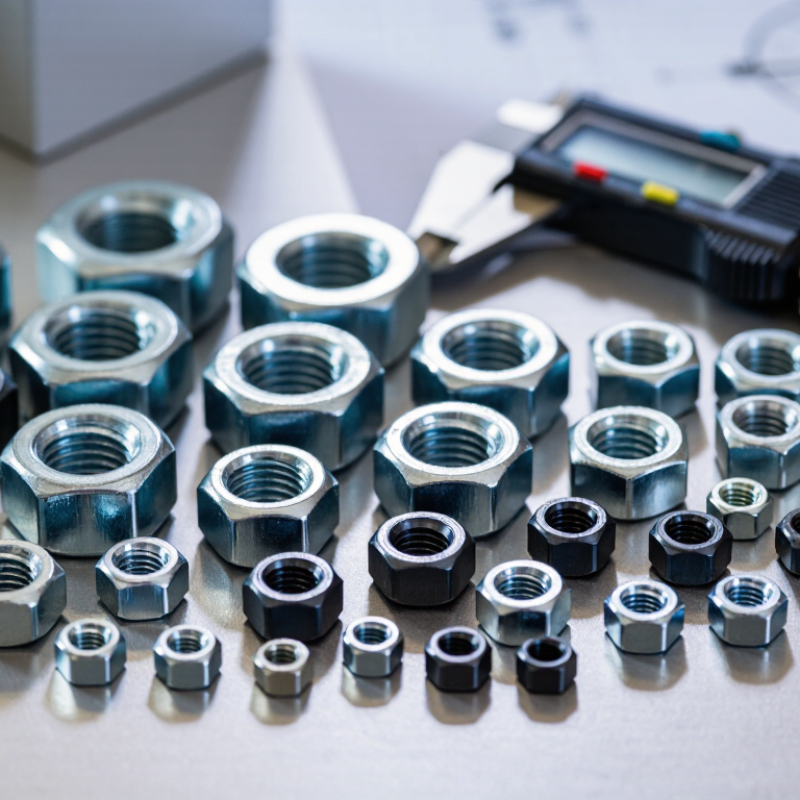
Hex nuts are six-sided fasteners with internal threads, designed to tighten onto a bolt or threaded rod. Their flat faces give a wrench firm contact, while the corners help identify size quickly on a crowded workbench. For global buyers, “hex nut” alone is not a complete specification. Diameter, thread pitch, material, strength grade, and finish all affect fit and performance.
Classification can begin with shape and use: standard hex nuts suit many general assemblies, while thicker heavy hex nuts provide more bearing area. Lock nuts resist loosening through a nylon insert or all-metal design. Nuts are also grouped by material and grade, such as carbon steel, stainless steel, or brass. Finishes—including zinc plating and hot-dip galvanizing—change corrosion resistance and dimensions. Standards and grade markings vary, so confirm the applicable specification with the supplier. A catalog label can still be incomplete; I would verify samples or drawings before approving a large order.
Tips: Match the nut’s thread to the bolt, not just its diameter. Check the wrench size and clearance around the fastener. For outdoor use, consider the environment and coating compatibility. Keep a sample beside the drawing. Small mismatches matter.
10 Best Hex Nut Manufacturers for Global Buyers - What Hex Nuts Are and How They Are Classified
Common hex nut classifications, reference standards, materials, and typical selection considerations. Size examples are illustrative, not exhaustive. | Nut classification | Common reference | Typical materials | Illustrative metric sizes | Typical use and selection notes |
| Standard hex nut, style 1 | ISO 4032 | Carbon steel; stainless steel; alloy steel | M6, M8, M10, M12, M16 | General-purpose fastening. Match the nut’s property class and thread pitch to the bolt and service requirements. |
| Thin hex nut | ISO 4035 | Carbon steel; stainless steel | M6, M8, M10, M12 | Used where axial space is limited, often as a locknut paired with another nut. A thin nut generally has less load-bearing capacity than a standard nut. |
| High hex nut, style 2 | ISO 4033 | Carbon steel; alloy steel; stainless steel | M8, M10, M12, M16 | The taller profile provides more thread engagement than a standard style 1 nut; select according to the applicable assembly specification. |
| Nylon-insert prevailing-torque nut | ISO 7040 | Plated carbon steel; stainless steel | M6, M8, M10, M12 | The polymer insert resists loosening from vibration. Check the specified temperature range and whether reuse is permitted for the application. |
| Thin nylon-insert prevailing-torque nut | ISO 10511 | Plated carbon steel; stainless steel | M6, M8, M10 | Combines a reduced-height form with a nylon locking element for compact assemblies; verify available thread engagement and temperature suitability. |
| All-metal prevailing-torque nut | ISO 7042 | Carbon steel; alloy steel; stainless steel | M6, M8, M10, M12 | Locking action is produced by metal deformation rather than a polymer insert. Confirm the required property class, coating, and prevailing torque. |
| Hex flange nut | ISO 4161 | Carbon steel; stainless steel | M6, M8, M10, M12 | The integral flange spreads bearing load over a wider area. Serrated versions are also available, but their surface-gripping features can damage finishes. |
| Slotted and castle nut | ISO 7035 | Carbon steel; alloy steel; stainless steel | M8, M10, M12, M16 | Slots allow a cotter pin or similar retaining device to secure the assembly. The bolt or shaft must have a matching cross-hole. |
| Domed cap nut | ISO 1587 | Carbon steel; stainless steel; brass | M4, M6, M8, M10 | The closed end covers the exposed bolt thread and can improve appearance and reduce snagging. Ensure the bolt does not bottom out inside the cap. |
| Long hex coupling nut | DIN 6334 | Carbon steel; stainless steel | M6, M8, M10, M12, M16 | Joins two externally threaded components, such as threaded rods. Check engagement length and alignment when connecting rods. |
Note: Standards and product details can vary by edition and specification. Confirm dimensions, thread tolerance, material, mechanical properties, coating, and certification requirements before ordering.
10 Hex Nut Manufacturers Serving International Buyers
Choosing among ten hex nut manufacturers serving international buyers requires more than comparing unit prices. Buyers should check dimensional consistency, material traceability, production capacity, and export experience. ISO 898-2 specifies mechanical properties for nuts, so request test reports that identify the relevant property class and production lot. Small differences matter. A nut that binds on a bolt can slow an assembly line.
Shipping reliability also affects supplier choice. UNCTAD’s Review of Maritime Transport 2024 reports that over 80% of global trade by volume moves by sea. Delays, packaging damage, or unclear documents can therefore disrupt delivery plans. Ask manufacturers about lead times, corrosion-resistant packing, sample approval, and how they handle quality issues. A polished catalog helps, but it is not proof of consistent production; verify claims with samples and records. Even careful checks cannot prevent every delay.
Tips: Compare like-for-like specifications, including thread, grade, finish, and packaging. Request a recent inspection report, then check whether its lot number matches the sample. Record unanswered questions, too. They may reveal where a supplier’s process needs closer review.
How Manufacturers Compare in Standards, Products, and Supply
A useful comparison begins with the standard behind each nut, not the size of a catalogue. ISO 898-2 covers mechanical properties for carbon and alloy steel nuts, while ISO 3506-2 addresses corrosion-resistant stainless steel nuts. These standards help buyers check whether a product suits its load, material, and environment. A specification sheet should state the grade, thread, coating, and test requirements. Ask how the manufacturer controls lot traceability and handles test records. Certificates are useful, but they do not replace product-level evidence. Small details matter.
Supply capability needs the same scrutiny. The ISO Survey of Management System Standard Certifications reported 1,265,216 valid ISO 9001 certificates worldwide in 2023. Certification signals a quality-management system; it does not prove every shipment will arrive on time. UNCTAD’s Review of Maritime Transport 2023 says more than 80% of world trade by volume moves by sea. That makes packaging, port access, and realistic lead-time planning relevant when comparing suppliers. Ask for sample inspection reports and a clear plan for urgent replenishment. I would still compare more than a polished audit file: actual delivery consistency can be less tidy than the paperwork suggests. A short trial order can reveal packing damage, labeling gaps, or variation between batches.
How Global Buyers Can Select and Verify a Supplier
Choosing a hex nut supplier starts with a clear specification. Record the thread size, material grade, dimensions, coating, and required standard before requesting quotes. Ask how the manufacturer controls thread fit and lot-to-lot consistency. A low price means little if nuts arrive with uneven plating or damaged threads. Request material certificates and inspection records tied to the shipment, not generic sample documents. Check that the supplier can explain its testing process in plain terms.
Tips: Order samples from the production line, not specially prepared pieces. Measure several nuts with suitable gauges, then compare results with the agreed drawing. Ask for a recent inspection report and confirm batch traceability. If a supplier resists basic questions, pause.
For larger orders, review production capacity, quality procedures, and corrective-action records. A video call can show equipment and packaging, but it cannot replace independent inspection when risk is high. Confirm lead times, packaging details, and how defects are handled in writing. Keep a retained sample from each accepted batch. No audit catches everything; even a careful buyer can miss a detail, so build verification into repeat orders.