7 Best Bio Sanitizer Tablets for Global Buyers?
Bio Sanitizer Tablets attract global buyers seeking compact sanitation options for travel, emergency supplies, water storage, and selected cleaning applications. But “bio” is not a universal performance standard. A tablet’s suitability depends on its intended use, ingredients, dosage, contact time, and verified claims. Small details matter: a clear label, a sealed blister pack, and instructions that remain readable after shipping can affect real-world use.
The need for dependable sanitation is clear. The WHO/UNICEF Joint Monitoring Programme reported that 2.2 billion people lacked safely managed drinking-water services in 2022. That figure describes access—not demand for tablets—and should not be treated as proof that one product can solve a wider infrastructure problem. Still, it shows why buyers should assess sanitation products carefully. This guide compares seven options through practical criteria, including application range, available efficacy evidence, storage stability, packaging, and supplier documentation. Claims should be checked against test methods and the conditions stated on product labels. A polished brochure is not enough. Some supplier information may be incomplete, and that deserves scrutiny rather than assumption. For international purchasing, confirm that a product’s intended use and labeling fit the destination market’s requirements. The strongest choice is not necessarily the one with the broadest claims; it is the one supported by clear instructions, credible evidence, and a realistic match to the buyer’s needs.
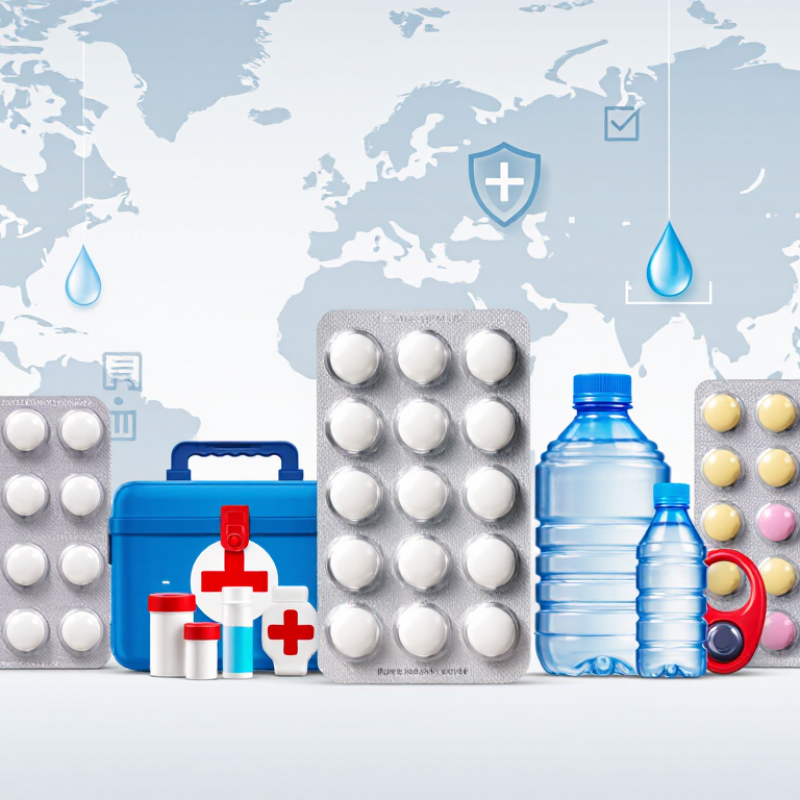
What Bio Sanitizer Tablets Are and How They Work
Bio sanitizer tablets are compact treatments that typically contain selected microorganisms, enzymes, or both. They are designed to help break down organic matter in systems such as septic tanks, holding tanks, and certain drains. Add a tablet to water or the designated treatment point, and its active ingredients disperse. Microbes then use suitable organic material as a food source. Enzymes can help split larger compounds into smaller ones.
They are not all-purpose disinfectants. A biological treatment may support waste breakdown or odor control, but it should not be assumed to kill disease-causing germs or make water safe to drink. Results depend on the formula, temperature, water conditions, and the material being treated. Check the label for dosing, contact time, and compatible uses. More is not always better.
In practice, a tablet may be convenient for travel or routine tank care: no bulky liquid bottle, and less chance of a spill. Still, “bio sanitizer” is a broad label. Ingredients and performance can vary. For example, a tablet intended for a waste-holding tank may not suit a household drain. Keep records of dosage and results, and investigate persistent odors or blockages rather than repeatedly adding tablets. That judgment matters.
Key Criteria for Comparing Bio Sanitizer Tablets
When comparing bio sanitizer tablets, start with the intended use. A tablet designed for water may not suit food-contact surfaces or equipment. Check the label for the target microbes, approved application, and required dilution. Broad claims are not enough. Look for independent test data that names the method, conditions, and contact time. Results can change when water is cold, organic matter is present, or the solution is mixed incorrectly.
Dose clarity matters. Instructions should state how many tablets to use per litre and how long the solution remains effective after mixing. A simple measuring process helps prevent inconsistent strength. Check the active ingredients and their compatibility with metals, plastics, and seals; residue or corrosion can become costly. Small details matter. Packaging should protect tablets from moisture, and the supplier should provide batch information, safety data, and storage guidance. For global purchasing, confirm that documentation and product claims fit the destination market’s requirements. Compare cost per treated volume, not just price per pack. A low price can look convincing, until shipping, shelf life, or unclear directions change the calculation. Testing conditions rarely match every workplace, so leave room for practical verification before large-scale use.
Seven Bio Sanitizer Tablet Options for Global Buyers
Seven Bio Sanitizer Tablet Options for Global Buyers
“Bio sanitizer” is not a single technical category, so buyers should compare intended use, active chemistry, contact time, and local registration requirements. The WHO/UNICEF Joint Monitoring Programme’s 2023 report estimated that 2.2 billion people lacked safely managed drinking water in 2022. This highlights the importance of water safety, but sanitizer tablets are not automatically suitable for drinking-water treatment.
Seven options serve different needs: chlorine tablets for compatible hard surfaces; chlorine-dioxide tablets for specified water or surface uses; oxygen-based tablets for some cleaning tasks; effervescent tablets for convenient dosing; enzyme-based tablets for breaking down organic residue; probiotic tablets for selected cleaning programs; and multi-purpose tablets designed for defined environments. These categories are not interchangeable. Check the label for approved applications, dilution, contact time, material compatibility, storage conditions, and safety instructions. Performance can change with water temperature and organic soil.
Tips: Test a small area first, use a measuring container, and record the batch and dilution. For export purchases, request a current safety data sheet and independent efficacy test relevant to the intended use. A product that works on a clean counter may perform differently on a greasy surface. That detail is easy to overlook.
How to Check Safety, Certifications, and Compatibility
A sanitizer tablet should come with clear safety instructions, not just a bold claim on its package. Check the label for active ingredients, dilution rates, contact time, and first-aid guidance. Keep the safety data sheet available, and confirm that it matches the product’s current formulation. Ask for proof. Look for independent test reports or certifications relevant to the intended use and destination market; a certificate for one application may not cover another. If documents are vague, outdated, or difficult to verify, pause before ordering.
Compatibility matters just as much. Compare the tablet’s instructions with the equipment manual, especially for tanks, seals, metal fittings, and wastewater systems. Test a small, inconspicuous area when the manufacturer allows it. Check whether performance depends on water temperature or hardness, and whether the tablet needs a specific dissolving time. Small details matter. A product may be effective but still unsuitable for a particular surface or dosing system. I would not assume that “bio” means harmless or compatible; the term alone does not explain how the product behaves. Not always. Ask the supplier for written compatibility guidance and retain the batch number and purchase documents for traceability.
Practical Tips for Sourcing and Purchasing Internationally
For global buyers comparing bio sanitizer tablets, the cheapest quote rarely shows the full landed cost. Ask suppliers for a batch-specific certificate of analysis, safety data sheet, ingredient and dosage details, shelf-life evidence, and packaging specifications. Test dissolution in the water conditions your customers actually use, including cold or hard water. Details matter. A small pilot order can reveal slow dissolution, damaged foil packs, or unclear instructions before a full shipment leaves port.
Shipping deserves equal attention. UNCTAD’s Review of Maritime Transport 2024 reports that maritime transport carries over 80% of global trade by volume, so route disruption and handling delays can affect replenishment plans. Compare lead times, minimum order quantities, Incoterms, and moisture-resistant packaging—not just unit prices. Check destination-market labeling and product documentation with your importer before confirming artwork or shipment. Keep samples from each approved batch for comparison. A tidy document pack is useful, but it cannot guarantee identical performance in every use setting; that uncertainty is easy to underestimate. Test first.