2026 Top Types of Real Wood Planks for Global Buyers
As global buyers plan for 2026, Real Wood Planks remain valued for their texture, repairability, and long service potential. Oak, walnut, ash, teak, and reclaimed timber lead different applications, from warm residential floors to durable hospitality interiors. Each species behaves differently under humidity, sunlight, and repeated traffic.
The Food and Agriculture Organization’s Global Forest Resources Assessment 2020 reports approximately 4.06 billion hectares of forest worldwide. This scale does not mean every timber source is equally responsible or suitable. The OECD-FAO Agricultural Outlook 2024–2033 also highlights continued demand for forest products, reinforcing the need for traceable supply chains and efficient material use. Buyers should examine origin, moisture content, grading, drying method, and certification before comparing prices.
Small details matter.
A kiln-dried oak plank with stable moisture can outperform a cheaper board with attractive color but poor conditioning. FSC certification may support responsible sourcing, while PEFC documentation offers another recognized traceability route. However, certification claims require verification through current supplier records, not only website badges. Product data sheets, batch references, and third-party inspection reports provide stronger evidence.
This guide reviews the top types of Real Wood Planks for international buyers in 2026. It considers appearance, hardness, dimensional stability, maintenance, sustainability, and regional availability. Market rankings are useful, but they are not permanent. Climate, freight costs, regulations, and changing design preferences can quickly alter the best choice. A beautiful plank is still a weak purchase when its source, moisture level, or installation requirements remain unclear.
Hardwood Plank Classification: Solid, Engineered, Reclaimed, and Live-Edge Types
2026 Top Types of Real Wood Planks for Global Buyers
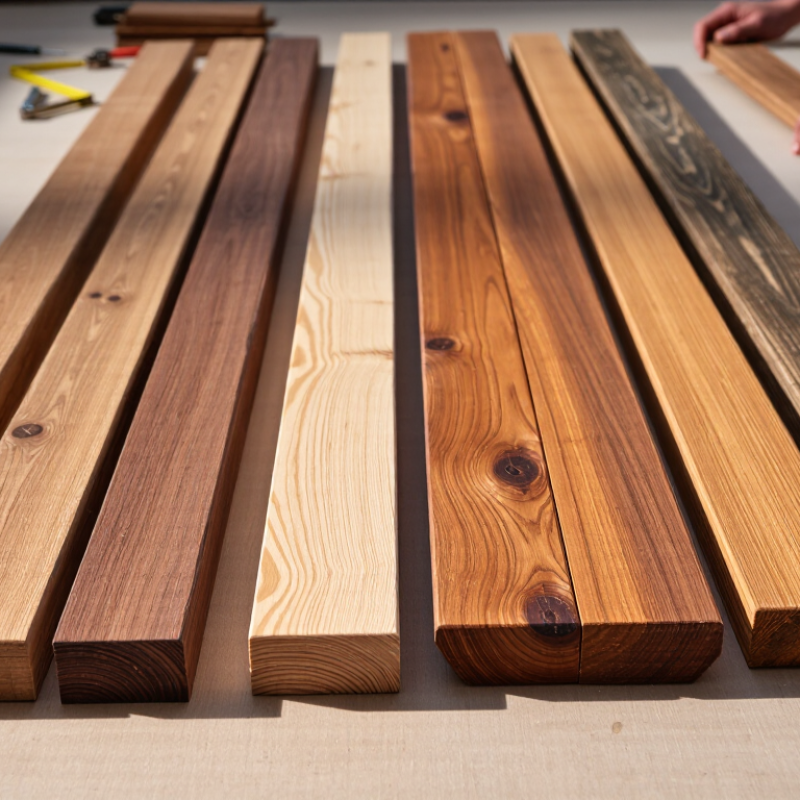
Hardwood planks fall into four practical groups: solid, engineered, reclaimed, and live-edge. Solid wood is milled from one timber section. It can be sanded repeatedly and develops deeper color with age. However, moisture movement remains a serious concern in humid rooms. The USDA Forest Service Wood Handbook explains that wood dimensions change as moisture content changes, especially across the grain. Measure indoor humidity before ordering. Small details matter.
Engineered planks use a hardwood wear layer over cross-laminated wood layers. This structure usually improves dimensional stability over radiant heating or concrete subfloors. The FAO Global Forest Resources Assessment 2020 reported that forests cover about 31% of global land. It also recorded 420 million hectares of forest loss between 1990 and 2020. Responsible sourcing is not optional. Ask for species, origin, grading, moisture data, and chain-of-custody documents.
Reclaimed planks bring nail marks, uneven edges, and visible repair lines. Their character is real, but sorting quality varies between suppliers. Global reclaimed-wood statistics remain inconsistent, which makes confident market comparisons difficult. Live-edge boards preserve the natural contour of the trunk. They suit feature walls, counters, and statement tables, yet each board needs careful flattening and stable support. Expect variation. That is the point, though not always easy to accept.
Species Selection by Janka Hardness: Oak 1,290 lbf, Maple 1,450 lbf
2026 Top Types of Real Wood Planks for Global Buyers
Species choice starts with Janka hardness, but hardness alone does not define quality. Oak, rated around 1,290 lbf, offers balanced strength and visible grain. It suits busy living rooms, offices, and hospitality interiors. Maple reaches approximately 1,450 lbf, giving it stronger resistance to dents and daily wear. Its pale, fine grain creates a cleaner appearance. These values commonly refer to red oak and hard maple, so buyers should confirm the exact species before ordering.
Tips: Request samples, technical sheets, and recent moisture readings. Compare plank width, thickness, drying method, and surface finish. Maple can show dirt more clearly because of its light color. Oak usually hides minor marks better. Ask for independent Janka references, not only sales descriptions.
Real-world performance also depends on installation and climate. Wood shipped across regions may react to humidity changes after arrival. Proper acclimation is essential. Wider planks can reveal seasonal gaps more noticeably. This detail is often underestimated. I would not choose maple only because it has the higher rating. A scratched pale floor may look less forgiving than a slightly softer oak floor. Species selection should match traffic, maintenance habits, visual goals, and local indoor conditions. Test a sample under real lighting first. Mistakes become expensive when assumptions replace inspection.
Moisture Standards: Target 6–8% for Interior Hardwood Flooring
2026 Top Types of Real Wood Planks for Global Buyers
For interior hardwood flooring, moisture content is a purchasing priority, not a minor detail. Oak, maple, walnut, and ash planks should generally target 6–8% moisture content. This range often suits conditioned interiors, but local humidity still matters. A plank reading 10% may appear acceptable during shipping, then shrink after installation. Small gaps can become visible near heating systems. Experienced buyers should request moisture readings before loading and after delivery. Use a calibrated meter, and test several boards from different bundles. One measurement is not enough.
Tips: Confirm the supplier’s testing method. Ask for readings from the plank core, not only the surface. Keep cartons raised from concrete floors. Allow the wood to acclimate indoors until readings stabilize. Follow the flooring installer’s instructions.
The 6–8% target is useful, but it is not a universal promise. Coastal homes, dry winter climates, and air-conditioned buildings create different conditions. I have seen carefully packed planks change after installation because the room was not ready. That mistake is easy to overlook. Buyers should record indoor temperature, relative humidity, delivery dates, and moisture readings. A small inspection log can reveal whether the wood or the building caused later movement. Avoid accepting boards with staining, fresh end checks, or sharply different readings within one bundle.
Plank Dimensions and Stability: 19 mm Solid Boards Versus Multilayer Panels
For global buyers, 19 mm solid boards look reassuring because they offer strength, repairability, and a substantial walking feel. Yet thickness alone does not guarantee stability. A typical 19 × 120 × 1,800 mm solid board can cup when its moisture changes across the width. The USDA Forest Products Laboratory’s Wood Handbook, FPL-GTR-282, reports that tangential shrinkage is generally greater than radial shrinkage, often by nearly two times, depending on species.
Width matters more than many specifications admit. A 19 mm board at 120 mm wide may react more visibly than a narrower board in a dry interior. NWFA technical guidance therefore emphasizes moisture testing for flooring, subfloors, and jobsite air before installation. Acclimation helps. It cannot correct a wet slab or poor ventilation. That distinction is frequently missed.
Multilayer panels use crossed or perpendicular wood layers to limit directional movement. EN 13489 covers multilayer parquet requirements, including dimensional performance and manufacturing quality. A 14–15 mm panel may feel less massive than a 19 mm solid board, but its balanced construction often performs better over underfloor heating. The core and finish still matter. Cheap construction can undermine good geometry. I would not promise zero movement; wood remains hygroscopic. Buyers should compare actual board width, moisture content, core layout, tolerances, and installation climate, not thickness alone.
Global Buying Criteria: FSC Certification, EN 14342, and Formaldehyde E1 Limits
For global buyers in 2026, real wood plank selection starts with traceable sourcing and measurable indoor safety. Oak, ash, walnut, and pine show different grain, hardness, and moisture movement. A sample should reveal clean machining, stable edges, and consistent thickness. Do not judge quality from photographs alone. I have seen attractive boards fail after installation because their moisture content was ignored. This remains an easy mistake.
FSC certification supports responsible forest sourcing, but buyers should inspect certificate scope and chain-of-custody details. A logo alone proves little. Ask for the certificate number, product coverage, and verification route. Documentation should match the invoice, species description, and shipment quantity. Suppliers should also explain whether the wood is solid, finger-jointed, or layered. Those terms affect durability and future refinishing.
EN 14342 is central when wood flooring enters European markets. It covers essential performance information, including fire reaction, formaldehyde release, and biological durability where relevant. Request current test reports for the exact product, not a similar plank. Formaldehyde emissions should meet the applicable E1 limit and testing method. Check finishes, adhesives, and backing materials too. A low-emission core can still be compromised by surface coatings. This detail is often missed. Buyers also need packaging labels, installation guidance, and batch traceability. Requirements differ by destination, so local review remains necessary. I would recheck every document before payment.