AirAccess Access Control as a Service Platform with Auto-Cell Networking (ACasS)
Enterprise Hosted Platform - MVPAccess™
New! Napco Access 1 & 2-Door Controllers
Please contact us directly or visit our FAQ page or Video Library.
Toll Free 800-645-9330
Phone 631-842-9400
Fax 631-842-9135
Email: sale@safehomeexpert.com
sale@safehomeexpert.com (Latin America)
Sign up for integrator training seminars. 2 days and 3 day online courses are available from our directory indexed by product.
Learn MoreOffer the one access control solution powerful and flexible enough to protect all of your clients. Continental Access provides state-of-the-art access control software and hardware in an easy-to-implement and easy-to-use access control solution that seamlessly integrate with a wide range of facility management products.
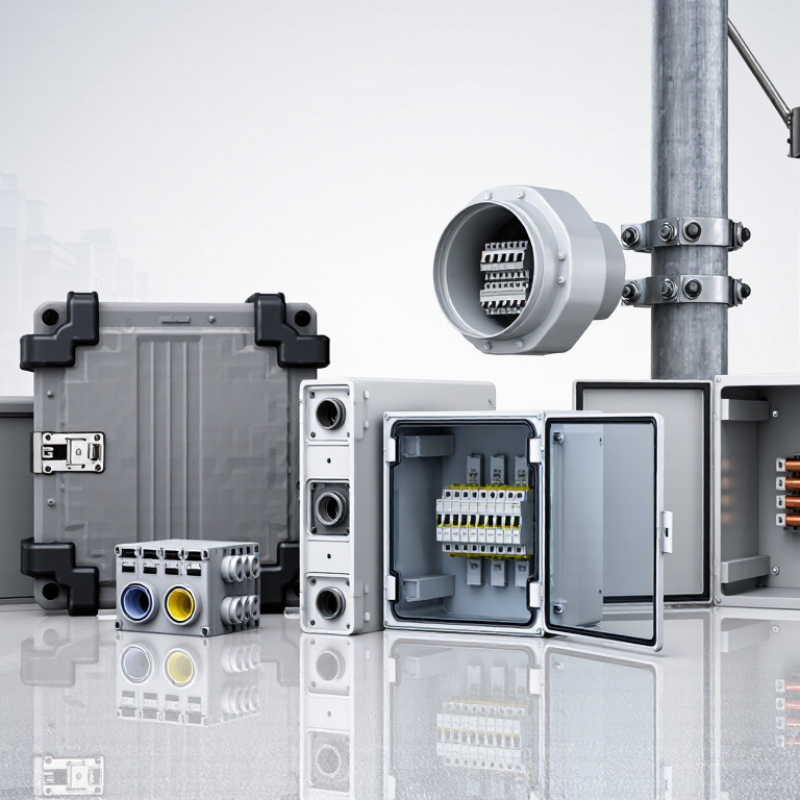
Learn MoreFor global buyers, choosing the right Cable Branch Boxes starts with understanding real project conditions. In 2026, selection is moving beyond price, appearance, and catalog promises. Installers now examine enclosure materials, cable capacity, sealing performance, grounding options, and maintenance access. A box beneath a wet roadside cabinet faces different demands from one inside a clean factory. Small details matter. A poorly matched entry seal can allow moisture, loosen terminals, and create costly downtime.
This guide reviews the top types of Cable Branch Boxes used in power distribution, renewable energy, transportation, construction, and industrial systems. It considers conventional junction boxes, waterproof outdoor models, modular boxes, pole-mounted designs, and specialized high-current solutions. The goal is practical comparison, not a list of impressive specifications. Experienced sourcing teams should confirm rated voltage, current, ingress protection, operating temperature, conductor size, and certification requirements before ordering. They should also request drawings, test records, sample units, and installation guidance from qualified manufacturers. A glossy datasheet is not enough.
Reliable decisions come from matching evidence to the installation site. Buyers should check cable bending space with actual glands and measure clearance around energized equipment. They should also ask how replacement parts, inspection, and warranty support will work after delivery. Some “top” types may be unsuitable when labor skills, climate, or local standards differ. This is where buyers must remain critical. The following overview offers a practical starting point, while final approval should come from competent electrical professionals and project documentation.
For global buyers, a cable branch box is a protected enclosure that divides one incoming cable into several outgoing circuits. It provides a controlled connection point for power distribution, maintenance, and future expansion. Unlike a loose cable joint, the box keeps terminals organized and shields them from dust, moisture, impact, and accidental contact.
Inside, conductors connect through terminals, busbars, or insulated connectors. The incoming cable enters through a sealed gland, while branch cables leave through separate outlets. When power reaches the box, the internal connection transfers it to each circuit. Proper tightening is essential. A loose terminal can create heat, voltage loss, or equipment failure. Small details matter.
Common types include low-voltage branch boxes, medium-voltage boxes, and weather-resistant outdoor models. Some use screw terminals, while others use compression connectors or plug-in modules. Selection depends on voltage, current, cable size, installation space, and environmental exposure. An outdoor box may need strong sealing and corrosion-resistant hardware. A compact indoor box may prioritize easy inspection.
In practical installation work, moisture is a frequent problem. A box may look secure but still allow water through an unsuitable cable gland. I have also seen crowded terminals make later testing unnecessarily difficult. That mistake is easy to overlook. Buyers should confirm the enclosure rating, conductor capacity, grounding arrangement, and test access before ordering. No design is perfect; unclear site information can still lead to a poor choice.
Cable branch boxes are commonly classified by design, voltage level, enclosure protection, and installation environment. Low-voltage boxes support building distribution, lighting, and industrial machinery. Medium-voltage versions use stronger insulation and controlled clearances. According to IEC 60529, IP ratings indicate protection against dust and water, but an IP66 enclosure may still fail if its cable glands are poorly fitted. That detail is often overlooked.
Design also separates fixed, modular, resin-filled, and maintenance-accessible boxes. Fixed boxes suit stable layouts, while modular units help factories expand production lines. Resin-filled designs resist moisture and vibration, making them useful for underground, coastal, and renewable-energy projects. The IRENA Renewable Capacity Statistics 2025 reported 585 GW of renewable capacity added globally in 2024. This growth increases demand for branch boxes used near solar arrays, battery systems, and wind equipment. Some buyers may specify outdoor protection without checking ultraviolet resistance or thermal cycling. That is a costly gap.
Application is the practical classification. Construction sites need compact, impact-resistant boxes. Rail, marine, and chemical facilities require tighter sealing and stronger material selection. IEC 61439 provides design verification principles for low-voltage assemblies, while IEC 60502 supports cable requirements for power installations. The IEA Electricity 2024 report expects global electricity demand to rise by about 4% annually through 2026. Therefore, buyers should compare fault ratings, conductor capacity, maintenance access, and local installation rules. A box can look suitable on paper. Field conditions may disagree.
Cable branch boxes are becoming more specialized for global projects in 2026. The main types include indoor low-voltage boxes, outdoor weatherproof boxes, medium-voltage separable boxes, and modular distribution boxes. Each design serves a different installation environment. Space is tight. Indoor models suit factories, commercial buildings, and clean electrical rooms. They usually prioritize compact dimensions, clear terminal layouts, and easy maintenance access.
Outdoor branch boxes require stronger protection against rain, dust, ultraviolet exposure, and impact. Buyers should check the enclosure rating, gasket quality, cable gland design, and corrosion resistance. Medium-voltage types need controlled insulation, screened connections, and verified short-circuit performance. These details are not optional. Modular boxes can support changing circuits, but their connectors and internal spacing must match the cable size. A flexible layout may still create heat problems if poorly planned.
Global buyers should compare conductor materials, rated current, operating voltage, temperature range, and installation method. Copper and aluminum cables may require different terminals or preparation procedures. Certification documents should be reviewed against the destination market’s requirements, such as IEC-based or national standards. Do not rely on a product label alone. Ask for routine test records, installation instructions, and enclosure test evidence. A common mistake is choosing by price before checking cable bending space. Another is assuming one box fits every climate. It rarely does. Field conditions, local inspection practices, and future circuit expansion deserve equal attention.
| Cable Branch Box Type | Typical Enclosure and Sealing Method | Typical Electrical Range | Common Installation Environment | Typical Protection Level | Main Applications | Key Advantages | Important Selection Considerations |
|---|---|---|---|---|---|---|---|
| Standard Enclosed Cable Branch Box | Polycarbonate, ABS, stainless steel, or painted steel enclosure with cable glands, terminals, or bolted connections. | Up to 1,000 V AC Commonly 16–630 A | Indoor electrical rooms, commercial buildings, factories, and protected outdoor areas. | IP54–IP66 Depending on enclosure and cable-entry design. | Low-voltage power distribution, lighting circuits, machinery supplies, and building services. | Flexible configuration, easy inspection, broad availability, and relatively simple maintenance. | Verify conductor size, terminal capacity, short-circuit withstand rating, temperature rise, and enclosure material. |
| Resin-Filled Waterproof Cable Branch Box | Polyamide, polycarbonate, or reinforced enclosure filled with two-part insulating resin after cable connection. | Up to 1,000 V AC Commonly 16–400 A | Underground installations, wet areas, outdoor utility networks, irrigation systems, and marine-adjacent locations. | IP68 When correctly assembled and fully cured. | Submersible or flood-prone cable joints, buried distribution, landscape power, and outdoor infrastructure. | Excellent water resistance, strong mechanical support, and reliable insulation around connections. | Connection quality cannot normally be changed after filling; observe resin mixing, curing temperature, and working time. |
| Gel-Filled Cable Branch Box | Reusable or semi-reusable enclosure containing insulating gel around the cable joints and terminals. | Up to 1,000 V AC Commonly 10–250 A | Outdoor lighting, garden systems, temporary works, low-voltage control, and damp indoor locations. | IP68 Subject to the complete assembly and cable-entry system. | Fast field installation, maintenance-friendly branch connections, and low-voltage service networks. | Quick installation, good moisture displacement, and easier re-entry than resin-filled systems. | Check gel compatibility with cable insulation, operating temperature, mechanical protection, and long-term UV exposure. |
| Modular Terminal Cable Branch Box | Modular insulated enclosure using DIN-rail terminals, disconnect terminals, fuse holders, or circuit protection devices. | Up to 1,000 V AC Commonly 10–250 A | Control panels, industrial automation systems, building service panels, and equipment skids. | IP40–IP66 Based on the enclosure and installed cable glands. | Control and instrumentation wiring, machine distribution, auxiliary circuits, and organized cable branching. | Clear circuit identification, easy testing, replaceable components, and simple future expansion. | Allow space for heat dissipation and bending radius; confirm terminal voltage, current, and conductor compatibility. |
| Underground and Manhole Cable Branch Box | Heavy-duty polymer, glass-reinforced plastic, or corrosion-resistant metal enclosure with compression seals. | Up to 1,000 V AC Commonly 63–630 A | Utility trenches, road infrastructure, underground chambers, transport facilities, and external distribution routes. | IP67–IP68 With resistance to water ingress during temporary or continuous immersion as specified. | Street lighting, public infrastructure, underground feeders, EV charging distribution, and site utilities. | Designed for moisture, soil contact, limited access, and mechanical service conditions. | Assess flood level, external pressure, impact resistance, corrosion, drainage, maintenance access, and cable pulling forces. |
| Fire-Resistant and Fire-Barrier Cable Branch Box | Metal or certified fire-resistant enclosure using heat-resistant terminals, barriers, and fire-sealing cable entries. | Up to 1,000 V AC Current rating depends on terminals and enclosure design. | High-rise buildings, emergency systems, tunnels, transport facilities, and safety-critical installations. | IP54–IP66 Fire performance is specified separately from ingress protection. | Emergency lighting, smoke control, fire pumps, evacuation systems, and safety power circuits. | Supports circuit integrity and limits flame or heat transfer when used within a tested system. | Do not rely on IP rating alone; verify fire-resistance duration, cable type, mounting method, and applicable local regulations. |
| Hazardous-Area Cable Branch Box | Certified flameproof, increased-safety, or dust-protected metal or reinforced polymer enclosure with certified cable glands. | Commonly up to 1,000 V AC Current and voltage depend on certification. | Refineries, chemical plants, fuel storage areas, mining sites, and locations with combustible dust or gas. | IP54–IP66 Must also meet the required hazardous-area protection concept. | Branching power and control cables in potentially explosive atmospheres. | Provides controlled protection against ignition risks when correctly certified and installed. | Match equipment marking to the zone, gas or dust group, temperature class, ambient temperature, and cable-entry method. |
| Monitored or Smart Cable Branch Box | Sealed or modular enclosure with current sensors, voltage measurement, temperature sensing, or communication modules. | Typically up to 1,000 V AC Measurement range depends on sensors. | Data centers, renewable-energy sites, industrial plants, smart buildings, and distributed infrastructure. | IP54–IP66 Depending on enclosure and communication hardware. | Load monitoring, fault indication, energy measurement, predictive maintenance, and remote asset management. | Improves visibility of branch-circuit loading, temperature trends, and abnormal operating conditions. | Confirm measurement accuracy, auxiliary power, cybersecurity requirements, communication protocol, data retention, and electrical isolation. |
| Busbar-Based Cable Branch Box | Insulated enclosure containing a copper or aluminum busbar system with plug-in, bolted, or fused outgoing connections. | Up to 1,000 V AC Commonly 100–1,600 A | Large commercial buildings, factories, data centers, warehouses, and high-density distribution systems. | IP31–IP55 Higher ratings require suitable enclosure and joint protection. | High-capacity feeder branching, production lines, busbar trunking interfaces, and centralized power distribution. | High current density, orderly expansion, reduced cable congestion, and easier load balancing. | Check busbar short-circuit withstand, temperature rise, connection torque, clearances, and compatibility with the upstream system. |
| Solar and Renewable-Energy Cable Branch Box | UV-resistant polymer or metal enclosure with DC-rated terminals, fuses, isolators, surge protection, and cable glands. | Commonly up to 1,500 V DC Current depends on string and feeder configuration. | Rooftop solar installations, ground-mounted photovoltaic arrays, battery sites, and renewable-energy facilities. | IP65–IP68 For outdoor exposure when properly installed. | Combining photovoltaic strings, DC cable branching, surge protection, and array-level isolation. | Supports outdoor DC distribution and can integrate protection and isolation in one enclosure. | Use components specifically rated for DC switching and photovoltaic service; consider polarity, arc risk, UV exposure, and thermal derating. |

2026 Top Types of Cable Branch Boxes for Global Buyers
Enclosure material directly affects a cable branch box’s service life. Polycarbonate offers low weight, strong impact resistance, and good insulation. Glass-reinforced polyester suits harsh industrial locations and limits corrosion. Stainless steel performs well near salt spray, but it increases weight and installation cost. Aluminum is practical, yet surface treatment must resist oxidation and galvanic contact. Small detail. It matters.
The IP rating follows IEC 60529, not a marketing slogan. An IP66 enclosure is dust-tight and resists powerful water jets. IP67 adds temporary immersion protection, but it does not guarantee long-term underwater operation. The 2024 IEA Electricity report expects global electricity demand to grow by about 3.4% annually through 2026. More distribution equipment will face heat, moisture, and frequent maintenance. Buyers should check gasket aging, cable-entry sealing, UV exposure, and internal temperature rise together.
Field inspections often reveal a practical weakness: a high IP rating can fail after poor drilling or uneven gland tightening. NEMA 250 classifications may also differ from IEC IP ratings, so direct conversion is unsafe. Independent test reports should confirm impact strength, flame behavior, corrosion resistance, and short-circuit performance. A thicker enclosure is not automatically safer. It may trap heat and complicate handling. Some specifications remain unclear, especially for combined UV and chemical exposure, so buyers should request real test conditions rather than accept broad “outdoor” claims.
How to Select the Right Cable Branch Box for Your Project
Choosing a cable branch box starts with the network, not the enclosure shape. Confirm system voltage, operating current, cable size, and expected fault current. A box rated for today’s load may fail after expansion. Leave practical space for larger conductors and safer maintenance. Do not guess.
Review the installation environment carefully. Outdoor substations may face rain, dust, ultraviolet exposure, and temperature changes. Select an enclosure with suitable ingress protection and corrosion resistance. Underground locations need strong sealing and reliable drainage control. Check terminal materials, cable entry direction, grounding points, and connection capacity. The smallest box is rarely the best choice.
I have seen projects delayed because installers could not reach the terminals with standard tools. That detail matters. Ask for dimensional drawings, test records, material data, and clear installation instructions. Verify certification against the destination market’s electrical requirements, because approval rules differ between regions. A qualified engineer should confirm coordination with protective devices and cable ratings. Field checks should include torque verification, insulation testing, and thermal inspection after energizing.
Some decisions remain imperfect. Future loads, local weather, and installation habits are not always predictable. Allowing moderate spare capacity is usually wiser than selecting the cheapest compact option. Consult the utility or project authority before purchase.
Ingress protection is a key selection factor for cable branch boxes. The chart compares representative IEC 60529 protection codes commonly specified for different installation environments. Higher digits indicate a higher standardized protection level, but the final selection should also consider voltage, current, cable size, material, temperature, and installation method.
Selection guide: IP54 is generally suitable for protected indoor locations, IP65 for dusty or water-jet-exposed areas, IP67 for temporary immersion, and IP68 for continuous or extended immersion under conditions specified by the manufacturer and project requirements.