2026 Best Tablet Counter Buying Guide for Global Buyers
Choosing the right Tablet Counter in 2026 requires more than comparing counting speeds. Global buyers must evaluate accuracy, product handling, cleaning access, software, and after-sales support. A machine may look efficient on a showroom floor, yet perform differently with dusty, fragile, coated, or mixed-size tablets. Small errors multiply.
Industry data confirms why this decision matters. The International Data Corporation’s Worldwide Quarterly Personal Computing Device Tracker reported strong global tablet demand in 2024, reflecting broader investment in compact digital hardware and automated workflows. In pharmaceutical manufacturing, Grand View Research and MarketsandMarkets continue to identify automation, serialization, and quality control as major market drivers. These trends are pushing manufacturers toward faster, more traceable counting systems. However, market forecasts vary by definition, region, and application. Treat projections as direction, not certainty.
A reliable buying process should examine validated counting accuracy, output stability, reject handling, dust control, and compatibility with bottles or blister packaging. Request test results using your actual tablets. Ask for documented calibration procedures, operator training, spare-parts availability, and response times across your target markets. WHO Good Manufacturing Practices and FDA data-integrity principles also provide useful quality references, even when local requirements differ. The best Tablet Counter is not always the fastest model. It is the machine that maintains repeatable performance during a real production shift. That sounds obvious. It is often overlooked. This guide compares practical specifications, ownership risks, and supplier credibility, helping buyers make a defensible decision in a changing global market.
What Is a Tablet Counter and How Does It Work?
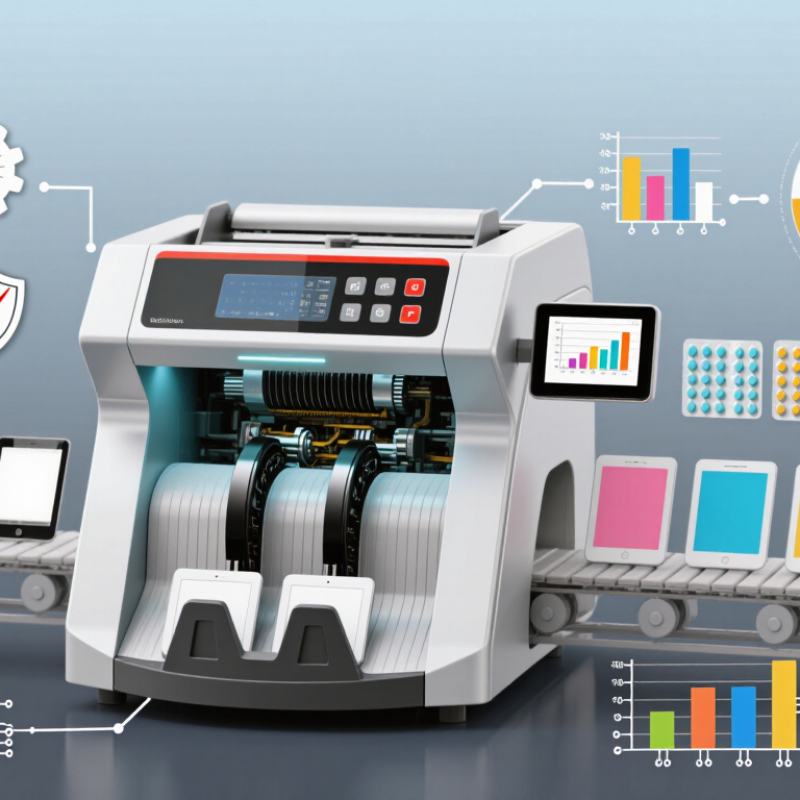
A tablet counter is a precision machine that counts solid tablets or capsules before packaging. In a typical production room, operators pour product into a clean hopper. Vibration separates crowded pieces. A guided channel moves them toward an optical or sensor-based counting zone. Each passing tablet creates a detected event. The control system adds these events until the target quantity is reached. Simple in principle. Not always simple in practice.
When the set count is complete, a gate directs the batch into a bottle, pouch, or container. Sensors check whether the container is present and whether tablets move consistently. Many machines pause the feed when a container shifts, reducing spills and inaccurate fills. Adjustable speed, channel width, and product settings help handle different shapes and sizes. Operators still matter. They inspect feed behavior, clean contact surfaces, verify count accuracy, and compare results with a calibrated reference. A fast machine is not automatically a reliable one.
For global buyers, the useful question is not only how many containers the machine fills per minute. Ask about counting tolerance, changeover time, dust control, data records, electrical requirements, and service support. Request a trial with the actual tablets, because glossy samples can hide problems. Small chips, static, and irregular coatings may cause double counts or missed counts. In practical evaluations, specifications sometimes look convincing until real product testing exposes feeding instability. That uncomfortable lesson deserves attention. Good purchasing leaves room for maintenance, operator training, and honest performance limits.
Key Types of Tablet Counters for Different Buying Needs
Choosing a tablet counter starts with product flow, not advertised speed. Small pharmacies often need compact manual or semi-automatic equipment. These models suit occasional batches and limited workspaces. They also allow direct visual checking during counting. However, manual operation can become tiring during busy hours. That weakness is easy to underestimate.
Automatic tablet counters serve high-volume pharmacies, hospitals, and distribution centers. They use sensors, vibrating channels, or rotating discs to separate tablets. Electronic counting models can improve consistency across repeated batches. Semi-automatic counters offer a practical middle ground for growing operations. They reduce hand counting without requiring a complex production line. Consider tablet size, shape, dust level, and daily quantity before choosing.
In practical evaluations, I would test ten repeated batches with the same product. Record counting errors, cleaning time, setup changes, and operator comfort. A counter that handles one round quickly may perform poorly after frequent size adjustments. No counter is perfect. Some systems struggle with fragile tablets, unusual coatings, or mixed dimensions. Buyers should request calibration details, maintenance instructions, and service support for their region. Clear displays, guarded moving parts, and accessible contact surfaces also matter. A short trial with real tablets often reveals more than a specification sheet.
How to Evaluate Tablet Counter Accuracy, Speed, and Safety
When choosing a tablet counter, measure accuracy under real production conditions. Laboratory results may not reflect dusty rooms, vibration, or uneven tablet shapes. Ask suppliers for repeatability data, not only a single accuracy figure. A useful trial should test different tablet sizes, coatings, and speeds. Watch the discharge point closely. Missed tablets often appear when the hopper level becomes low.
Tips: Run three test batches. Record every count. Check rejected tablets manually. Compare results with the machine display.
Speed matters, but stable counting matters more. A fast machine that creates frequent stoppages can reduce daily output. Evaluate setup time, refill access, and cleaning procedures. Operators should adjust settings without reaching near moving parts. Transparent guarding, emergency stops, and clear alarms support safer work. Contact surfaces should be easy to inspect and clean. Ask for material documentation and maintenance instructions suitable for your target market.
Experience has taught many buyers to test noise and dust control before purchase. These details are easy to overlook. They can affect comfort, hygiene, and maintenance costs. Do not rely only on demonstrations using perfect tablets. Request a trial with your actual samples, if permitted. Document the settings, environmental conditions, and counting results. My own preference is to leave room below the maximum speed. It improves stability, although every facility may see different results. Verify local safety and electrical requirements before installation.
How to Select a Reliable Tablet Counter Supplier Worldwide
A reliable tablet counter supplier should prove performance, not just promise it. Ask for factory records, calibration certificates, material specifications, and test videos using tablets similar to yours. The ISO Survey 2023 recorded more than 1.26 million ISO 9001 certificates worldwide, but certification alone cannot confirm machine accuracy. Check the certificate scope, audit date, and actual production controls. Request a sample-counting trial before signing. Measure counting accuracy, speed, dust handling, changeover time, and rejected tablets. A transparent supplier should explain limits clearly. Perfect claims deserve careful questions.
Tips: Compare at least three suppliers. Verify references in your target region. Review spare-part availability, remote support, installation training, and response times. Confirm whether software records alarms and calibration history. Ask for a written acceptance protocol with measurable limits. Also inspect the contact surfaces; smooth, cleanable stainless steel can reduce residue and maintenance effort. PMMI industry reports continue to identify automation, labor efficiency, and flexible packaging operations as major investment drivers. However, faster equipment is not always better. Excessive speed may increase stoppages or counting errors. This is where buyers often overlook practical testing. Choose the supplier that documents repeatable results, not the one offering the longest feature list.
2026 Best Tablet Counter Buying Guide for Global Buyers
Typical tablet-counting equipment throughput by machine format. Use these reference ranges to match supplier claims with your required production speed, tablet characteristics, and packaging line.
Semi-automatic and automatic counters are commonly specified by bottles per minute, while manual counting is generally suitable for low-volume operations. Actual performance depends on tablet size, shape, friability, bottle format, counting accuracy, product changeover, and feeder design. Ask suppliers for a product-specific test report before purchase.