2026 Best Hotel Card Lock Types for Global Buyers

Choosing a Hotel Card Lock in 2026 is no longer a simple hardware decision. Global buyers must compare security, guest convenience, software compatibility, and long-term operating costs. A lock that works well in a small coastal hotel may fail in a large city property with thousands of daily access events.

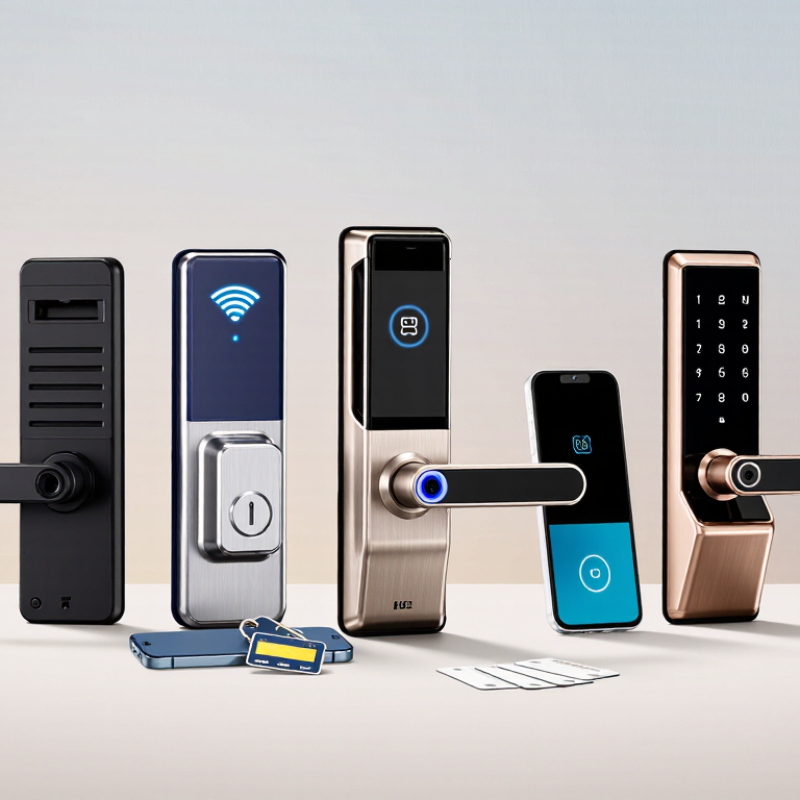
The main choices include magnetic stripe locks, RFID card locks, smart card systems, mobile Bluetooth locks, and hybrid platforms. Each type creates different demands. RFID cards tolerate frequent use better than magnetic cards. Mobile access can reduce plastic waste, but it depends on guest smartphones, batteries, and reliable application support. Online locks provide stronger monitoring, yet they require stable networks and careful data management. Small details matter. Think about wet hands, worn cards, narrow door frames, and a busy reception desk at midnight.

Bruce Schneier, a respected security authority, wrote, “Security is a process, not a product.” That principle applies directly to every Hotel Card Lock purchase. The lock body is only one part of protection. Firmware updates, audit trails, emergency access, staff training, and replacement procedures also shape real-world security. No lock is perfect.

This guide evaluates the best Hotel Card Lock types for global buyers in 2026. It considers installation conditions, international compatibility, maintenance support, cybersecurity expectations, and total ownership costs. Some recommendations may not suit every property. That is intentional. A budget resort, business hotel, and luxury residence should not follow the same access strategy. The right decision begins with honest operational details, not impressive product labels.

2026 Best Hotel Card Lock Types for Global Buyers

Define Hotel Card Lock Types by ISO/IEC 14443, NFC, BLE, and PIN Access

2026 Best Hotel Card Lock Types for Global Buyers

Define Hotel Card Lock Types by ISO/IEC 14443, NFC, BLE, and PIN Access

For global hotel buyers, lock selection starts with the credential, not the finish. ISO/IEC 14443 defines contactless proximity-card communication at 13.56 MHz. NFC systems commonly build on this standards family. Guests tap a card near the reader. The action feels familiar. It also supports controlled credential issuance and replacement. However, ISO/IEC 14443 compliance does not prove strong encryption or smooth hotel integration. Buyers should verify the full security architecture, reader certification, and audit functions.

BLE uses a smartphone as a digital key. The 2024 Connected Consumer Survey reported smartphone ownership above 90% among surveyed United States consumers. That figure supports mobile access, but adoption is never universal. Phones lose charge. Permissions fail. Some guests prefer cards. BLE therefore needs offline behavior, revocation controls, and a clear fallback path. NFC phone access offers shorter-range interaction, while BLE can support hands-free unlocking. Range can mislead.

PIN access remains practical for staff areas, late arrivals, and controlled exceptions. The 2024 Data Breach Investigations Report found that the human element appeared in 68% of breaches. Shared codes deserve particular caution. Use individual PINs, expiry rules, attempt limits, and event logs. A mixed architecture often works best: ISO/IEC 14443 cards for general guests, NFC or BLE for opted-in mobile users, and PINs for limited access. This is not flawless. Hotel environments are messy. Test elevators, wet hands, network loss, and rushed reception workflows before purchase.

Compare RFID, NFC, Magnetic-Stripe, BLE, and Biometric Lock Technologies

2026 Best Hotel Card Lock Types for Global Buyers

Compare RFID, NFC, Magnetic-Stripe, BLE, and Biometric Lock Technologies

For global hotel buyers, lock selection should begin with guest flow, not novelty. RFID locks use contactless cards and remain practical in busy properties. They tolerate repeated use and support offline access records. NFC can support mobile credentials, but phone compatibility varies by device and region. Magnetic-stripe locks are familiar and inexpensive. Their cards wear quickly, and readers need regular cleaning. That weakness becomes obvious near beaches, dusty entrances, and high-turnover rooms. I have seen simple systems outperform advanced ones when staff training was stronger.

BLE locks offer phone-based entry and remote credential control. They suit properties seeking fewer plastic cards. Yet pairing problems, dead batteries, and weak signals can frustrate guests. Biometric locks reduce credential sharing, but enrollment, privacy controls, and accessibility require careful review. Fingerprints may fail after wet hands or minor injuries. Facial recognition creates additional consent and data-retention concerns. Buyers should request audit logs, emergency override procedures, offline operation, and clear maintenance intervals. Do not trust a polished demonstration alone.

Tips: Test every system with wet fingers, gloves, weak phone batteries, and crowded lobbies. Ask for five-year costs, not only purchase prices. Keep a secure fallback card process. Check local privacy and fire-safety requirements with qualified advisers. Pilot one floor before a full rollout. This is where assumptions usually break.

2026 Best Hotel Card Lock Types for Global Buyers - Compare RFID, NFC, Magnetic-Stripe, BLE, and Biometric Lock Technologies
Lock Technology Typical Credential or Device Typical Operating Range Security Characteristics Guest Convenience Offline Operation Power and Maintenance Retrofit Potential Best-Fit Hotel Use Overall Buyer Assessment
RFID Contactless Contactless key card, wristband, or fob using low-frequency or high-frequency radio communication. Usually a few centimetres for access-control cards. The exact distance depends on antenna design, reader power, card type, and installation. Generally stronger and more resistant to physical wear than magnetic-stripe cards. Security varies significantly by credential technology and encryption; older systems may be vulnerable to cloning. High Usually available. Many systems can validate cards locally and synchronize events later. Battery-powered locks commonly require periodic battery replacement. Contactless cards do not contain batteries. Good when existing door hardware can accept a compatible contactless reader and controller. Large hotels, resorts, serviced apartments, and properties seeking durable contactless cards. ★★★★☆
Strong general-purpose choice when credential security and system compatibility are verified.
NFC NFC-enabled smartphone, contactless card, wearable, or secure digital credential. Normally a very short range, generally a few centimetres, requiring the device to be held close to the reader. Can support secure credentials, cryptographic authentication, and mobile-device security features. Protection depends on the complete credential, reader, mobile application, and backend design. Very high for guests who prefer mobile credentials. Physical cards can often be retained as an alternative. Possible for many deployments, although mobile credentials may require prior provisioning and periodic synchronization. Door lock batteries still require maintenance. Guest smartphones must be charged, and mobile credential support requires software administration. Moderate to good, depending on whether existing readers and access controllers support NFC credentials. Mobile-first hotels, premium properties, and properties offering digital check-in or phone-based room access. ★★★★☆
Excellent for mobile access, provided phone compatibility, privacy, and fallback access are planned.
Magnetic-Stripe Swipe card containing encoded magnetic data. Physical contact is required; the card must pass through the reader slot. Lower security than modern contactless technologies because the stripe can wear out and its data may be copied with suitable equipment. It is also more vulnerable to demagnetization and physical damage. Familiar and simple, but swiping is slower and less convenient than tapping or using a mobile credential. Commonly available because many systems validate the card locally. Cards are inexpensive, but readers contain moving or exposed components that can require more cleaning and servicing. Often high for older properties already equipped with magnetic-stripe hardware. Budget properties, legacy installations, and locations where low initial replacement cost is more important than advanced security. ★★☆☆☆
Low-cost legacy option, but generally not the preferred choice for new global deployments.
Bluetooth Low Energy (BLE) Smartphone or approved Bluetooth-enabled credential device. Usually operates within several metres, although secure access normally requires the guest to be near the door. Actual performance depends on the phone, radio environment, and lock design. Can use encrypted communication, rotating credentials, and server-side access policies. Security depends on secure application design, device protection, credential lifecycle management, and fallback procedures. Very high for guests using mobile check-in. Some systems support hands-free or proximity-based unlocking. Often possible after a credential is downloaded to the phone, but provisioning, revocation, and some policy checks may require connectivity. Lock batteries require scheduled replacement. Software, mobile operating-system compatibility, and Bluetooth support require ongoing administration. Moderate. Existing electronic locks may require a compatible communication module, controller, or complete reader replacement. Digital hotels, extended-stay properties, and operators seeking app-based access and reduced physical key-card use. ★★★★☆
Highly convenient and scalable, but requires dependable mobile support and a strong offline fallback plan.
Biometric Fingerprint, facial, palm, or other biometric characteristic stored or processed by the access system. Fingerprint readers require direct contact or close placement. Facial systems generally work from a short distance within the camera and sensor field. Can provide strong identity binding, but biometric data is sensitive and cannot be replaced like a lost card. Spoof detection, encrypted templates, liveness checks, access governance, and privacy controls are essential. Can be convenient for enrolled users, but enrollment, recognition failures, hygiene concerns, and accessibility requirements must be managed. Usually possible when biometric templates and authorization rules are stored locally, subject to system design and policy. Requires sensor cleaning, software maintenance, environmental testing, and reliable power. Poor lighting, moisture, gloves, or physical changes may affect recognition. Usually lower than card-based systems because specialized readers, controllers, enrollment processes, and privacy measures may be required. Restricted staff areas, high-security zones, private clubs, and selected premium applications rather than universal guest-room access. ★★★☆☆
Potentially strong for controlled areas, but privacy, accessibility, cost, and operational complexity limit broad hotel-room use.

Comparison note: Performance, security, read range, battery life, and retrofit suitability vary by reader, credential, door hardware, installation environment, local regulations, and access-control architecture. RFID and NFC are related contactless technologies; NFC is commonly used for very short-range device and card communication.

Evaluate Security Using UL 294, EN 14846, AES-128, and Audit Logs

For global hotel buyers, card-lock security begins with evidence, not attractive specifications. UL 294 can help assess access-control equipment, while EN 14846 addresses electro-mechanically operated locks and fittings. Confirm the exact certification scope. A complete door assembly may not share every tested component. During site assessments, I check the reader, controller, wiring, emergency opening, and power-failure response together. Small gaps often appear between the brochure and the installed system.

Encryption deserves equal attention. AES-128 can protect card credentials and communication when implemented correctly, but it is not a complete security strategy. Ask how keys are generated, stored, rotated, and revoked. Audit logs should record card identity, door number, time, access result, and unusual events. Accurate clocks matter. So does tamper-resistant storage. Test whether staff can export readable records after a network outage. They should not lose a night’s events because one server stopped responding. That happens.

A practical evaluation also measures battery warnings, duplicate-card handling, and the time needed to disable a lost card. Request independent test reports and installation records, not only declarations. Requirements differ across properties and jurisdictions, so local technical review remains necessary. I have learned that “compliant” can sound more certain than it is. A lock may meet one standard while its software, key management, or audit process remains weak. Real security is the complete chain, checked repeatedly.

Assess Battery Life, IP Ratings, and Read Ranges for Hotel Operations

The best hotel card lock in 2026 should survive real corridors, not just laboratory claims. Battery life matters because a dead lock can stop check-in at 11 p.m. Choose systems offering at least 12 months under normal hotel traffic, with visible low-battery warnings and emergency power access. Heavy-use doors need testing with frequent unlock cycles. The 2024 MarketsandMarkets Electronic Access Control report valued this market at about USD 10.2 billion and forecasts USD 15.6 billion by 2029. That growth reflects stronger demand for reliable access management, not simply newer hardware.

IP ratings require careful reading. Under IEC 60529, IP54 resists limited dust and water splashes, while IP65 offers stronger dust protection and water-jet resistance. Exterior doors, pool areas, and humid coastal properties deserve higher protection. Indoor hallway locks may not need it.

Read range also changes with card material, reader alignment, metal doors, and electrical interference. A claimed 4-centimeter range may become shorter after installation. Test sample doors on-site.

Tips: Record battery voltage, unlock counts, temperature, and failed reads during a 30-day pilot. Ask for independent test evidence, not only supplier estimates. Include winter mornings and wet housekeeping carts. I would not accept a “two-year battery” promise without traffic assumptions. It sounds precise, but hotel usage is rarely precise. Read-range tests should include staff badges, guest cards, and slightly damaged cards. Small failures become expensive when repeated across hundreds of rooms.

Match Lock Types to Global Hotel Needs, Budgets, and 2026 Standards

2026 Best Hotel Card Lock Types for Global Buyers

Matching hotel locks to local needs requires more than comparing purchase prices. RFID card locks suit properties with stable front-desk routines and frequent room turnover. They are simple to issue, easy to replace, and familiar to many guests. Mobile-enabled locks reduce plastic use and support remote access, but they depend on guest phone compatibility, network planning, and clear backup procedures. PIN locks can work well for serviced apartments and late arrivals. They need strong code management and frequent audit reviews.

Budget should include installation, batteries, software, training, and maintenance. A low-cost lock may create expensive service calls later. In humid coastal areas, buyers should check corrosion resistance and sealing details. In cold regions, battery performance deserves practical testing. Accessibility also matters. Guests should receive clear visual and tactile guidance at the reader, handle, or keypad.

Global buyers should request documented encryption, access logs, offline operation, emergency credentials, and update policies. Systems should support local payment and identification workflows without storing unnecessary personal data. Independent testing and regional certifications add useful assurance, but paperwork alone is not enough. Test ten doors during busy check-in hours. Watch for failed reads, slow unlocking, and confusing prompts. Mobile entry is attractive, yet not every guest owns a modern phone. That weakness is easy to overlook. A mixed system may cost more initially, but it can serve different buildings, budgets, and guest expectations more reliably. JSImport

2026 Best Hotel Card Lock Types for Global Buyers

Matching lock technologies with global hotel needs, budgets, and current access-control expectations.

The normalized 0–100 planning scores evaluate guest convenience, retrofit suitability, offline resilience, auditability, and long-term operating efficiency. BLE-enabled and hybrid systems generally provide the strongest fit for international properties, while mechanical locks remain relevant for low-budget or low-connectivity locations.

Cart Summary

Subtotal: $0